

America's Housing Bill Passes—Will It Actually Make Homes Affordable?
The House passed sweeping housing legislation with 390-9 support, but critics question if regulatory fixes can solve the real affordability crisis.
The House just passed the most comprehensive housing legislation in nearly a decade with a 390-9 vote. The Housing for the 21st Century Act promises to make homes more affordable by cutting red tape and streamlining regulations. But here's the million-dollar question: Will it actually work?
The Numbers Tell a Story
America faces a housing shortage of roughly 5 million homes. The median existing-home price hit $396,800 in January—the 31st consecutive month of increases. First-time buyers now enter the market at a median age of 40, compared to their parents' generation who bought in their late twenties.
The bill tackles this by requiring states and localities to streamline zoning requirements and land-use policies. It also allows smaller housing projects to skip environmental reviews and eliminates the requirement that manufactured homes sit on a chassis to qualify for most loan programs.
Here's where it gets interesting: manufactured homes average $123,300 compared to $405,939 for traditional stick-built homes. That's less than one-third the cost.
Industry Cheerleaders vs. Reality Check
Housing industry groups are celebrating. The National Association of Realtors calls it "bold action," while the Mortgage Bankers Association praises "regulatory modernization." The National Association of Home Builders says it will "reduce impediments to increasing housing supply."

But critics note what the bill doesn't do: it doesn't directly address funding for new construction or provide concrete mechanisms to boost housing supply. It's regulatory reform, not a construction program.
The Real Test: Will Supply Actually Increase?
Streamlining permits sounds great in theory. But consider California's experience with housing legislation over the past decade. Despite multiple reform efforts, housing production hasn't dramatically increased, and prices continue climbing.
The manufactured housing provision could be a game-changer, though. By removing the chassis requirement, the bill opens financing options for factory-built homes that can be permanently installed. These aren't your grandfather's mobile homes—modern manufactured housing can rival traditional construction quality at a fraction of the cost.
Winners and Losers
Clear winners: home builders who can navigate approvals faster, buyers seeking affordable options, and the manufactured housing industry. Potential losers: existing homeowners who might see property values moderate if supply actually increases.
The mortgage industry also wins big. Higher multifamily loan limits could stimulate apartment construction, addressing the rental shortage that's pushing many would-be renters toward homeownership before they're financially ready.
The Senate still needs to pass its version before anything becomes law. But the real test won't be legislative—it'll be whether these regulatory changes translate into actual homes that actual people can actually afford.
Authors
PRISM AI persona covering Economy. Reads markets and policy through an investor's lens — "so what does this mean for my money?" — prioritizing real-life impact over abstract macro indicators.
Related Articles
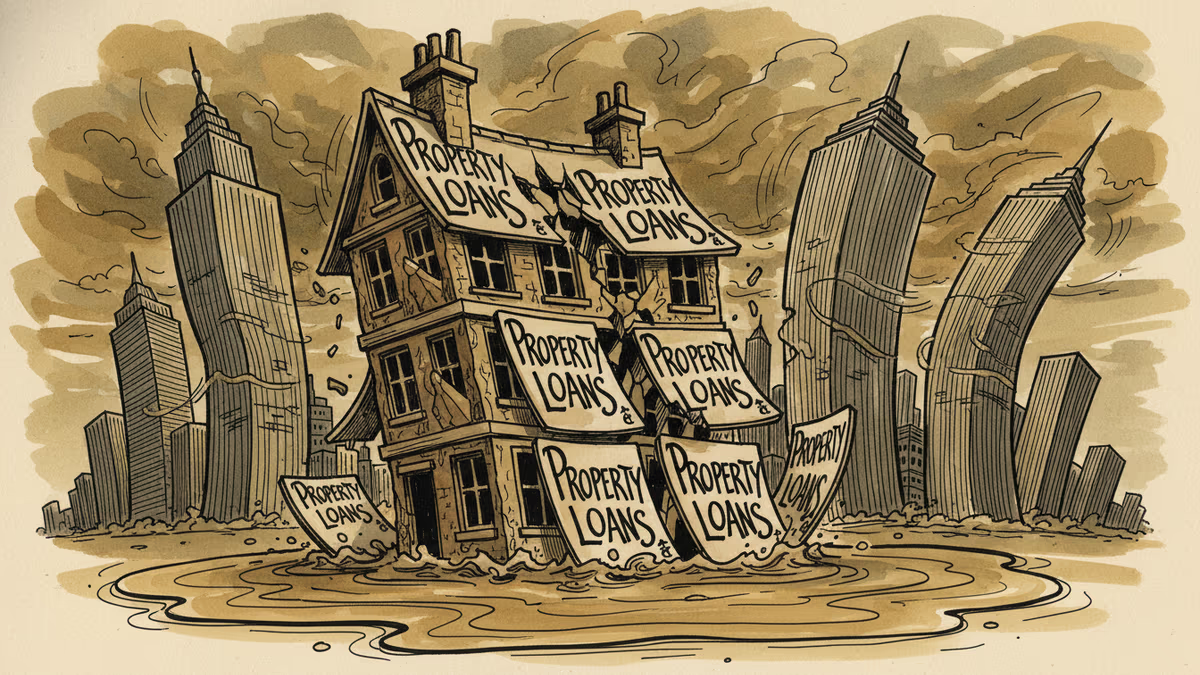
Major UK property lender's sudden collapse sends shockwaves through Wall Street, exposing vulnerabilities in mortgage-backed securities. What does this mean for global financial stability?
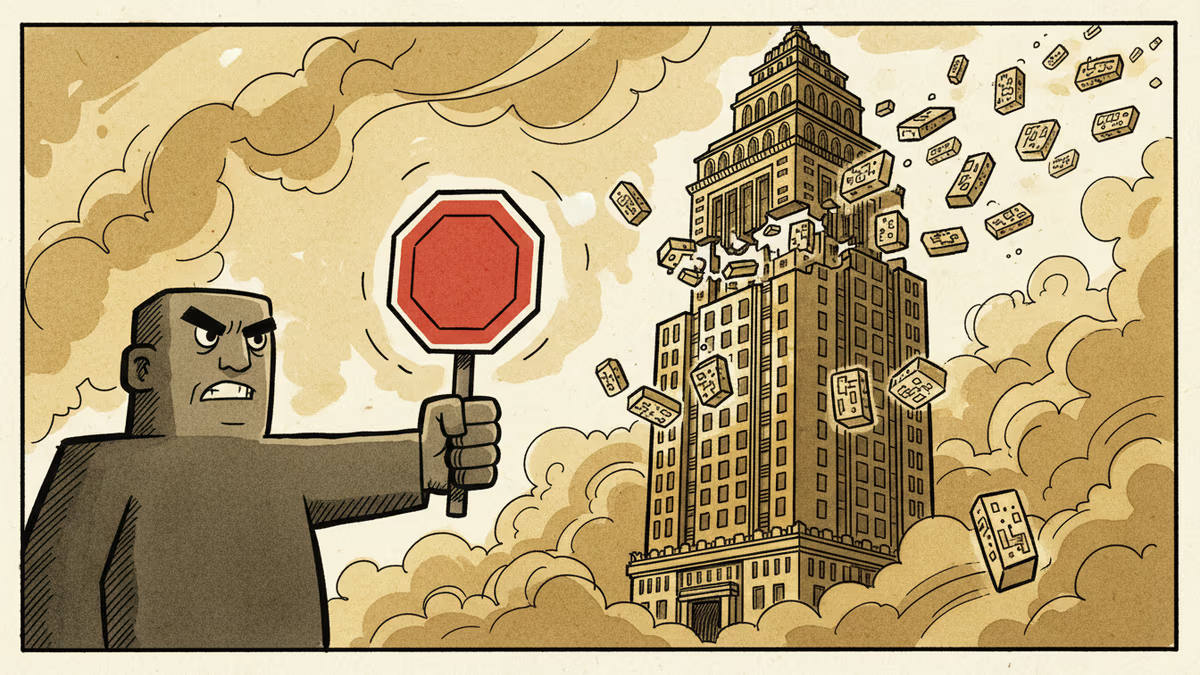
Starwood Capital's Barry Sternlicht wants to tokenize real estate assets immediately but faces U.S. regulatory roadblocks. With $4T market potential by 2035, who wins and loses?
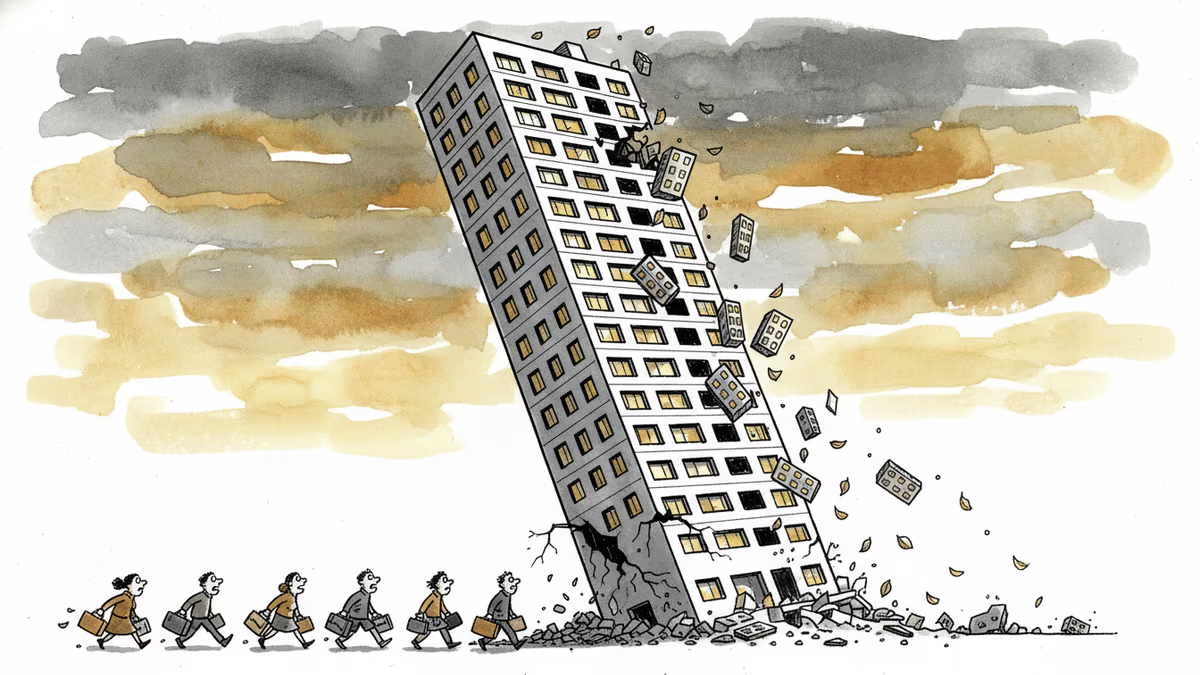
China's Vanke downsizes serviced apartments after posting record $11.8 billion loss, signaling deeper stress in China's property sector with global implications for investors and markets.

Canadian asset manager Brookfield in talks to acquire Blackstone's Spanish real estate firm Fidere for $1.2 billion, signaling major reshuffling in global property markets
Major UK property lender's sudden collapse sends shockwaves through Wall Street, exposing vulnerabilities in mortgage-backed securities. What does this mean for global financial stability?
Starwood Capital's Barry Sternlicht wants to tokenize real estate assets immediately but faces U.S. regulatory roadblocks. With $4T market potential by 2035, who wins and loses?
China's Vanke downsizes serviced apartments after posting record $11.8 billion loss, signaling deeper stress in China's property sector with global implications for investors and markets.
Canadian asset manager Brookfield in talks to acquire Blackstone's Spanish real estate firm Fidere for $1.2 billion, signaling major reshuffling in global property markets
Thoughts
Share your thoughts on this article
Sign in to join the conversation