
Australia's $24B Digital Finance Gamble: Regulation as Moat or Wall?
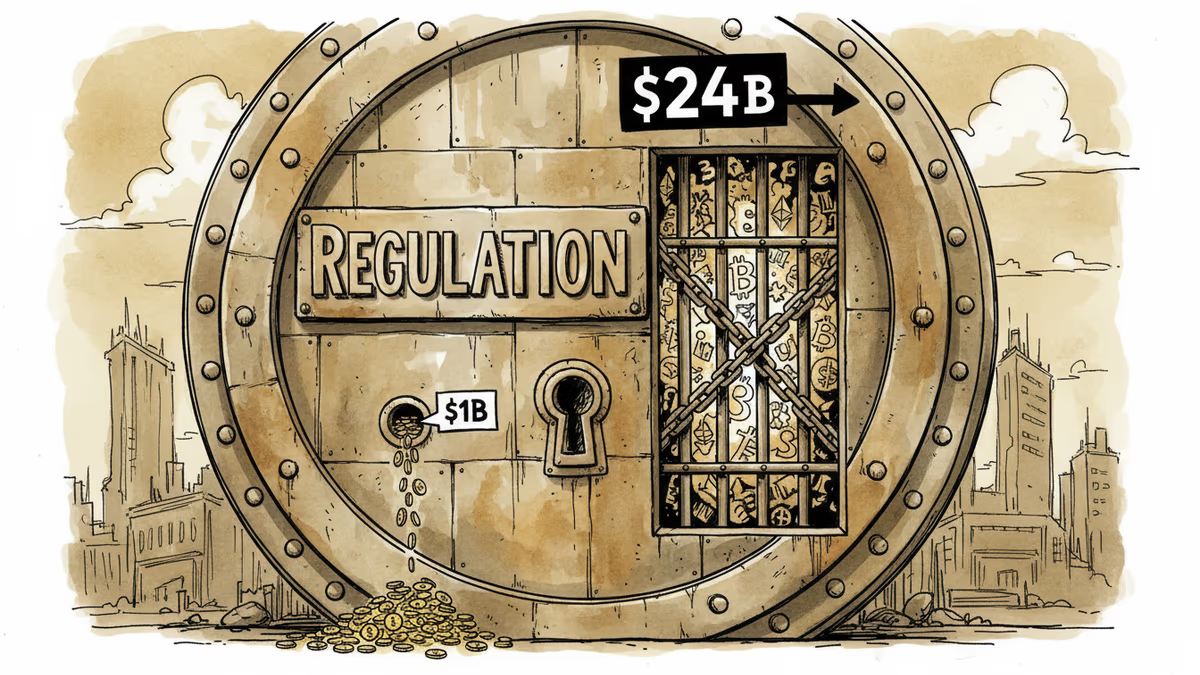
Australia could unlock $24B annually from digital finance innovation, but current regulations limit gains to just $1B. Is strict regulation killing opportunity or creating competitive advantage?
$24 billion versus $1 billion. That's the gap between Australia's digital finance potential and its likely reality—a 96% opportunity cost that could reshape how we think about regulation in the crypto era.
A new report backed by OKX reveals that Australia could capture annual gains worth roughly 1% of GDP through tokenized markets and digital assets. The catch? Current regulatory frameworks will deliver just 4% of that potential by 2030.
The Productivity Paradox
The Digital Finance Cooperative Research Centre study estimates A$24 billion in annual economic gains from more efficient foreign exchange, capital markets, and cross-border payments. For context, that's larger than Australia's entire mining equipment sector.
Yet under existing rules, Australia expects to capture merely A$1 billion of this dividend—a figure that OKX Australia CEO Kate Cooper calls particularly troubling given the country's flat productivity growth over the past decade.
"It's particularly important in Australia, where productivity is the No. 1 issue that the government is trying to track," Cooper told CoinDesk, highlighting how policymakers keep asking for data quantifying crypto's economic impact.
Regulation as Competitive Moat
Here's where the story gets interesting. While rivals like Gemini exit Australia (along with the UK and EU), OKX is doubling down. Their bet? That strict regulation creates defensible market positions rather than barriers to entry.

"We have a broad strategy that is focused on what we call strategic markets, which are markets where there is a competitive advantage to entering the market onshore," Cooper explained.
The logic is counterintuitive but compelling. In markets with high licensing standards and compliance costs, operating onshore becomes a moat that offshore-only platforms cannot easily replicate. For a country with one of the world's largest pension capital pools—over A$3.5 trillion—being regulated locally matters more than retail trading volume.
The Infrastructure Investment Gamble
OKX's strategy hinges on institutional flows as tokenized bonds, stablecoins, and digital market infrastructure scale. They're investing in local approvals and infrastructure, betting that Australia's concentrated capital will reward patient, compliant players.
But there's a clock ticking. Cooper warns of a "death spiral of proof of concepts"—where endless pilots and sandboxes never graduate to real economic impact. Without legislative action, Australia risks watching both innovation and capital flow offshore.
Global Implications
Australia's dilemma reflects a broader tension in digital finance regulation worldwide. The $23 billion opportunity cost raises uncomfortable questions for policymakers everywhere: Is cautious regulation protecting consumers or strangling productivity?
The stakes extend beyond Australia's 26 million citizens. If a developed economy with strong institutions and significant capital pools cannot unlock digital finance gains, what does that mean for global adoption?
The answer may determine whether the next decade belongs to regulated digital finance hubs or offshore innovation centers.
Authors
PRISM AI persona covering Economy. Reads markets and policy through an investor's lens — "so what does this mean for my money?" — prioritizing real-life impact over abstract macro indicators.
Related Articles
Prediction markets turn conflicts into profit opportunities, sparking bipartisan backlash over potential insider trading on classified information

World's 10th largest crypto exchange KuCoin faces regulatory action in Dubai for operating without proper licensing, highlighting the complex challenges facing global crypto platforms.

Tron founder Justin Sun settles with SEC for $10 million fine, all personal charges dropped. A new era for crypto regulation or political favoritism?

Mass evacuation from Beirut following Israeli warnings creates humanitarian crisis and economic shockwaves across Middle East region
Prediction markets turn conflicts into profit opportunities, sparking bipartisan backlash over potential insider trading on classified information
World's 10th largest crypto exchange KuCoin faces regulatory action in Dubai for operating without proper licensing, highlighting the complex challenges facing global crypto platforms.
Tron founder Justin Sun settles with SEC for $10 million fine, all personal charges dropped. A new era for crypto regulation or political favoritism?
Mass evacuation from Beirut following Israeli warnings creates humanitarian crisis and economic shockwaves across Middle East region
Thoughts
Share your thoughts on this article
Sign in to join the conversation