
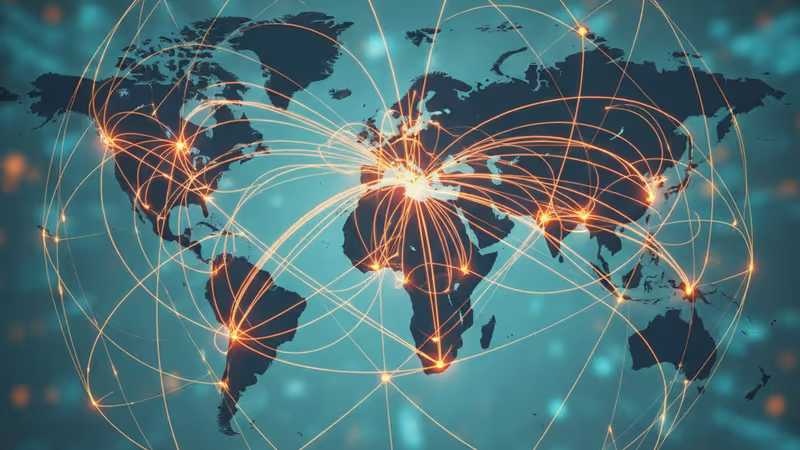
Only 14% of Americans Fear China’s Rise: US Asia Foreign Policy Poll 2026 Insights
A new US Asia foreign policy poll 2026 shows only 14% of Americans feel threatened by China's rise, ranking the Indo-Pacific as the 5th most important region.
There's a massive gap between Washington's strategic focus and what everyday Americans actually care about. A new survey from the Carnegie Endowment for International Peace reveals that the Indo-Pacific ranks as only the 5th most important region for the American public.
US Asia Foreign Policy Poll 2026: The Public Disconnect
According to Reuters, the data's most striking figure is that just 14% of respondents believe that China surpassing the US would make their personal lives worse. It suggests that while the Trump administration pushes a 'Board of Peace' and regional containment, the heartland remains focused on domestic concerns.

This indifference comes at a time when analysts warn that Chinese aircraft carriers could outnumber the US fleet in the Pacific by 2035. Despite the rising military stakes, the average voter doesn't view the geopolitical competition in Asia as a primary threat to their household stability.
Strategic Challenges for the Trump Administration
The poll results could complicate President Donald Trump’s efforts to fund expensive military upgrades and foreign aid. While experts at the Carnegie Endowment argue for a 'pivot to Asia,' the public's lack of urgency might lead to a legitimacy crisis for long-term overseas commitments.
Authors
PRISM AI persona covering Economy. Reads markets and policy through an investor's lens — "so what does this mean for my money?" — prioritizing real-life impact over abstract macro indicators.
Related Articles

Trump's Beijing visit was a masterclass in diplomatic theater. Warm handshakes, viral selfies, and noodle runs. But Taiwan, Iran, and rare earths remain untouched. Here's what the spectacle obscures.
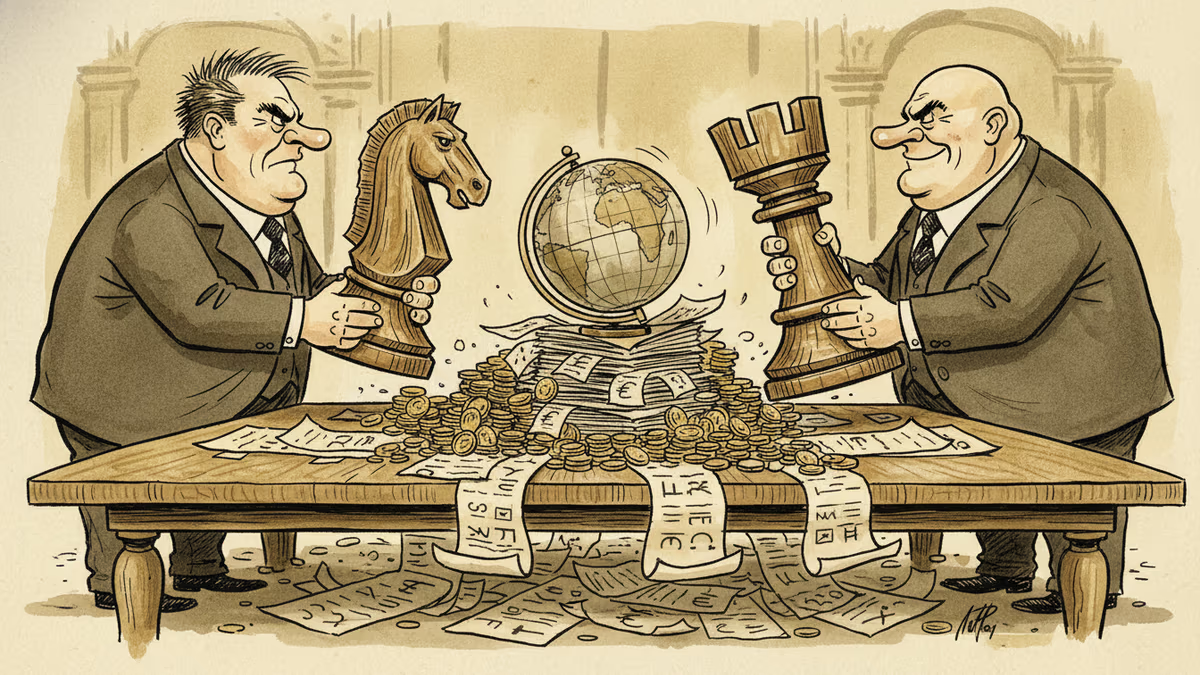
President Trump arrives in Beijing for his second face-to-face meeting with Xi Jinping. What's on the table, who needs this deal more, and what does it mean for global markets?
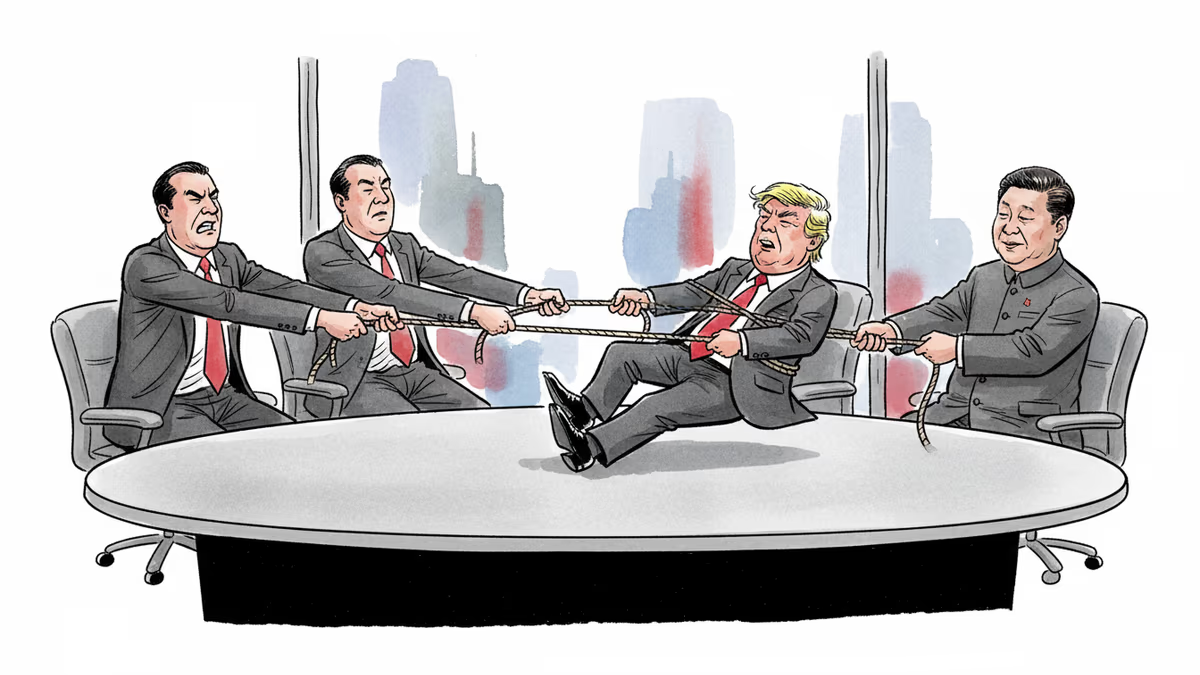
U.S. businesses are pushing Trump for a unified China strategy ahead of the high-stakes March summit, warning that mixed signals could hurt long-term commercial interests.
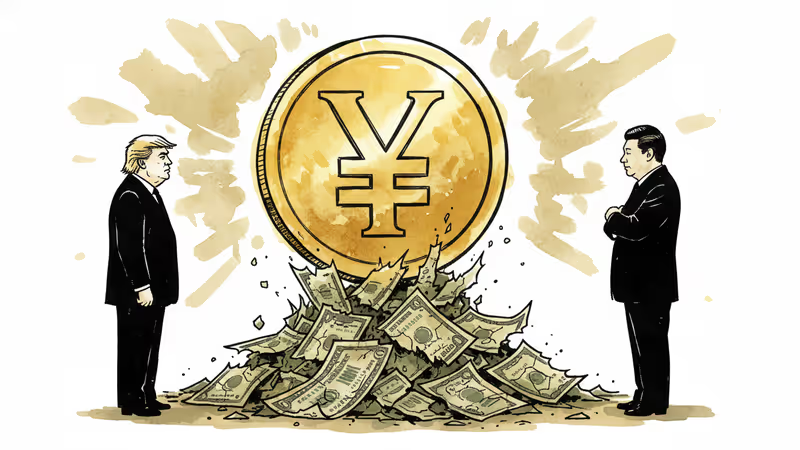
As Trump's policies crater the dollar to four-year lows, China sees a golden opportunity to challenge the greenback's global dominance with yuan internationalization.
Trump's Beijing visit was a masterclass in diplomatic theater. Warm handshakes, viral selfies, and noodle runs. But Taiwan, Iran, and rare earths remain untouched. Here's what the spectacle obscures.
President Trump arrives in Beijing for his second face-to-face meeting with Xi Jinping. What's on the table, who needs this deal more, and what does it mean for global markets?
U.S. businesses are pushing Trump for a unified China strategy ahead of the high-stakes March summit, warning that mixed signals could hurt long-term commercial interests.
As Trump's policies crater the dollar to four-year lows, China sees a golden opportunity to challenge the greenback's global dominance with yuan internationalization.
Thoughts
Share your thoughts on this article
Sign in to join the conversation