

Why Astronauts Can't Hug Their Families Before Moon Mission
Artemis II crew enters strict quarantine as NASA delays moon mission to March 2026. The isolation protocol reveals deeper challenges of lunar exploration.
Four astronauts are living in complete isolation in Houston, unable to touch their loved ones or step outside. A simple cold could derail humanity's first return to the Moon in over 50 years.
The Artemis II crew—Reid Wiseman, Victor Glover, Christina Koch, and Jeremy Hansen—have entered NASA's mandatory 14-day quarantine ahead of their lunar mission, now delayed from February to March 2026. While the world watches rocket preparations, these four humans face a uniquely personal challenge: complete social isolation to protect a mission that cost $93 billion.
The Price of Perfect Health
NASA's Health Stabilization Program isn't just about avoiding sniffles. The crew must inhabit a space roughly the size of two minivans for at least 10 days during their lunar journey. When they swing around the Moon's far side, they'll lose contact with Earth for hours—no emergency medical evacuation, no backup plan.
The stakes became clear just weeks ago when NASA aborted an International Space Station mission for the first time due to a medical emergency. The condition remains classified, but the message is stark: in space, there's no calling in sick.
During quarantine, the astronauts can see family members but can't touch them. They avoid public spaces, wear special masks, and live under constant medical monitoring. One stomach bug, one fever spike, and the mission—along with years of preparation and billions in investment—could vanish.
From Moon Germs to Moon Protection

The original Apollo quarantine protocol stemmed from genuine fear. Scientists weren't certain the Moon was sterile. What if Neil Armstrong brought back some unknown pathogen? The Apollo 11 crew spent 21 days in isolation after their return, monitored for any sign of lunar contamination.
By Apollo 14, NASA had gathered enough evidence to abandon post-mission quarantine. The Moon, it turned out, posed no biological threat to Earth.
But now the concern flows in reverse. Artemis II targets the Moon's south pole, where perpetual darkness creates natural freezers that could preserve Earth microbes for decades. These regions might hold crucial information about the Moon's origin and the early solar system—information that could be corrupted by a single terrestrial bacterium.
The Human Element in Space Exploration
The quarantine reveals something profound about modern space exploration. Despite all our technological advancement, human biology remains the most unpredictable variable. We can engineer rockets that fire with split-second precision, but we can't eliminate the common cold.
This human fragility shapes every aspect of the mission. The crew trains for years, but their final weeks involve deliberate social isolation. They prepare to explore the cosmos while cutting themselves off from human connection. It's a paradox that underscores both our ambition and our limitations.
The delay to March also reflects NASA's conservative approach following recent setbacks. The agency faces congressional scrutiny over costs and timelines, making any medical emergency or technical issue politically explosive.
Authors
Related Articles
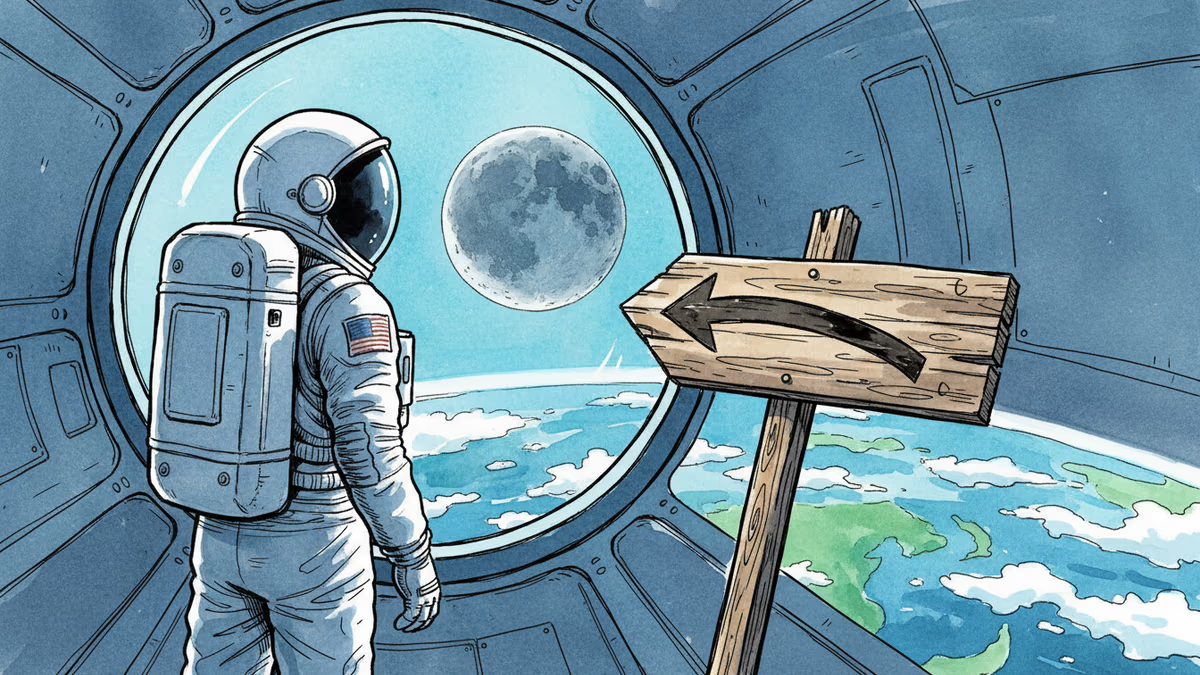
NASA's Artemis III has been redesigned as an Earth-orbit mission. SpaceX and Blue Origin say their landers won't be ready until late 2027. What does this mean for the future of lunar exploration?
Artemis II splashed down successfully in the Pacific, marking humanity's first crewed deep space mission in over 50 years. But the harder question isn't whether we can go back — it's why we should.
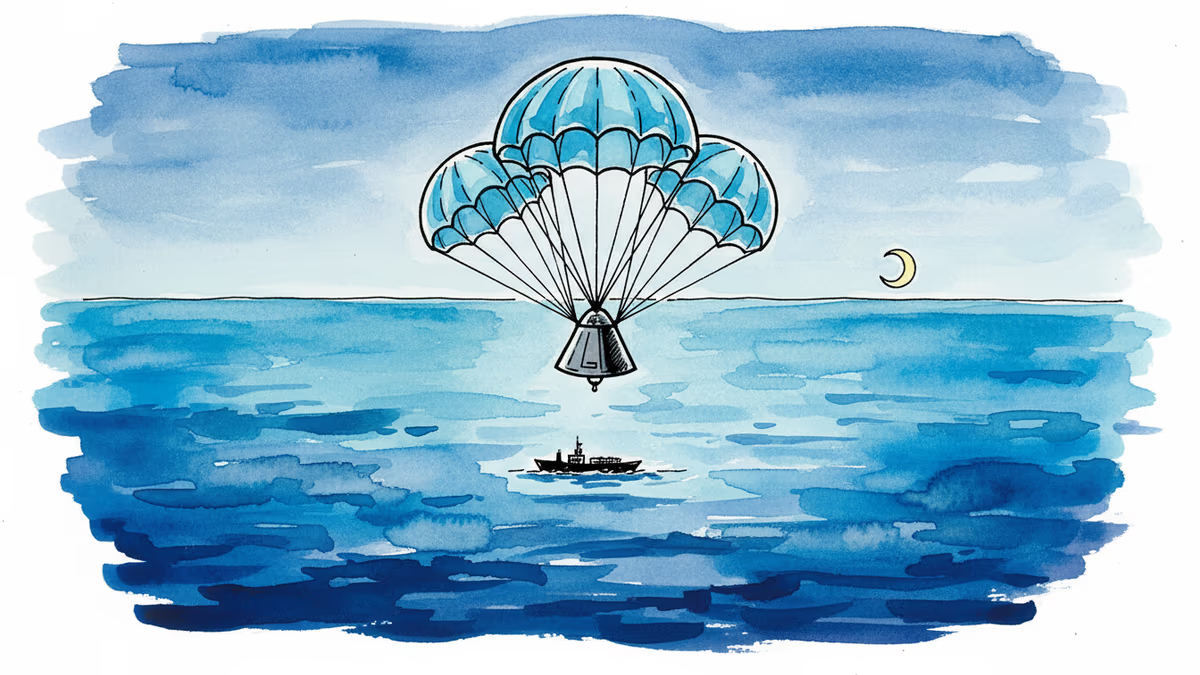
NASA's Orion capsule splashed down safely after humanity's first crewed lunar voyage in 54 years. The mission succeeded. Now the harder questions begin.

Artemis II's four astronauts are returning to Earth Friday night. The splashdown off Southern California isn't the anticlimax it sounds—it's the most technically perilous moment of the entire lunar journey.
NASA's Artemis III has been redesigned as an Earth-orbit mission. SpaceX and Blue Origin say their landers won't be ready until late 2027. What does this mean for the future of lunar exploration?
Artemis II splashed down successfully in the Pacific, marking humanity's first crewed deep space mission in over 50 years. But the harder question isn't whether we can go back — it's why we should.
NASA's Orion capsule splashed down safely after humanity's first crewed lunar voyage in 54 years. The mission succeeded. Now the harder questions begin.
Artemis II's four astronauts are returning to Earth Friday night. The splashdown off Southern California isn't the anticlimax it sounds—it's the most technically perilous moment of the entire lunar journey.
Thoughts
Share your thoughts on this article
Sign in to join the conversation