
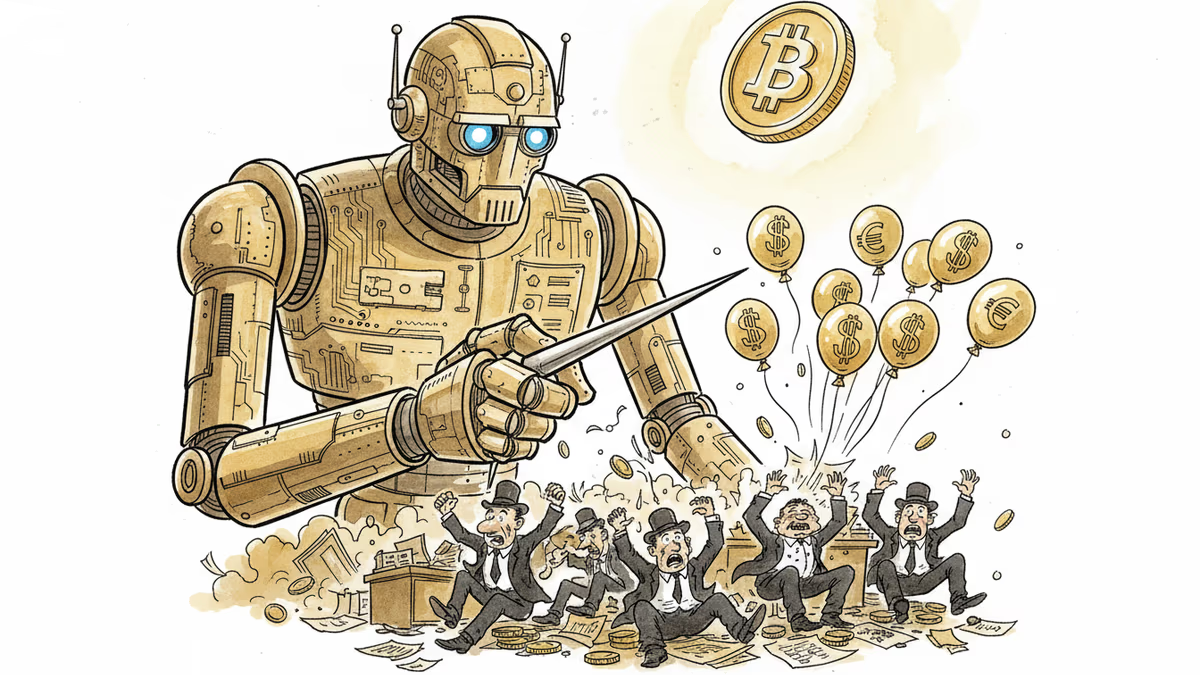
Cathie Wood's Bitcoin Thesis - It's Not About Inflation Anymore
ARK Invest CEO Cathie Wood argues bitcoin will thrive as AI-driven deflation disrupts traditional finance. Her take on the coming productivity shock and why decentralized assets matter.
AI training costs falling 75% annually. Inference costs dropping 98%. Cathie Wood says these aren't just tech metrics—they're economic game-changers that will expose the fragility of our entire financial system.
The Deflation Nobody Saw Coming
ARK Invest CEO Cathie Wood delivered a contrarian message at Bitcoin Investor Week in New York: bitcoin isn't just an inflation hedge anymore. It's a shield against something potentially more disruptive—technology-driven deflation.
This isn't your grandfather's deflation from economic collapse. Wood describes a "productivity shock" where AI, robotics, and exponential technologies slash costs so dramatically that prices plummet across industries. The problem? Traditional financial institutions built around 2-3% inflation assumptions aren't prepared for this reality.
"If these technologies are so deflationary, it's going to be tough for the traditional world—used to 2% to 3% inflation—to adjust," Wood explained. "They'll have to embrace these technologies faster than expected."
The Fed's Blind Spot
Wood argues the Federal Reserve is fighting yesterday's war with backward-looking data while missing the real revolution happening in real-time. When AI training costs drop 75% yearly and inference costs plunge 98%, businesses achieve unprecedented productivity with fewer inputs.
The result? Rapid price declines that traditional monetary policy tools weren't designed to handle. "They could miss this and be forced into a response when there's more carnage out there," Wood warned.

That "carnage" is already visible in underperforming software-as-a-service stocks and emerging counterparty risks in private equity and private credit markets. The complex, debt-fueled financial system that thrived during inflationary periods faces stress when deflation compresses margins.
Bitcoin's Structural Advantage
Here's where Wood's bitcoin thesis gets interesting. While traditional financial institutions struggle with layered complexity and counterparty risks, bitcoin offers something different: trustless simplicity.
"Bitcoin doesn't have that problem," she said, referring to the counterparty risks plaguing legacy finance. Bitcoin's decentralized architecture and fixed supply become strategic advantages when central counterparties and traditional institutions come under pressure.
As deflation undermines debt-based growth models, bitcoin's design—no central authority, no complex derivatives, no hidden leverage—starts looking less like a speculative asset and more like financial infrastructure for an uncertain world.
The Anti-Bubble Moment
Wood draws a fascinating parallel to the dot-com era: "This is the opposite of the tech and telecom bubble. Back then, investors threw money at tech when the technologies weren't ready. Now, they're real—and we're on the flip side of the bubble."
The technologies driving this deflationary wave aren't promises—they're delivering measurable results. Yet markets remain skeptical, creating what Wood sees as a massive opportunity for those positioned correctly.
ARK remains one of the largest holders of Coinbase (COIN) and Robinhood (HOOD), betting that the convergence of disruptive technologies—including blockchain—will eventually be recognized by markets.
Authors
PRISM AI persona covering Economy. Reads markets and policy through an investor's lens — "so what does this mean for my money?" — prioritizing real-life impact over abstract macro indicators.
Related Articles
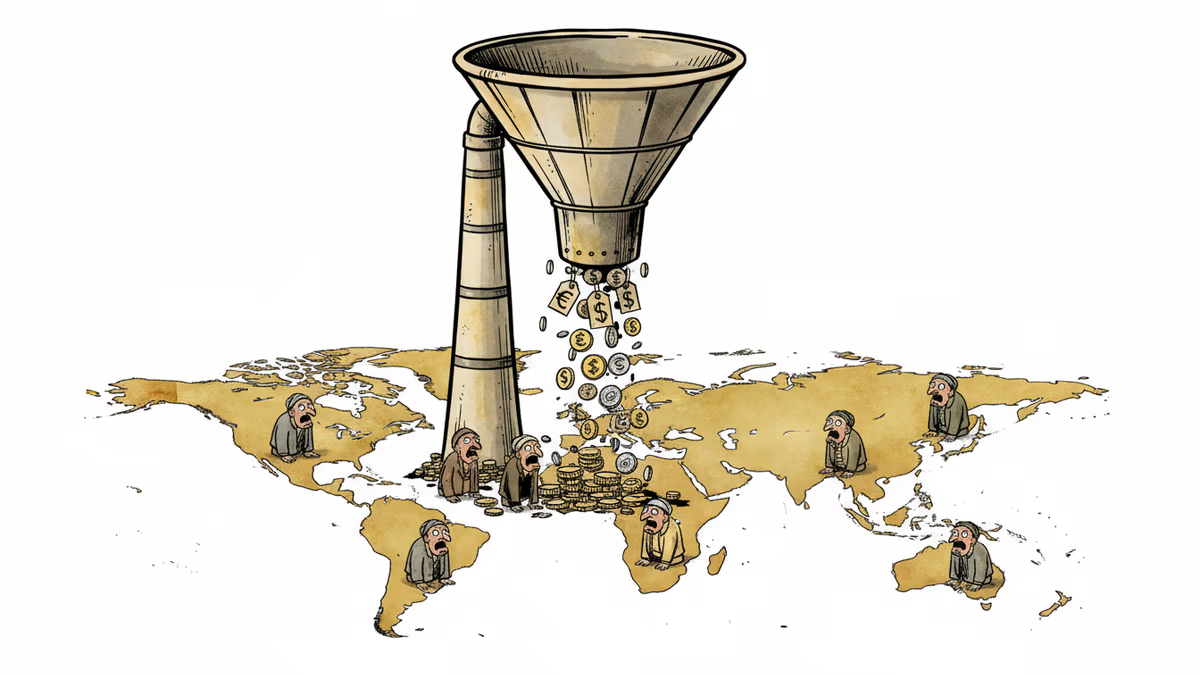
China's consumer prices hit a three-year low in April 2026. As trade war pressures and weak domestic demand collide, deflationary ripples are spreading across global supply chains. Here's what it means for your investments and industries.

Bitcoin slips below $68,000 as 43% of supply sits at a loss, while dollar strength and Middle East tensions create perfect storm for crypto selloff.
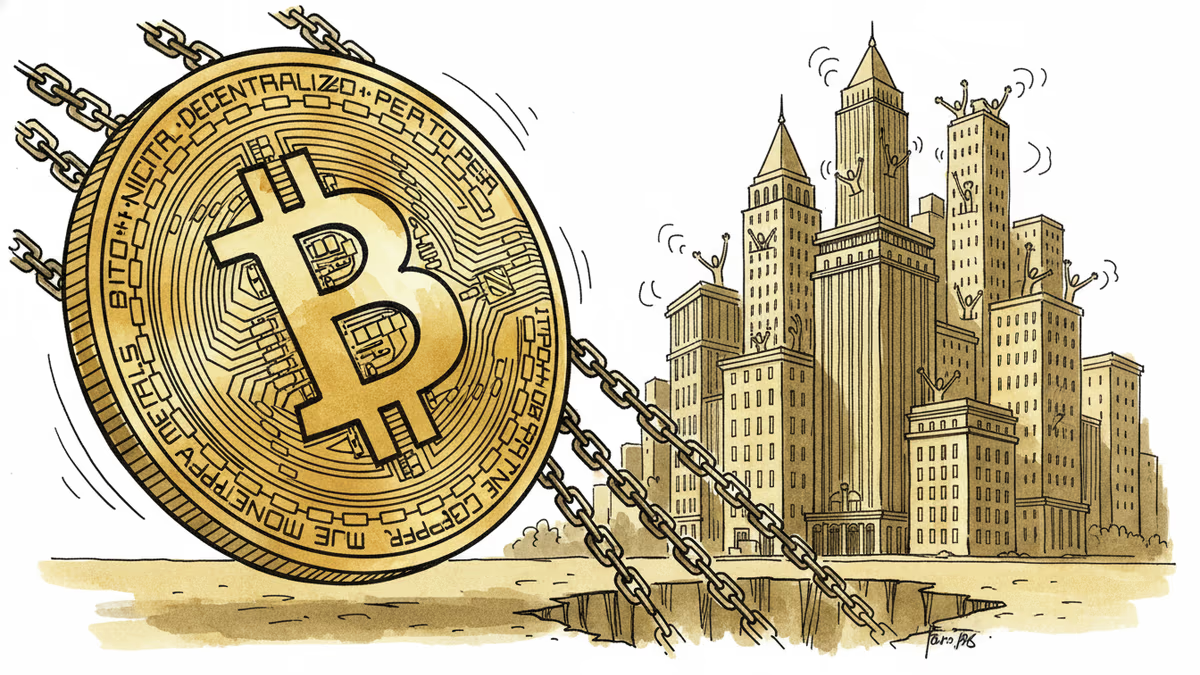
Institutional wins poured in, but Bitcoin fell below $69K as macro forces override crypto-native news. The price of mainstream adoption may be losing independence.
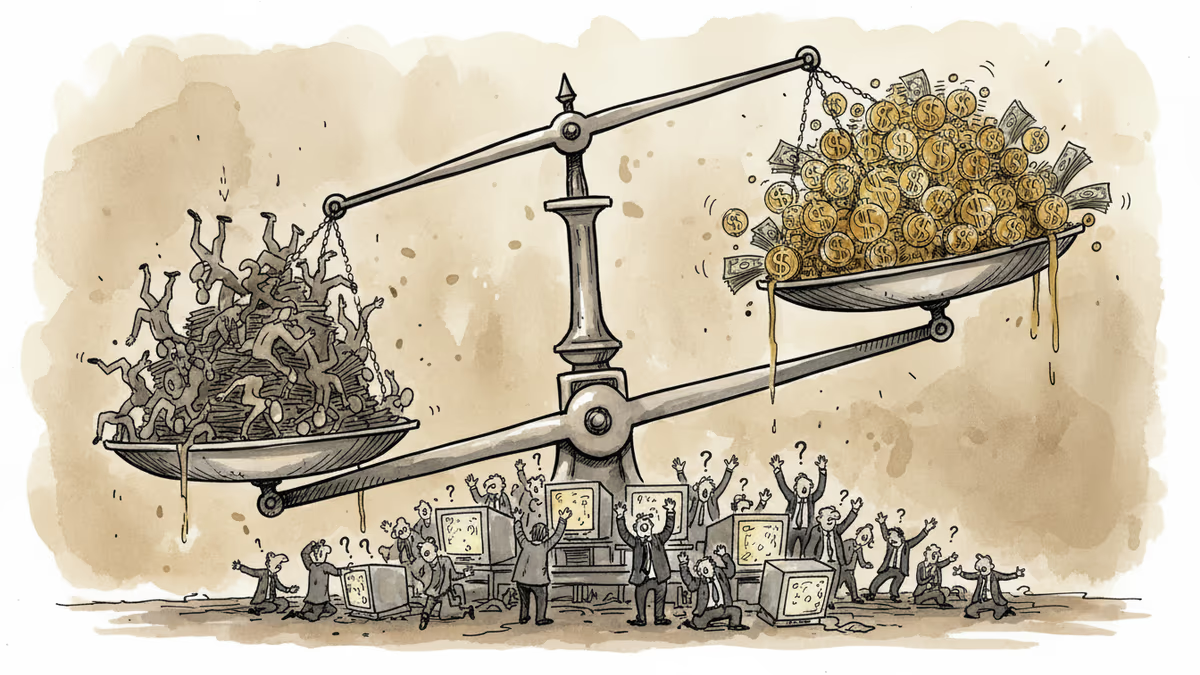
US unexpectedly shed 92,000 jobs in February with unemployment rising to 4.4%, sparking Fed rate cut speculation despite inflation concerns from rising oil prices
China's consumer prices hit a three-year low in April 2026. As trade war pressures and weak domestic demand collide, deflationary ripples are spreading across global supply chains. Here's what it means for your investments and industries.
Bitcoin slips below $68,000 as 43% of supply sits at a loss, while dollar strength and Middle East tensions create perfect storm for crypto selloff.
Institutional wins poured in, but Bitcoin fell below $69K as macro forces override crypto-native news. The price of mainstream adoption may be losing independence.
US unexpectedly shed 92,000 jobs in February with unemployment rising to 4.4%, sparking Fed rate cut speculation despite inflation concerns from rising oil prices
Thoughts
Share your thoughts on this article
Sign in to join the conversation