
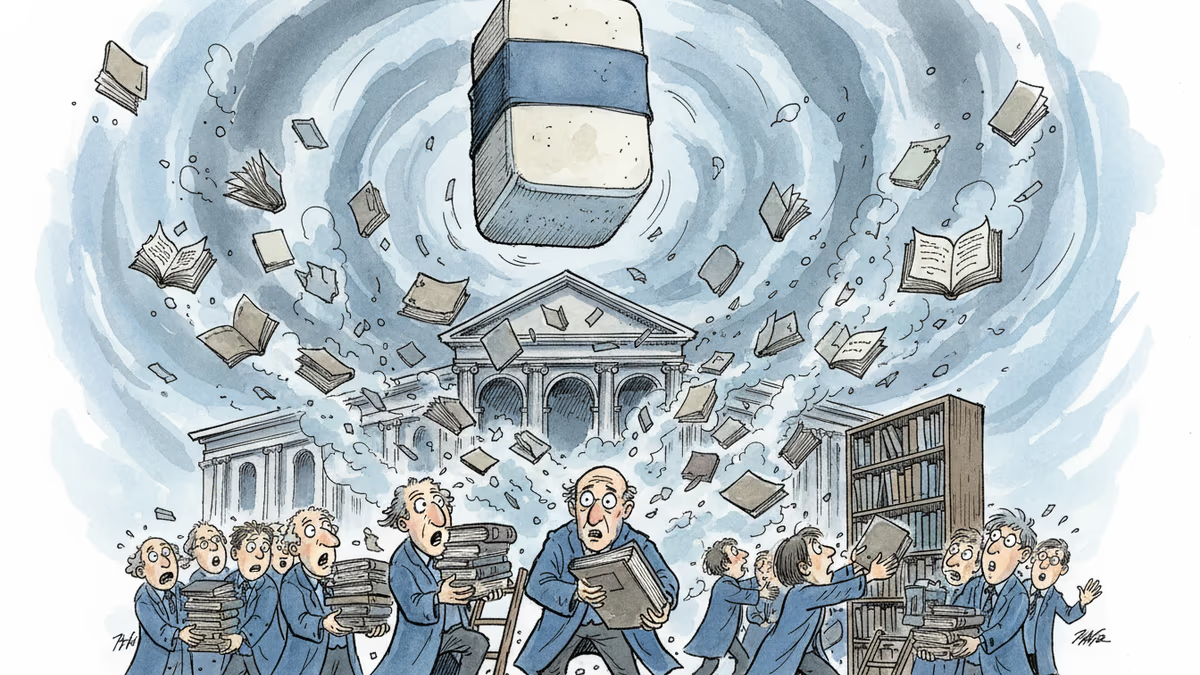
Wikipedia's 695,000-Link Dilemma: When Archives Become Weapons
Wikipedia editors debate whether to blacklist Archive.today after DDoS attack controversy. The decision could wipe out 695,000 links across 400,000 pages
695,000 links. That's how many times Wikipedia references Archive.today across its pages. Now, volunteer editors are wrestling with whether to delete every single one of them. The reason? The archive site was weaponized for a DDoS attack.
It's a decision that could reshape how the world's largest encyclopedia handles digital preservation—and it all started with one blogger's investigation.
The Incident: When Archives Attack
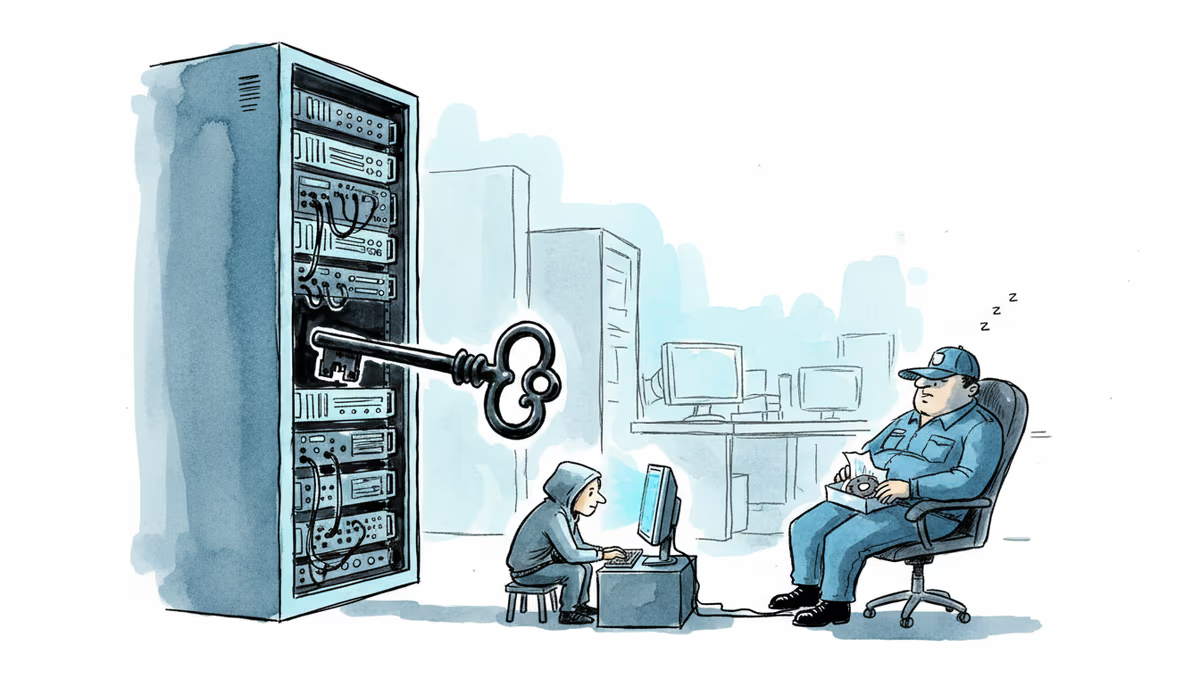
The trouble began in 2023 when a blogger published a post about Archive.today's mysterious anonymous maintainer. In response, someone turned the archive service itself into a weapon, using it to launch a distributed denial of service attack against the blogger.
The attack method was clever and concerning: generate massive numbers of archive requests to overwhelm the target's server. Archive.today (also known as Archive.is), typically used to preserve web pages and bypass news paywalls, became an unwitting accomplice in digital harassment.
Three Paths Forward
Wikipedia's volunteer community now faces three options:
Option A: Nuclear approach—remove all Archive.today links and blacklist the site entirely Option B: Soft deprecation—keep existing links but ban new ones Option C: Status quo—do nothing and hope for the best
Option A represents a massive undertaking. We're talking about 400,000 Wikipedia pages that would lose crucial reference links overnight. For many articles, these archived pages serve as the only remaining proof that certain information ever existed online.

The Editor's Dilemma: Security vs. Knowledge
The debate reveals a fundamental tension in digital knowledge management. Security-minded editors argue that continuing to link to a service that enabled harassment sets a dangerous precedent. "What message does it send if we keep promoting a tool that was used to attack someone?" they ask.
On the flip side, preservation advocates worry about the collateral damage. Years of careful documentation could vanish in an instant. "We're talking about destroying evidence, not just links," one editor noted in the discussion.
The stakes are particularly high for researchers and fact-checkers who rely on these archived pages to verify claims and track how information evolves over time.
Beyond Wikipedia: The Fragile Web
This controversy exposes a broader vulnerability in our digital information ecosystem. The internet suffers from "link rot"—URLs break, websites disappear, and information vanishes without a trace. Archive services like Archive.today, Wayback Machine, and WebCite serve as crucial backup systems for human knowledge.
But what happens when the backup systems themselves become compromised? The Archive.today incident isn't just about one service; it's about the inherent fragility of digital preservation.
Consider the implications for journalism, academic research, and legal proceedings. How many court cases, investigative reports, and scholarly papers depend on archived web pages as evidence? If we start blacklisting archive services every time they're misused, we risk creating massive blind spots in the historical record.
The Bigger Picture: Trust in Digital Infrastructure
The Wikipedia community's struggle reflects a larger challenge facing digital society. We've built our information systems on a foundation of trust—trust that archive services will remain neutral, that platforms will act responsibly, and that the tools we use for knowledge preservation won't be turned against us.
But trust, once broken, is difficult to rebuild. Even if Archive.today implements safeguards to prevent future abuse, the damage to its reputation may be permanent. This creates a chilling effect: will other archive services now become targets for similar attacks, knowing that the controversy alone might lead to their banishment?
Authors
Related Articles
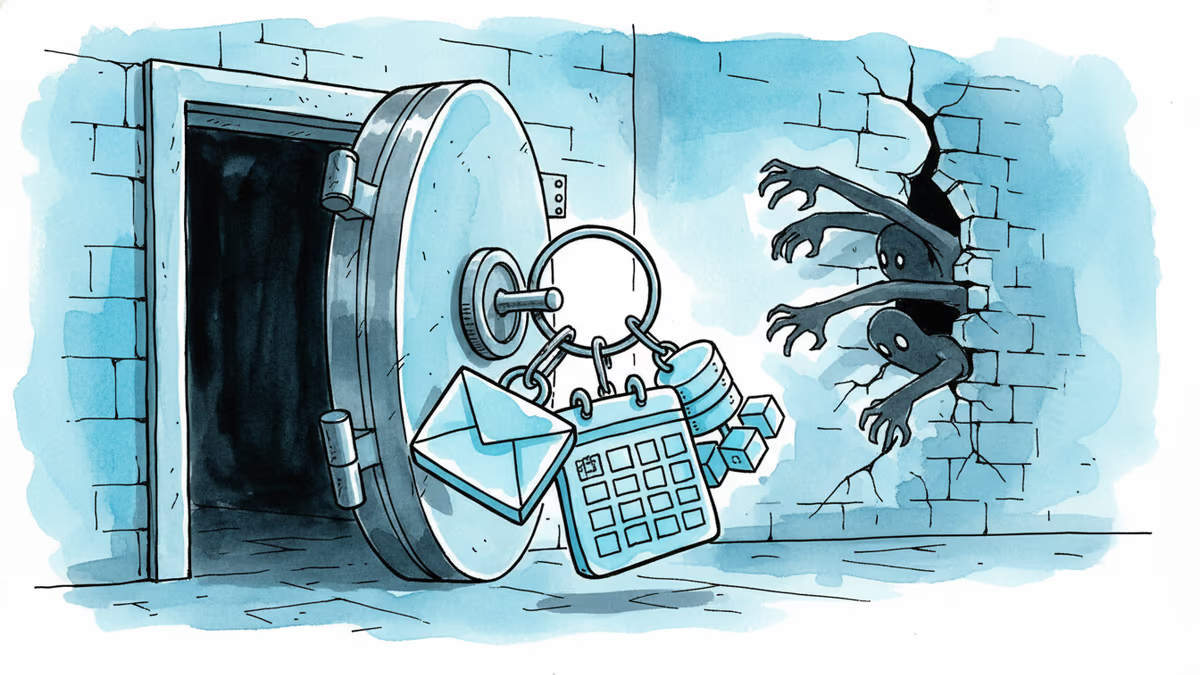
A critical vulnerability in Starlette—downloaded 325 million times per week—puts millions of AI agent servers at risk, exposing stored credentials for email, databases, and third-party services.
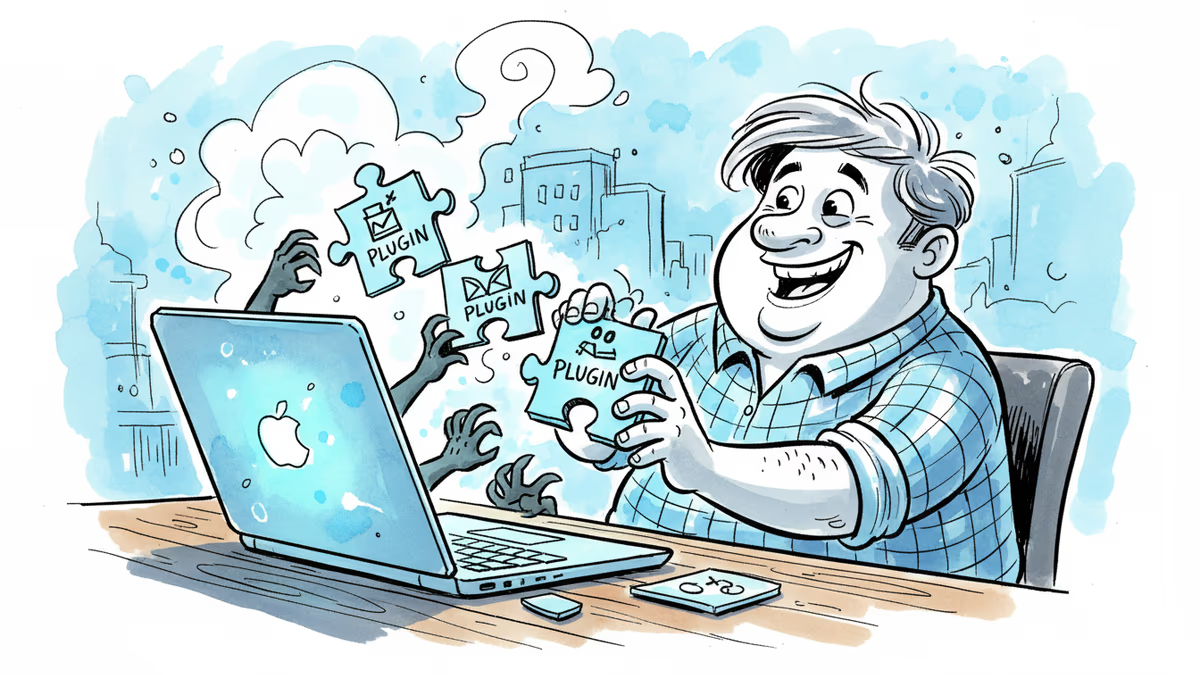
GitHub confirmed hackers stole data from 3,800 internal repositories via a poisoned VS Code extension. Here's why developer tools are now the most dangerous attack surface in tech.
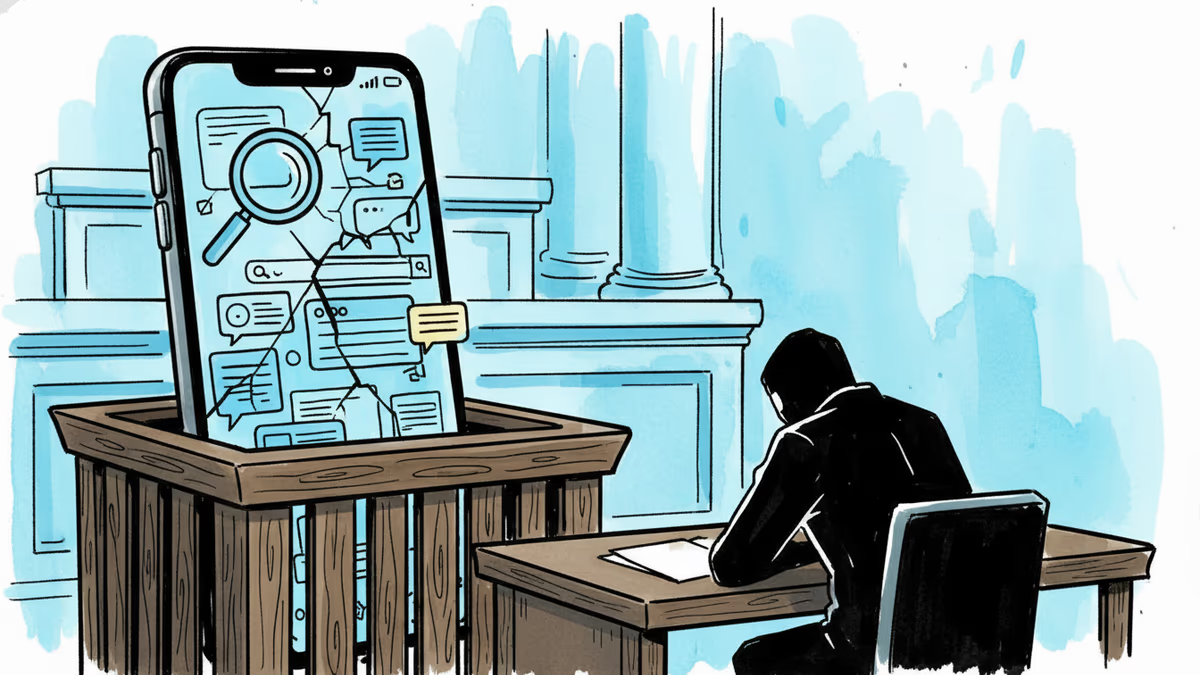
A Utah woman was sentenced to life in prison partly because of her Google searches and deleted texts. The Kouri Richins case reveals how digital footprints have become the courtroom's most reliable witness.
Dirty Frag gives low-privilege users root access on virtually every Linux distro. The exploit code leaked three days ago. Microsoft says attackers are already experimenting with it.
A critical vulnerability in Starlette—downloaded 325 million times per week—puts millions of AI agent servers at risk, exposing stored credentials for email, databases, and third-party services.
GitHub confirmed hackers stole data from 3,800 internal repositories via a poisoned VS Code extension. Here's why developer tools are now the most dangerous attack surface in tech.
A Utah woman was sentenced to life in prison partly because of her Google searches and deleted texts. The Kouri Richins case reveals how digital footprints have become the courtroom's most reliable witness.
Dirty Frag gives low-privilege users root access on virtually every Linux distro. The exploit code leaked three days ago. Microsoft says attackers are already experimenting with it.
Thoughts
Share your thoughts on this article
Sign in to join the conversation