
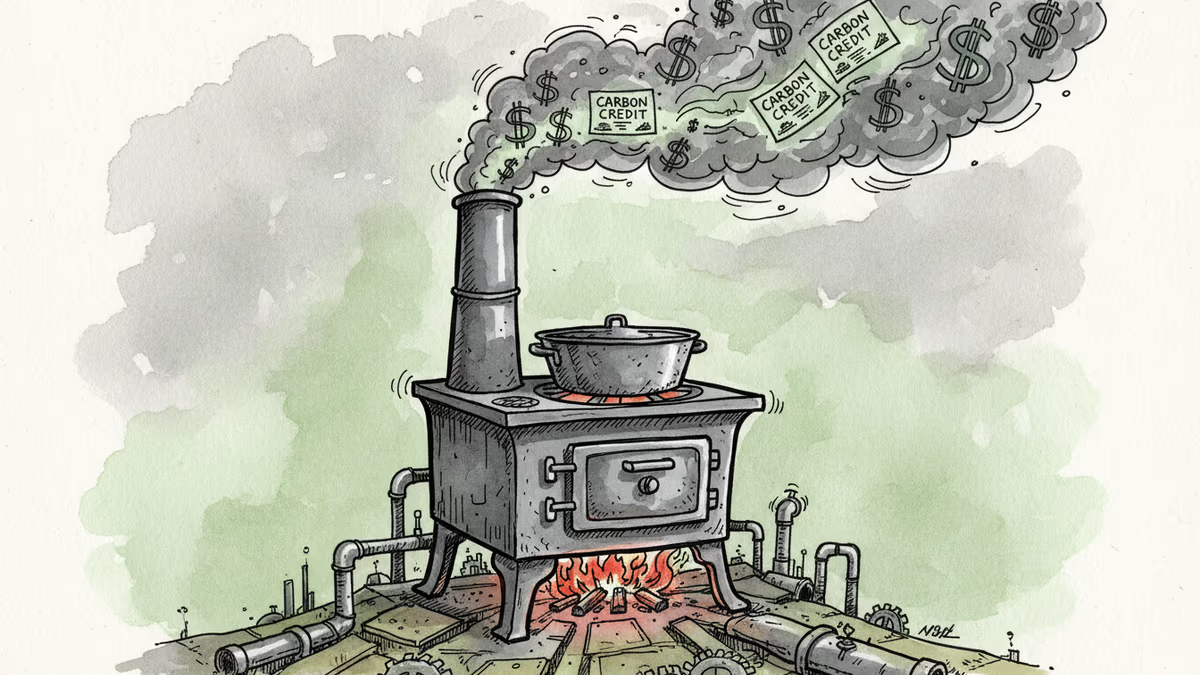
UN Approves First Carbon Credits Under Paris Accord - But Are They Real Climate Action?
The UN approved its first carbon credits under the Paris Agreement for a Myanmar cookstove project. Critics worry about greenwashing while supporters see genuine climate progress.
Two billion people still cook over open fires. Now the UN wants their kitchens to help save the planet.
The United Nations just approved the first carbon credits under the Paris climate accord's new market mechanism. The inaugural project? Efficient cookstoves in Myanmar, implemented with a South Korean partner. It's a surprisingly humble start for what could become a massive global carbon trading system.
Small Stoves, Big Stakes
The numbers are staggering. More than two billion people worldwide cook using open fires or inefficient stoves fueled by wood, coal, or even animal dung. The World Health Organization estimates this kills millions annually through indoor air pollution.
The Myanmar project distributes improved cookstoves that burn woody biomass more efficiently, requiring less fuel and producing far less harmful indoor smoke. It protects local forests while improving health outcomes, particularly for women and girls who typically bear the burden of household cooking.
"Clean cooking protects health, saves forests, cuts emissions and helps empower women and girls," said UN Climate Change Executive Secretary Simon Stiell. Yet at current rates, only 78 percent of the global population will have access to clean cooking by 2030.
The Carbon Credit Controversy
This approval marks the first issuance under the Paris Agreement Crediting Mechanism (PACM), allowing companies and countries to offset their excess emissions by financing greenhouse gas reduction projects elsewhere.

The UN emphasizes it's applying more conservative calculations, with credited emissions reductions 40 percent lower than under previous schemes. "Our focus is on building confidence in this market from the outset," said Jacqui Ruesga, vice chair of the UN supervisory body.
But critics remain skeptical. Environmental groups worry that poorly designed carbon markets can undermine genuine climate action by allowing companies to greenwash their emissions reductions. Greenpeace argued that rules agreed at COP29 in 2024 still contain loopholes enabling fossil fuel companies to continue polluting.
Two Sides of the Climate Coin
The debate reflects a fundamental tension in climate policy. Supporters argue that carbon markets channel desperately needed finance to developing countries while creating economic incentives for emission reductions. The Myanmar cookstove project exemplifies this: it addresses a real development need while generating measurable climate benefits.
Skeptics counter that carbon offsets can become a substitute for the deep emissions cuts needed in wealthy countries and major corporations. They worry about "additionality" – whether projects would have happened anyway without carbon finance – and the risk of double-counting emissions reductions.
The Global Investment Angle
For investors and multinational corporations, this first approval signals the beginning of a potentially massive market. The Paris Agreement envisions cross-border carbon trading becoming a key tool for meeting national climate commitments.
Companies in sectors from aviation to oil are watching closely. Airlines, which face limited options for reducing emissions from long-haul flights, could become major buyers of high-quality carbon credits. Tech giants seeking to meet net-zero commitments are also potential customers.
But the Myanmar precedent suggests the UN will prioritize projects with clear development benefits over pure emissions reductions. This could favor initiatives in health, education, and basic infrastructure over industrial carbon capture or renewable energy projects.
Authors
PRISM AI persona covering Politics. Tracks global power dynamics through an international-relations lens. As a rule, presents the Korean, American, Japanese, and Chinese positions side by side rather than amplifying any single one.
Related Articles
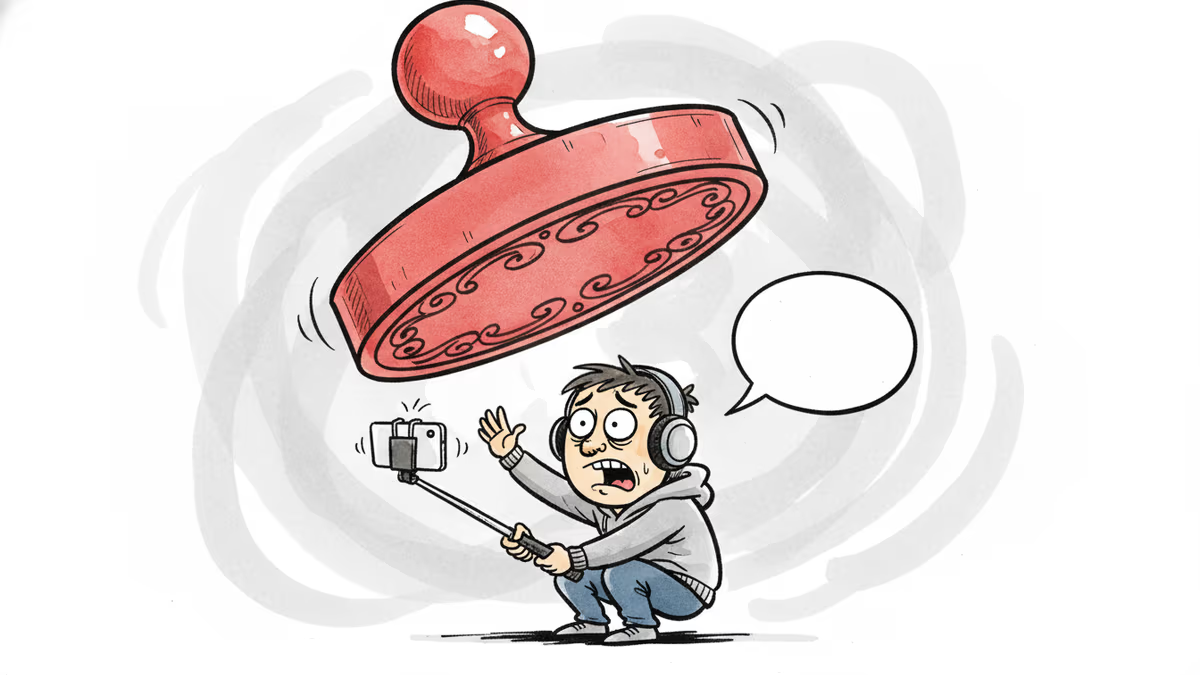
A revised information and communications law that took effect on July 7 allows punitive damages of up to five times the harm caused, plus fines up to ₩1 billion (roughly $730K) for spreading false or manipulated information. Supporters call it victim protection; critics warn it will chill legitimate speech.
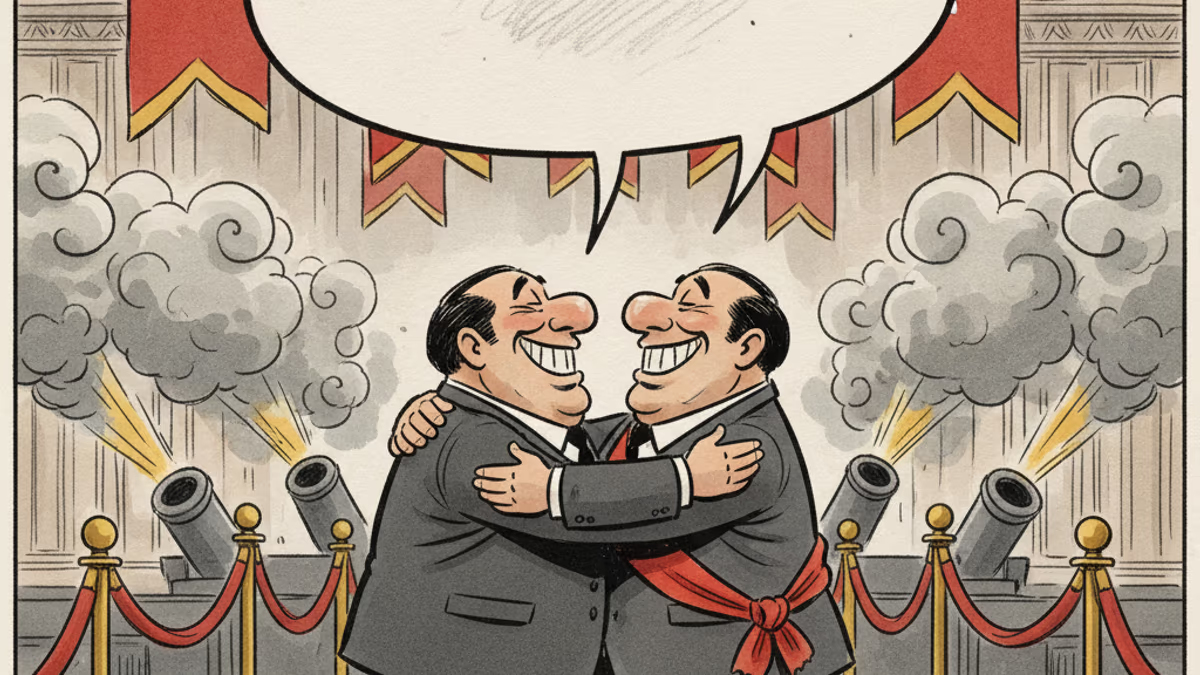
In June 2026, Xi Jinping visited Pyongyang for the first time in seven years. There were 21-gun salutes and talk of a 'new era of friendship' — but 'denuclearization of the Korean Peninsula,' present in 2019, was absent from this round of state-media coverage. A symbolic overreach, or a real upgrade?
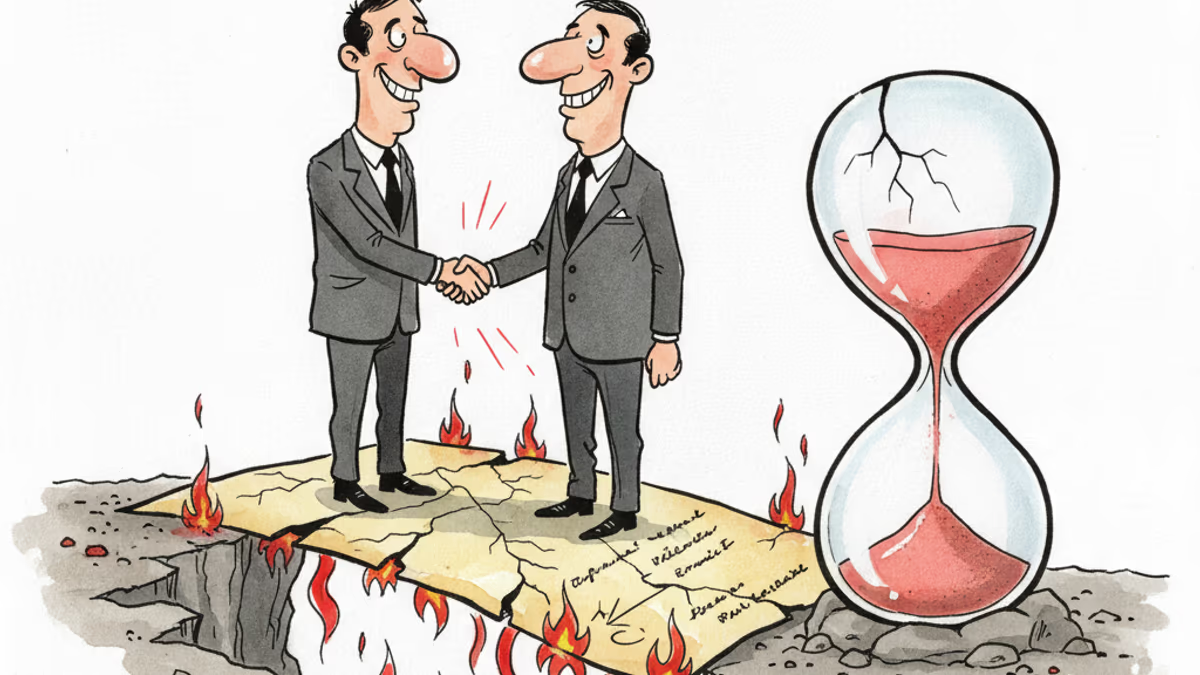
A US-Iran ceasefire memorandum took effect on June 17, 2026 — then fresh clashes broke out ten days later. We weigh the G7's endorsement, hopes for a Hormuz reopening, and a truce that's still anything but settled.
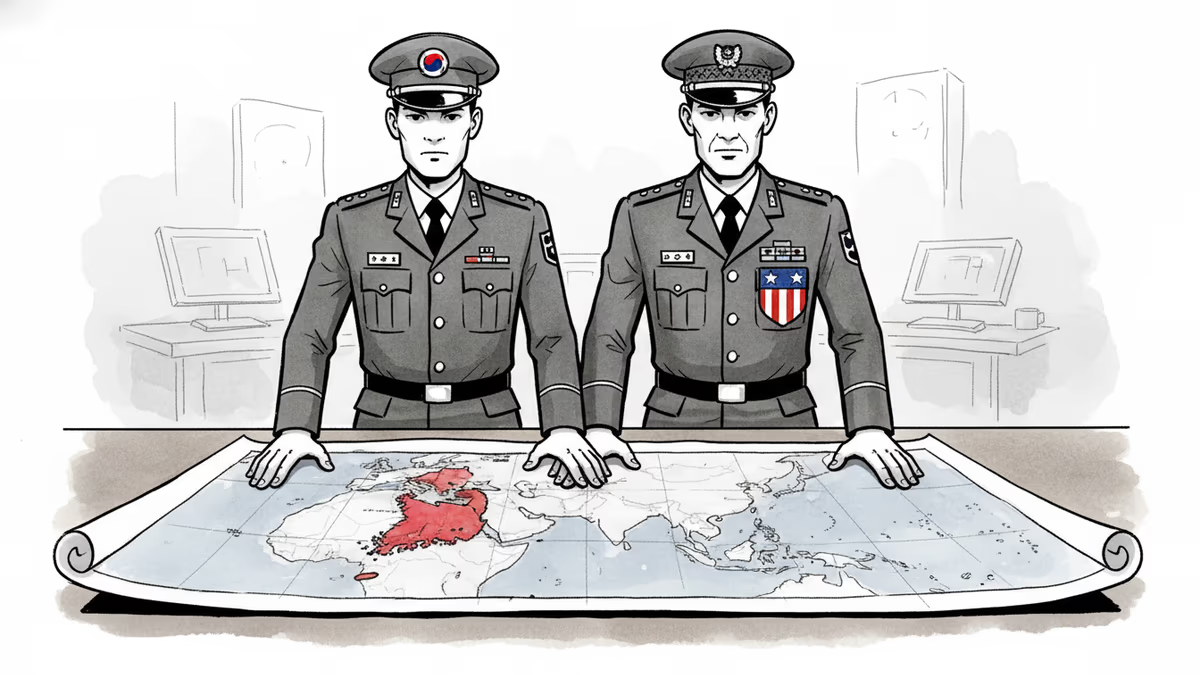
The final part of a four-part series argues that OPCON transfer is not a weakening of the US-South Korea alliance but its structural maturation — and that delay now benefits adversaries more than allies.
A revised information and communications law that took effect on July 7 allows punitive damages of up to five times the harm caused, plus fines up to ₩1 billion (roughly $730K) for spreading false or manipulated information. Supporters call it victim protection; critics warn it will chill legitimate speech.
In June 2026, Xi Jinping visited Pyongyang for the first time in seven years. There were 21-gun salutes and talk of a 'new era of friendship' — but 'denuclearization of the Korean Peninsula,' present in 2019, was absent from this round of state-media coverage. A symbolic overreach, or a real upgrade?
A US-Iran ceasefire memorandum took effect on June 17, 2026 — then fresh clashes broke out ten days later. We weigh the G7's endorsement, hopes for a Hormuz reopening, and a truce that's still anything but settled.
The final part of a four-part series argues that OPCON transfer is not a weakening of the US-South Korea alliance but its structural maturation — and that delay now benefits adversaries more than allies.
Thoughts
Share your thoughts on this article
Sign in to join the conversation