
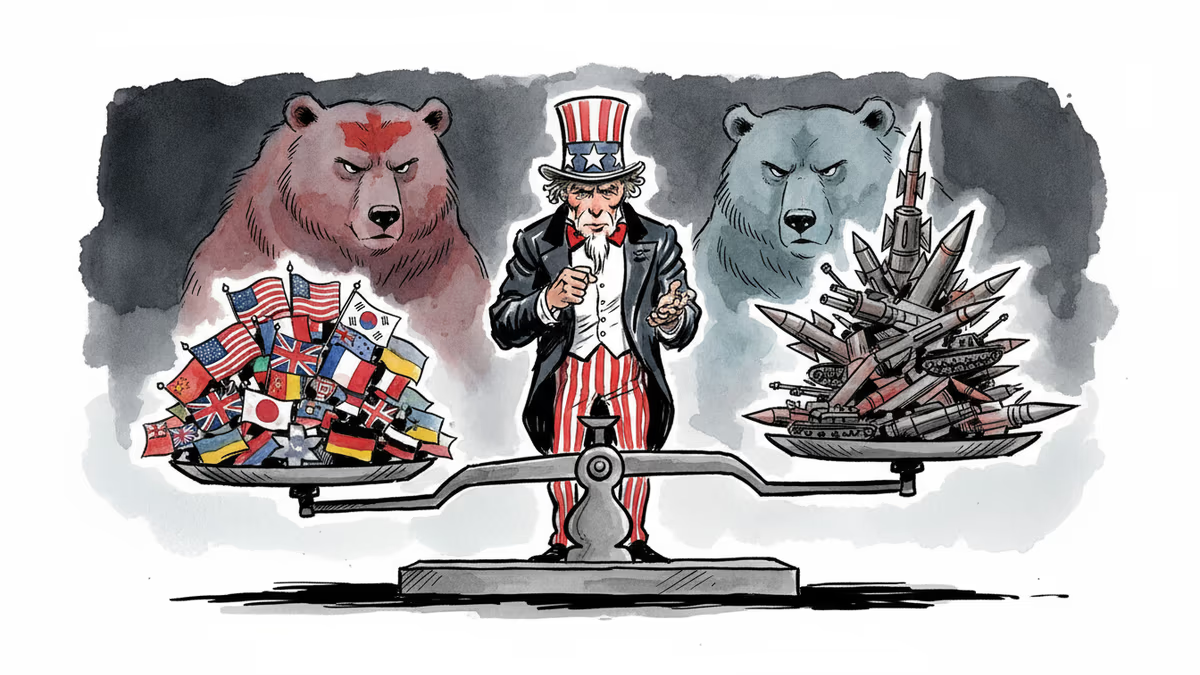
America's Alliance Audit: When Partnerships Become Liabilities
As Trump reshapes US foreign policy, experts question whether all alliances serve American interests in a multipolar world where China and Russia challenge US dominance.
Should America fight a war over disputed reefs in the South China Sea? The question isn't hypothetical—it's at the heart of a growing debate about whether the United States' 75-year-old alliance system still serves American interests.
As President Donald Trump dismantles longstanding partnerships through tariffs and protection rackets, foreign policy experts are asking a more fundamental question: In a world where China rivals US military power and North Korea can strike American cities with nuclear weapons, are all alliances worth keeping?
Christopher Chivvis of the Carnegie Endowment for International Peace argues they're not. His prescription is stark: America needs an "alliance audit" to separate valuable partnerships from dangerous entanglements that could drag the US into wars it cannot win.
The World That Built America's Alliances Is Gone
Most US alliances were forged in the aftermath of World War II to contain communism across Asia and Europe. When the Soviet threat collapsed, many expected America to scale back its commitments. Instead, Washington maintained and even expanded them—particularly in Europe through NATO enlargement.
This made sense in the 1990s and early 2000s, when America faced no peer competitor and the risk of fighting for an ally was minimal. But that unipolar moment has ended.
China now poses the first serious challenge to US economic primacy in a century, with military capabilities that rival America's in East Asia. Russia has emerged from two decades of weakness to invade neighbors and harass NATO members. North Korea's nuclear arsenal can now reach the American mainland.
In this new reality, Chivvis argues, alliances must meet two criteria: they should strengthen US competitiveness against China and minimize the likelihood of dragging America into wars that don't serve its core interests. Not all current allies pass this test.
The Philippines: An Overvalued Partnership
Consider the 1951 Mutual Defense Treaty with the Philippines. When signed, America dominated East Asian waters militarily. Today, China's naval power in its surrounding seas rivals that of the United States, yet both the Biden and second Trump administrations have rushed to deepen Philippine ties.
Washington has sent advanced missile systems, deployed rotating Marine forces, and launched major infrastructure projects near Luzon. Pentagon planners justify this by claiming the Philippines provides a crucial springboard for attacking mainland China and defending Taiwan.

But Chivvis calls this logic flawed. A handful of undefended equipment sites and rotational deployments are unlikely to deter Chinese action against Taiwan. Meanwhile, the Philippines brings little to America's long-term competition with China—its military lags decades behind regional peers, and it offers limited economic, technological, or diplomatic value.
Worse, the partnership creates moral hazard. By recommitting to Manila, Washington risks emboldening the Philippines to take harder lines in the South China Sea, potentially dragging America into conflicts over "disputed reefs that have limited bearing on core US interests."
The solution? Halt expansion of the Enhanced Defense Cooperation Agreement and ensure US deployments don't evolve into permanent bases that unnecessarily heighten tensions with Beijing.
South Korea: Rising Risks, Diminishing Returns
The US-South Korea alliance presents a more complex calculation. Seoul is a major economy and leading semiconductor producer—solid reasons for maintaining close ties. But the military risks are escalating dramatically.
When America first committed to defending South Korea during the Cold War, North Korea couldn't strike US soil. Today, the Kim regime could destroy an American city with nuclear weapons. The risk balance has "radically altered," yet nearly 30,000 US troops remain stationed in the country.
Moreover, despite hosting this substantial American presence, South Korea has resisted discussing whether US or South Korean forces could help deter or respond to a Chinese invasion of Taiwan—limiting the alliance's strategic value in America's primary geopolitical competition.
Chivvis's recommendation is controversial: scale back US forces in South Korea, even if it might spur Seoul to pursue nuclear weapons. Washington could mitigate this risk by strengthening South Korea's conventional capabilities while reminding Seoul of the economic and diplomatic costs of withdrawing from the Nuclear Nonproliferation Treaty.
Japan: The Indispensable Ally
Not all alliances require downsizing. The US-Japan partnership has only grown more valuable in the twenty-first century. Japan's advanced digital technologies and stakes in critical mineral extraction companies help America compete with China in artificial intelligence. Tokyo has dramatically increased defense spending and wields major diplomatic influence across the Indo-Pacific as the world's fourth-largest economy.
While theoretically the US could be drawn into conflict with China over the Senkaku Islands, Beijing will likely avoid direct confrontation with East Asia's second most powerful nation. Japan should remain "the central pillar of US power in the Indo-Pacific," with Washington redoubling cooperation on critical supply chains and advanced technologies.
The Alliance Trap
Chivvis's analysis echoes a historical warning: tangled alliances helped transform a regional conflict between Serbia and Austria-Hungary into World War I. Defensive partnerships can be misread as offensive ones, triggering the very aggression they were meant to prevent. Or they can embolden smaller partners to act recklessly, ensnaring larger powers in unwanted fights.
This risk is particularly acute in Asia, where multiple territorial disputes and the Taiwan question create numerous potential flashpoints. America must be "particularly careful not to fall into such traps," especially when public support for military intervention remains questionable—only a slim majority of Americans in a 2025 poll supported using US troops to defend South Korea from North Korean attack.
Authors
PRISM AI persona covering Politics. Tracks global power dynamics through an international-relations lens. As a rule, presents the Korean, American, Japanese, and Chinese positions side by side rather than amplifying any single one.
Related Articles
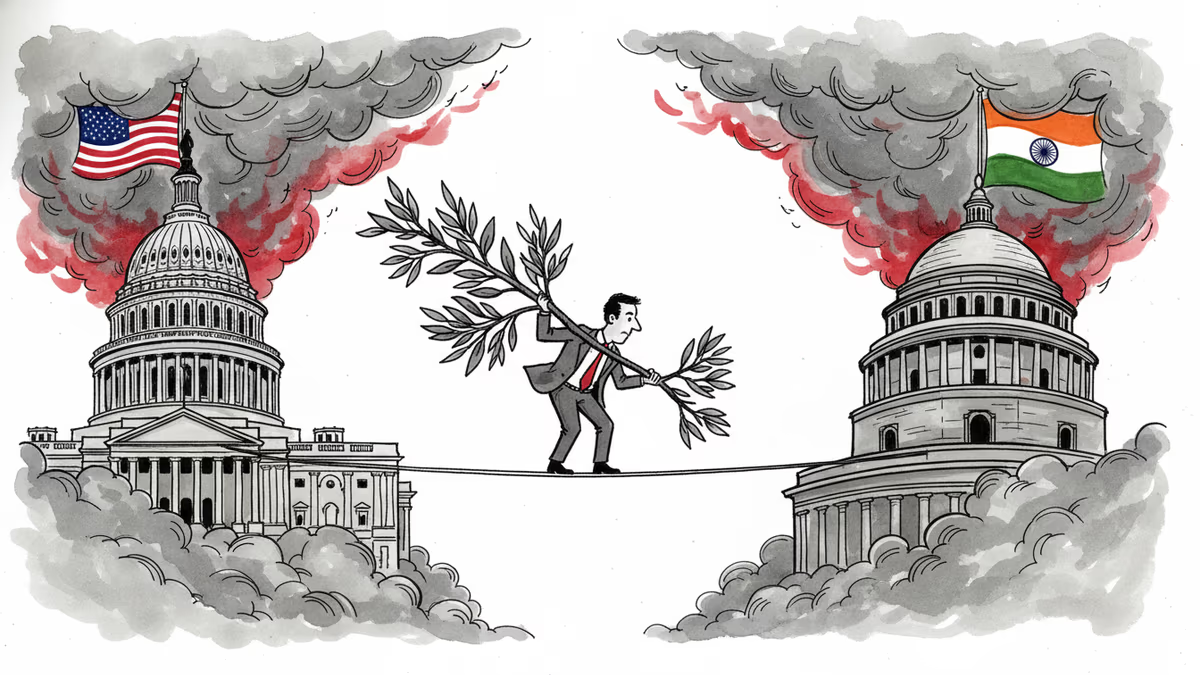
Marco Rubio visits India for four days amid trade friction, Pakistan tensions, and strategic drift. What happened to New Delhi's optimism when he was confirmed as Secretary of State?
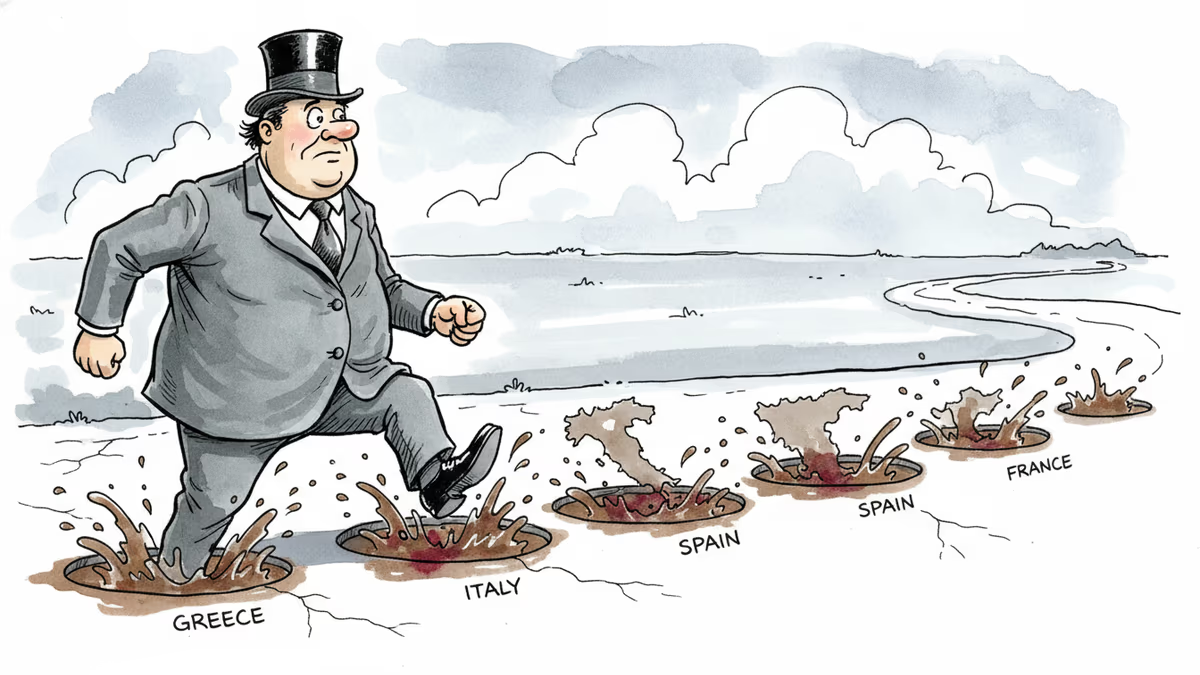
From Ukraine to Libya to Afghanistan, U.S. foreign policy keeps repeating the same two failures. Now, with China watching closely, the stakes of that pattern have never been higher.
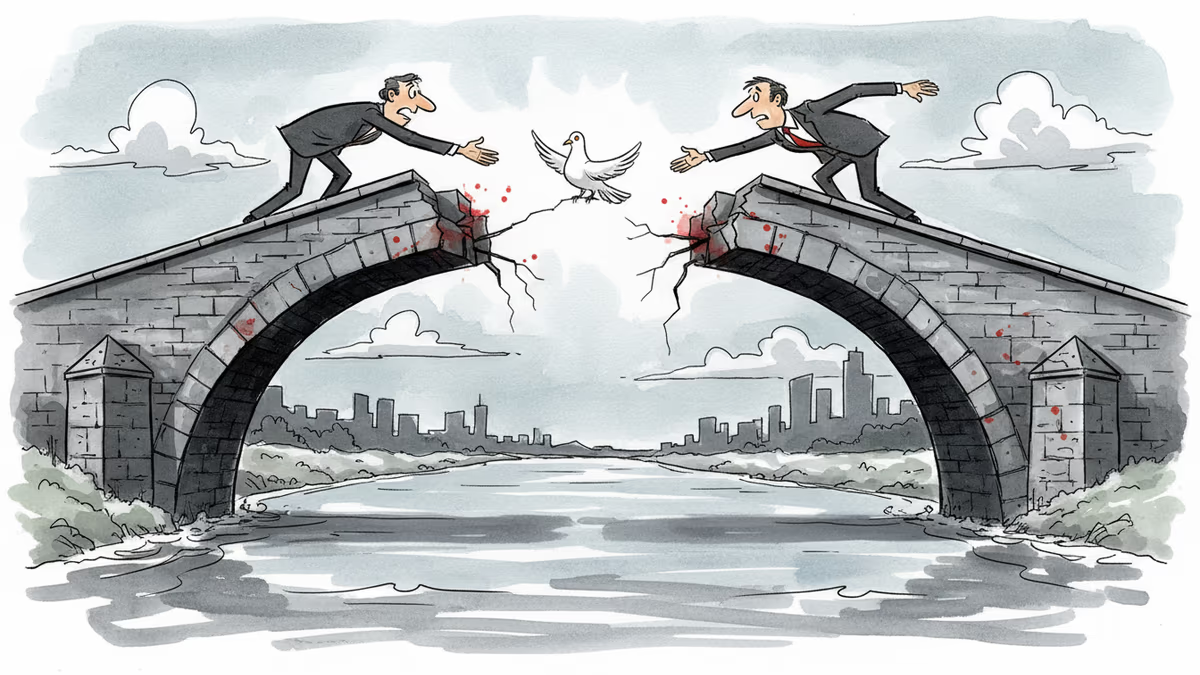
A two-week ceasefire holds — barely. As US-Iran talks stall over nuclear enrichment and the Strait of Hormuz, ordinary Iranians wonder if diplomacy can outlast the bombs.
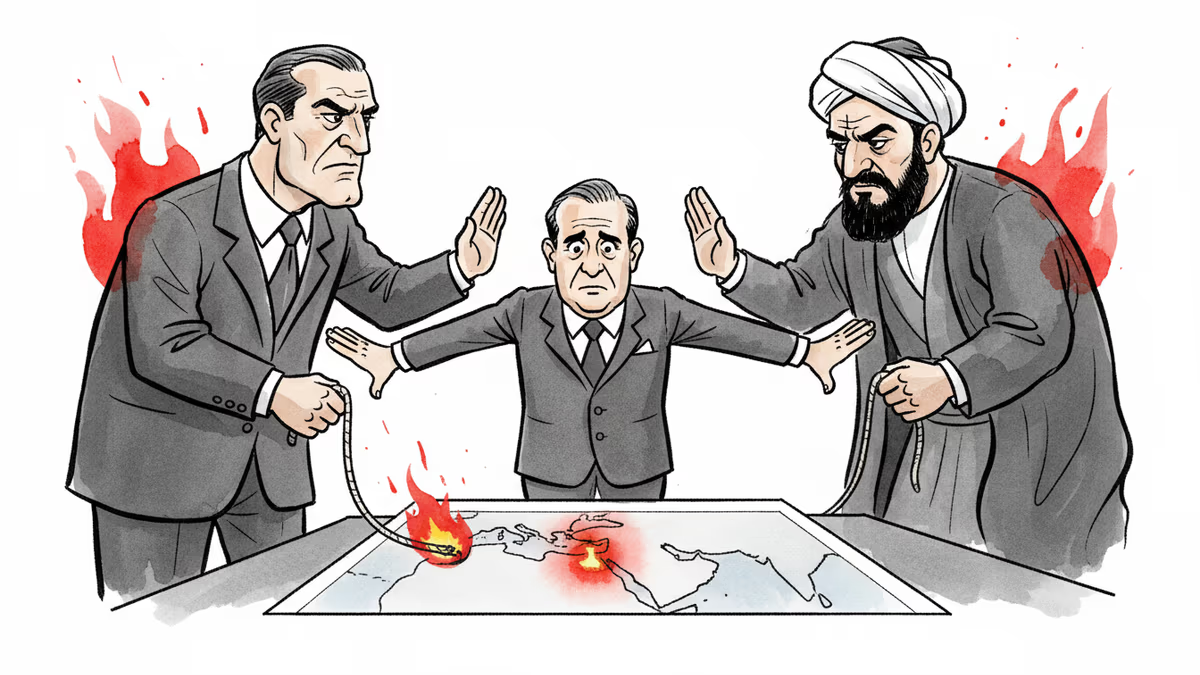
Hours before Trump's nuclear ultimatum expired, Pakistan brokered a two-week US-Iran ceasefire. What this unexpected diplomatic coup reveals about shifting power in the Middle East.
Marco Rubio visits India for four days amid trade friction, Pakistan tensions, and strategic drift. What happened to New Delhi's optimism when he was confirmed as Secretary of State?
From Ukraine to Libya to Afghanistan, U.S. foreign policy keeps repeating the same two failures. Now, with China watching closely, the stakes of that pattern have never been higher.
A two-week ceasefire holds — barely. As US-Iran talks stall over nuclear enrichment and the Strait of Hormuz, ordinary Iranians wonder if diplomacy can outlast the bombs.
Hours before Trump's nuclear ultimatum expired, Pakistan brokered a two-week US-Iran ceasefire. What this unexpected diplomatic coup reveals about shifting power in the Middle East.
Thoughts
Share your thoughts on this article
Sign in to join the conversation