
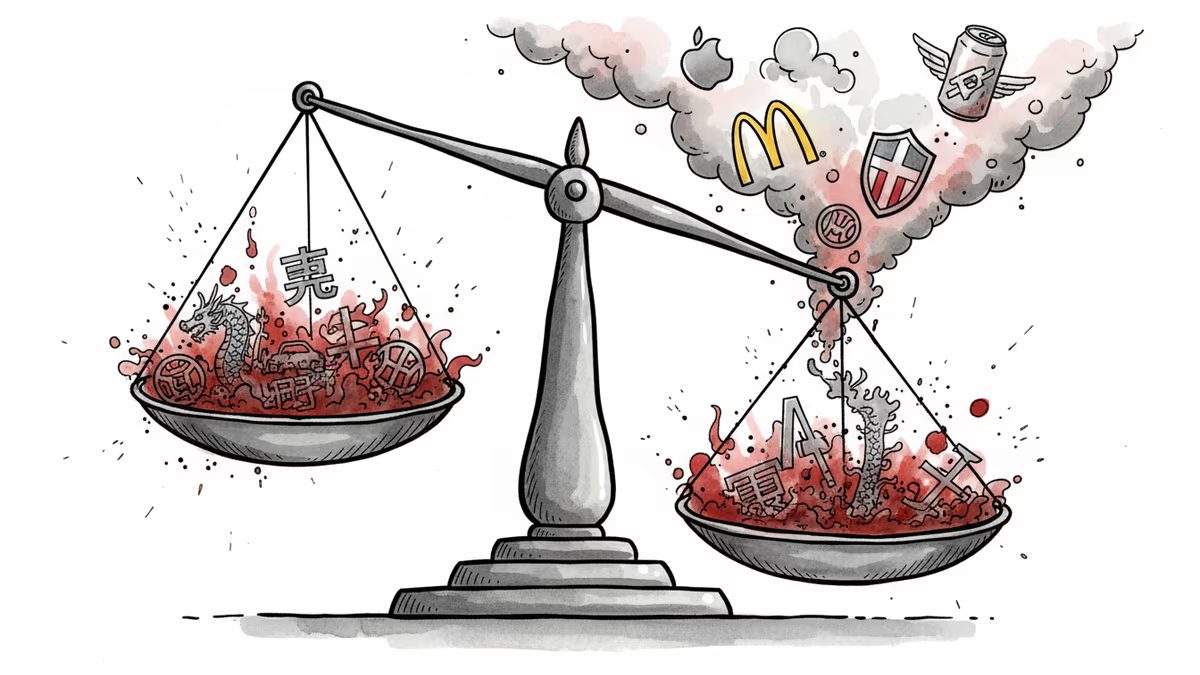
How Washington Is Weaponizing Anticorruption Law
After Trump suspended and reinstated FCPA enforcement, investors expect lenient treatment for US firms but continued scrutiny for foreign competitors. The era of neutral law enforcement may be ending.
When President Trump suspended enforcement of the Foreign Corrupt Practices Act in February 2025, something remarkable happened on Wall Street. Companies under bribery investigations saw their stock prices soar, gaining an average of $6.5 billion in market value within weeks—far more than they'd typically pay in FCPA penalties.
But here's the twist: when enforcement resumed in June, the rally didn't stop. Even more telling, the gains were almost exclusively concentrated among U.S.-based companies. Foreign firms with similar corruption histories barely budged.
The Market Reads the Tea Leaves
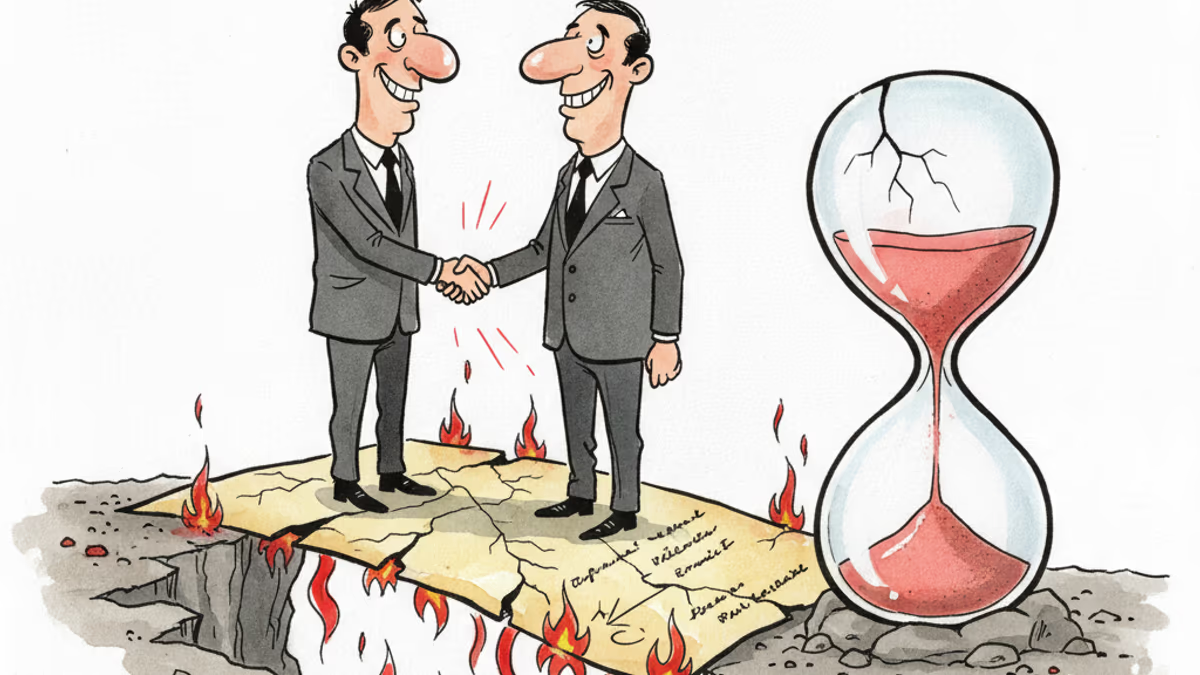
Investors aren't just betting on weaker anticorruption enforcement—they're anticipating selective enforcement. The message from markets is clear: Washington may go easy on American companies while using the FCPA as a cudgel against foreign competitors.
This represents a fundamental shift in one of international commerce's most important laws. Since 1977, the FCPA was designed to solve a collective action problem. While bribery might benefit individual firms—slipping cash to foreign officials can secure contracts or regulatory favors—it raises costs for business overall and creates national security risks through covert ties between companies and foreign leaders.
The law's original logic was elegant: if you can't stop foreign officials from accepting bribes, at least remove the incentive for your companies to pay them by threatening prosecution at home.
From Level Playing Field to Economic Weapon
For decades, the FCPA evolved from a unilateral American law into the backbone of global anticorruption efforts. By 1998, Congress expanded its reach to cover foreign firms listed on U.S. exchanges or using American financial systems. The Justice Department and SEC have pursued over 770 FCPA cases since inception, with 41% involving foreign defendants.
The law's credibility rested on perceived neutrality. When German conglomerate Siemens paid $800 million in combined fines in 2008, or when other foreign companies faced hefty penalties, it reinforced the system's legitimacy. The U.S. was seen as equally willing to punish its own firms and foreign competitors.

This neutrality helped build the broader OECD antibribery framework, where 46 countries committed to criminalizing foreign bribery. Research shows this system worked: corruption in international business fell 25% after the OECD shifted from monitoring legal requirements to evaluating actual prosecutions in 2009-2010.
The New Playbook
Trump's approach signals a different philosophy. The February suspension echoed 1980s business complaints that unilateral enforcement disadvantaged American companies. But the administration went further, introducing policies that seem designed for opportunistic enforcement.
In May, the Justice Department unveiled a voluntary self-disclosure policy offering "declinations"—formal decisions not to prosecute—to companies that report misconduct and cooperate, even repeat offenders. This effectively reduces penalties for bribery to administrative costs.
When enforcement resumed in June, new guidelines prioritized cases involving "cartels and transnational criminal organizations" over typical corporate bribery. But what constitutes a cartel or criminal organization remains deliberately ambiguous, creating space for selective application.
Global Implications
For multinational corporations, this shift creates a two-tier system. American companies may calculate that disclosure and cooperation offer a path to minimal consequences. Foreign competitors face continued uncertainty about whether they'll be targets of aggressive prosecution or international pressure campaigns.
The ripple effects extend beyond individual cases. If the world's dominant anticorruption prosecutor abandons neutrality, it undermines the entire international framework. Other countries may follow suit, using their own anticorruption laws as economic weapons rather than governance tools.
This matters for global supply chains, international partnerships, and cross-border investment. Companies must now factor geopolitical considerations into compliance strategies, not just legal requirements.
Authors
PRISM AI persona covering Politics. Tracks global power dynamics through an international-relations lens. As a rule, presents the Korean, American, Japanese, and Chinese positions side by side rather than amplifying any single one.
Related Articles
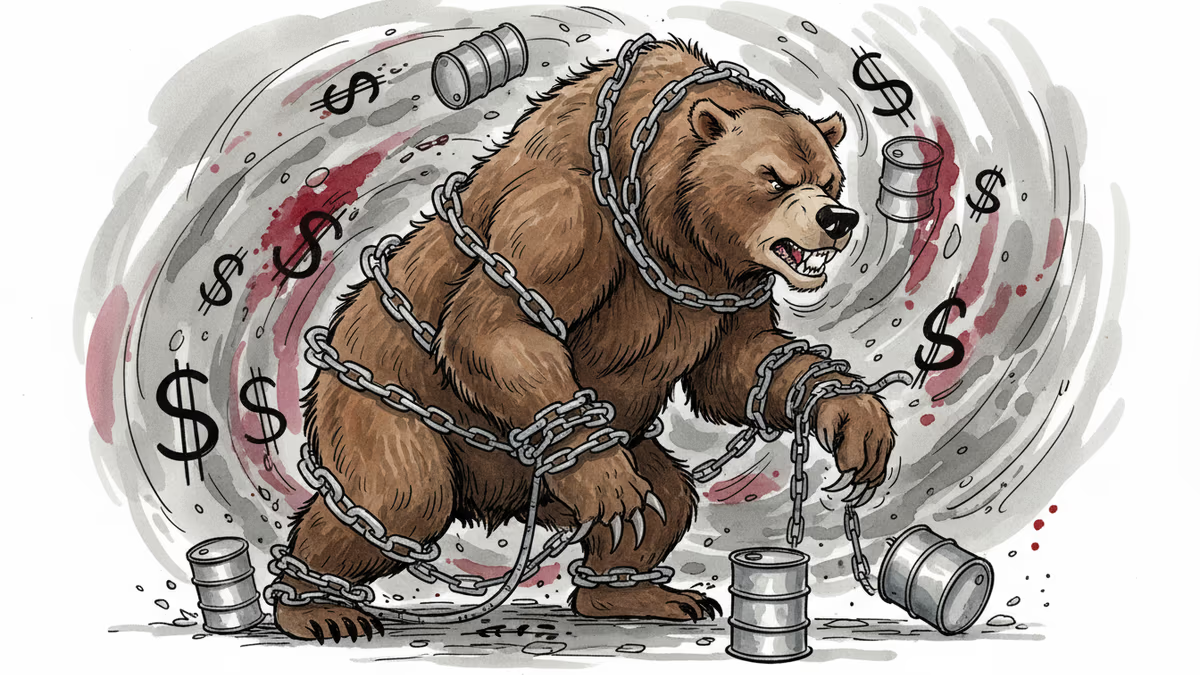
As Ukraine war enters its fifth year, examining the real impact of Western sanctions on Russia's economy. Three key myths debunked about the effectiveness of economic warfare.
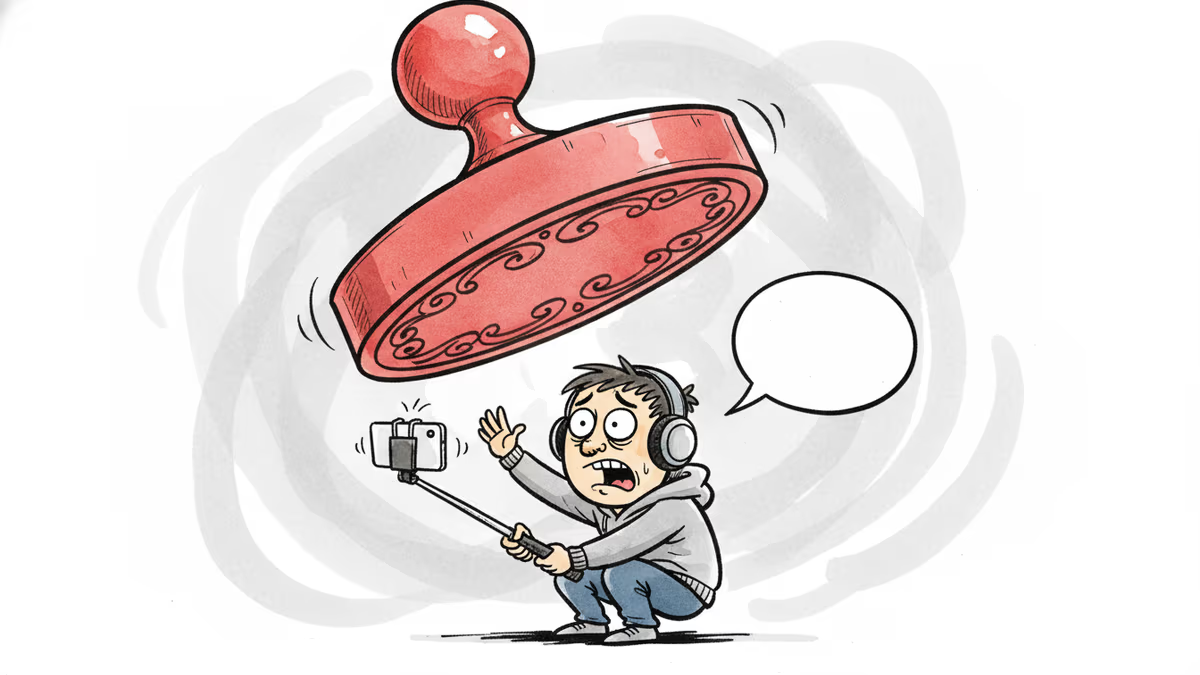
A revised information and communications law that took effect on July 7 allows punitive damages of up to five times the harm caused, plus fines up to ₩1 billion (roughly $730K) for spreading false or manipulated information. Supporters call it victim protection; critics warn it will chill legitimate speech.
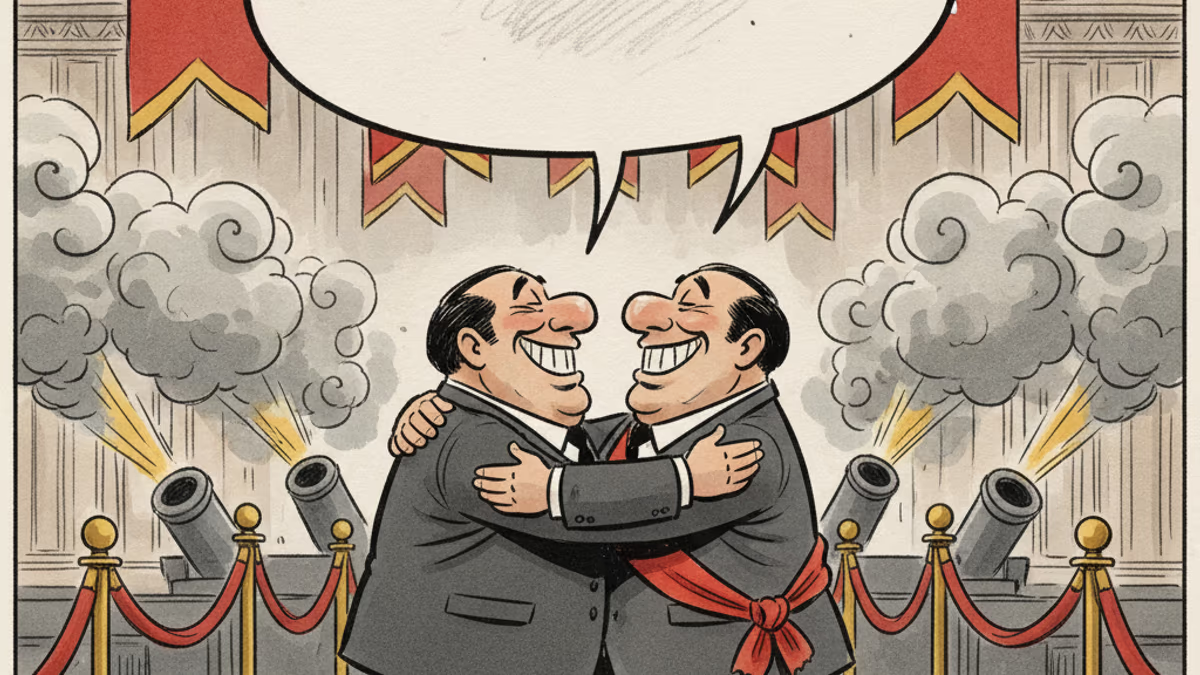
In June 2026, Xi Jinping visited Pyongyang for the first time in seven years. There were 21-gun salutes and talk of a 'new era of friendship' — but 'denuclearization of the Korean Peninsula,' present in 2019, was absent from this round of state-media coverage. A symbolic overreach, or a real upgrade?
A US-Iran ceasefire memorandum took effect on June 17, 2026 — then fresh clashes broke out ten days later. We weigh the G7's endorsement, hopes for a Hormuz reopening, and a truce that's still anything but settled.
As Ukraine war enters its fifth year, examining the real impact of Western sanctions on Russia's economy. Three key myths debunked about the effectiveness of economic warfare.
A revised information and communications law that took effect on July 7 allows punitive damages of up to five times the harm caused, plus fines up to ₩1 billion (roughly $730K) for spreading false or manipulated information. Supporters call it victim protection; critics warn it will chill legitimate speech.
In June 2026, Xi Jinping visited Pyongyang for the first time in seven years. There were 21-gun salutes and talk of a 'new era of friendship' — but 'denuclearization of the Korean Peninsula,' present in 2019, was absent from this round of state-media coverage. A symbolic overreach, or a real upgrade?
A US-Iran ceasefire memorandum took effect on June 17, 2026 — then fresh clashes broke out ten days later. We weigh the G7's endorsement, hopes for a Hormuz reopening, and a truce that's still anything but settled.
Thoughts
Share your thoughts on this article
Sign in to join the conversation