

Apple vs Camera App Maker: When Platforms Become Competitors
Reincubate's lawsuit against Apple over Continuity Camera highlights the thorny issue of platform giants copying third-party innovations.
When Camo launched in 2020, it solved a real problem: turning your smartphone into a high-quality webcam for your computer. The app gained traction among remote workers and content creators who needed better video quality than their laptop's built-in camera could provide.
Then two years later, Apple launched Continuity Camera – essentially the same feature, but baked directly into iOS. Now Reincubate, the company behind Camo, is fighting back with a lawsuit alleging anticompetitive conduct and patent infringement.
The Core Allegation
Reincubate claims Apple didn't just copy the technology – it "used its control over its operating systems and App Store to disadvantage that interoperable solution and redirect user demand to Apple's own platform-tied offering."
The twist? Camo was reportedly used by thousands of Apple employees before the company launched its competing feature. Apple had front-row seats to see how valuable this technology could be.
While Camo works across iOS, Android, Mac, and PC, Apple's Continuity Camera only works within Apple's ecosystem. It's more limited but comes with a crucial advantage: it's built right into the operating system.
The Platform Dilemma
This case highlights a fundamental tension in the platform economy. Should tech giants observe third-party innovations and then integrate the best ideas into their core products? Or does this stifle innovation by making developers reluctant to build on these platforms?

From Apple's perspective, integrating popular features improves user experience. Users get functionality without downloading separate apps, and everything works seamlessly within Apple's ecosystem.
But from developers' viewpoint, it's like playing a game where the referee can suddenly decide to join the opposing team. They pay App Store fees, follow Apple's rules, and compete for attention – only to potentially face Apple as a direct competitor.
Regulatory Scrutiny
This lawsuit arrives as regulators worldwide are scrutinizing big tech platforms more closely. The EU's Digital Markets Act already restricts some of these practices, and the US Department of Justice has its own ongoing antitrust case against Apple.
What makes Reincubate's case particularly interesting is the patent infringement claim. They're not just arguing Apple copied their idea – they're claiming Apple infringed on specific technical implementations.
The outcome could influence how platforms approach third-party innovation. Will they become more cautious about integrating popular features? Or will they find new ways to justify such moves?
The Innovation Paradox
This case exemplifies a broader challenge in the tech industry. Platforms need third-party developers to create valuable ecosystems, but successful third-party innovations often become targets for platform integration.
Some argue this drives innovation by creating opportunities for developers to build, prove concepts, and potentially get acquired. Others contend it creates a chilling effect where developers avoid building on platforms that might later compete with them.
Authors
Related Articles
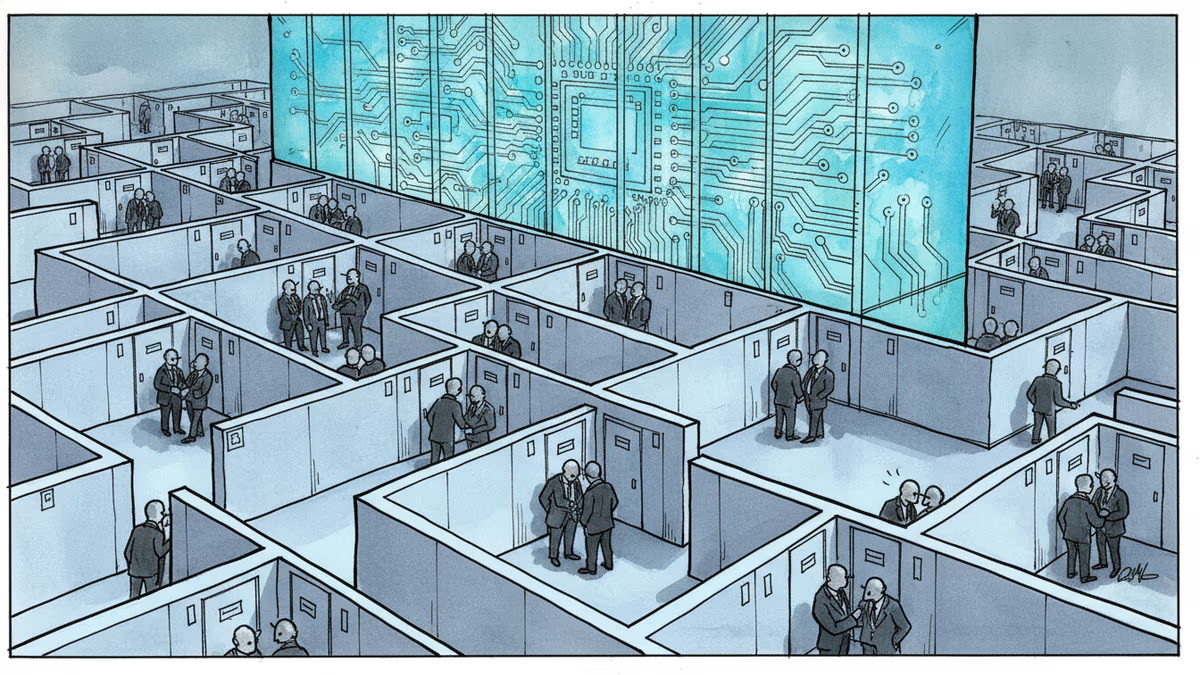
Behind every congressional hearing on Big Tech, there's a quieter room where the real rules get negotiated. As AI regulation, antitrust battles, and privacy law converge on Capitol Hill in 2026, the stakes have never been higher.
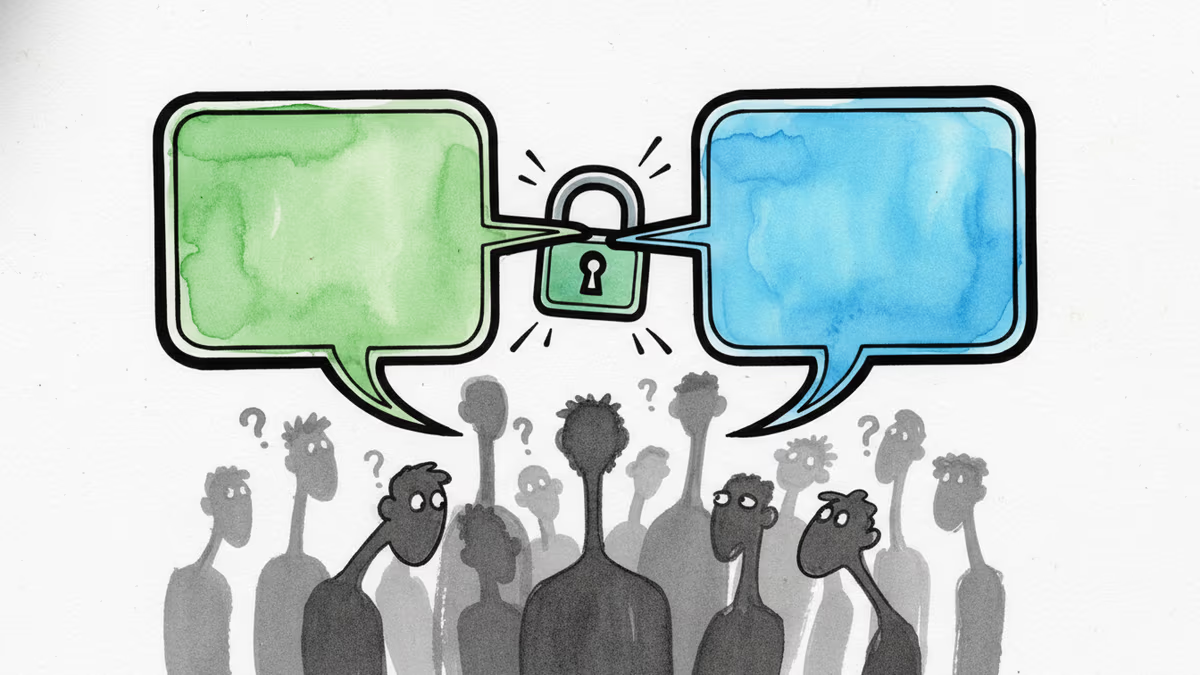
After 15 years of fragmented mobile messaging, Apple and Google are rolling out end-to-end encrypted RCS messaging between iPhones and Android devices. Here's what changed, why it took so long, and what it means for your privacy.
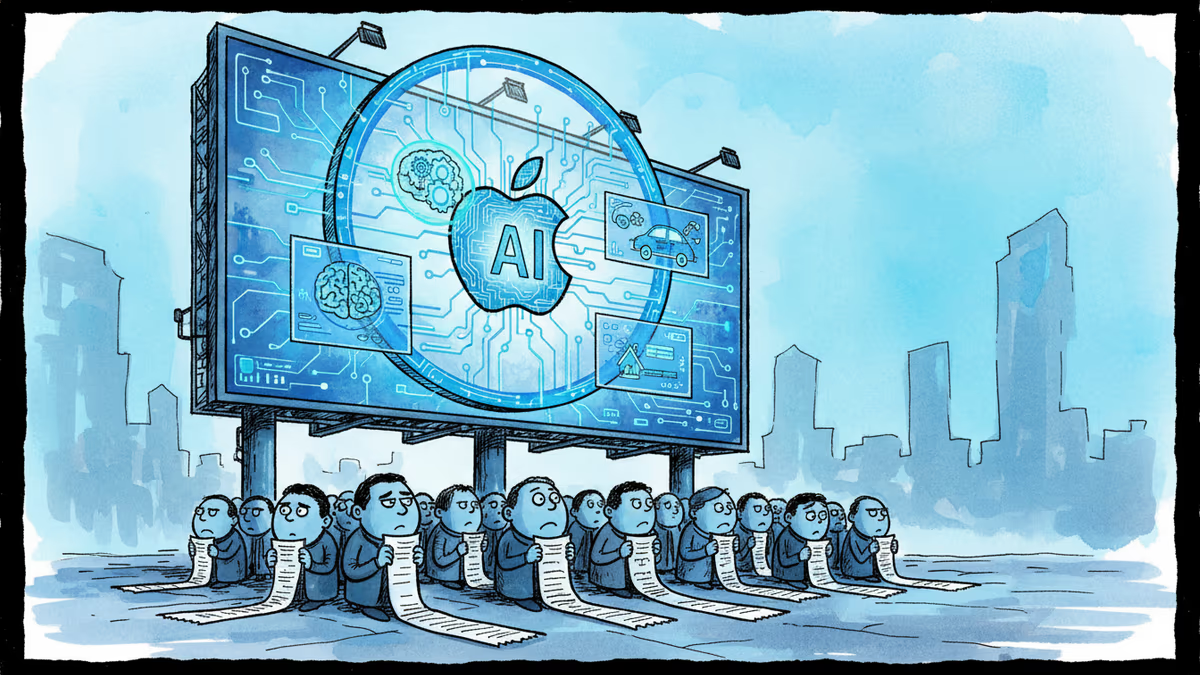
Apple agreed to pay $250 million to settle claims it misled iPhone 16 buyers about Apple Intelligence features. What this means for consumers, Big Tech marketing, and the AI industry.
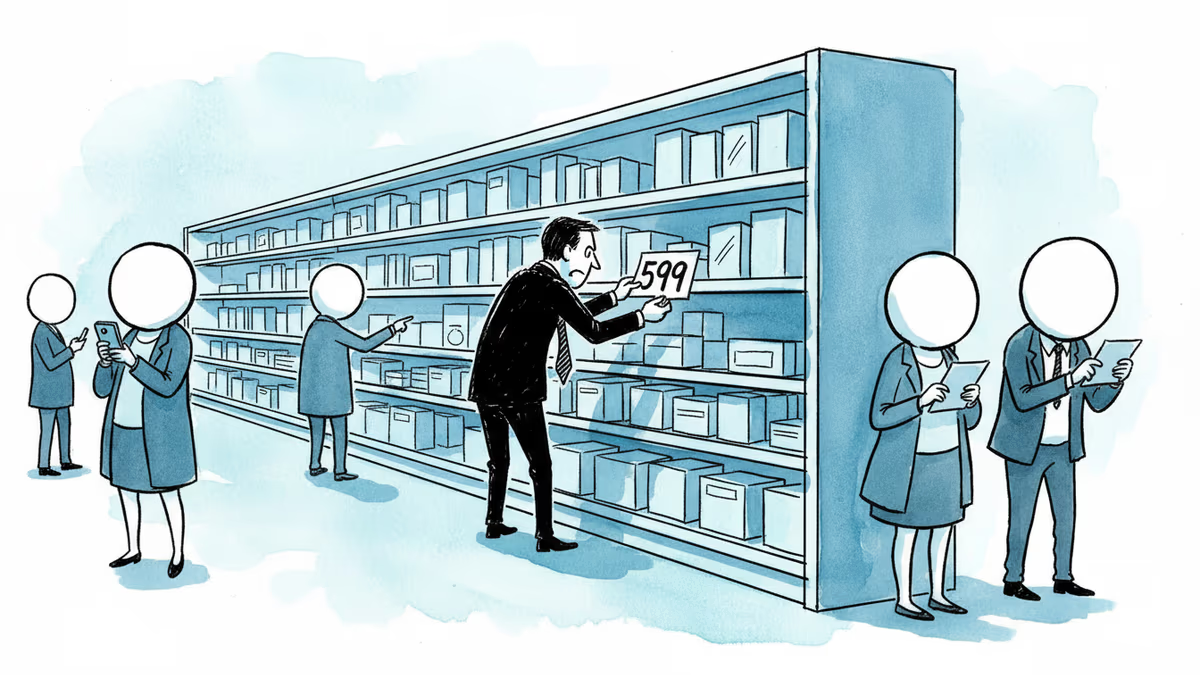
Apple quietly removed the entry-level $599 Mac Mini, raising the starting price to $799 — just one day after Tim Cook warned of chip supply constraints on the earnings call.
Behind every congressional hearing on Big Tech, there's a quieter room where the real rules get negotiated. As AI regulation, antitrust battles, and privacy law converge on Capitol Hill in 2026, the stakes have never been higher.
After 15 years of fragmented mobile messaging, Apple and Google are rolling out end-to-end encrypted RCS messaging between iPhones and Android devices. Here's what changed, why it took so long, and what it means for your privacy.
Apple agreed to pay $250 million to settle claims it misled iPhone 16 buyers about Apple Intelligence features. What this means for consumers, Big Tech marketing, and the AI industry.
Apple quietly removed the entry-level $599 Mac Mini, raising the starting price to $799 — just one day after Tim Cook warned of chip supply constraints on the earnings call.
Thoughts
Share your thoughts on this article
Sign in to join the conversation