
When Humans Step Back From Drone Racing
Anduril's AI Grand Prix isn't just a recruitment event. It's a preview of how autonomous weapons will reshape both warfare and the talent wars.
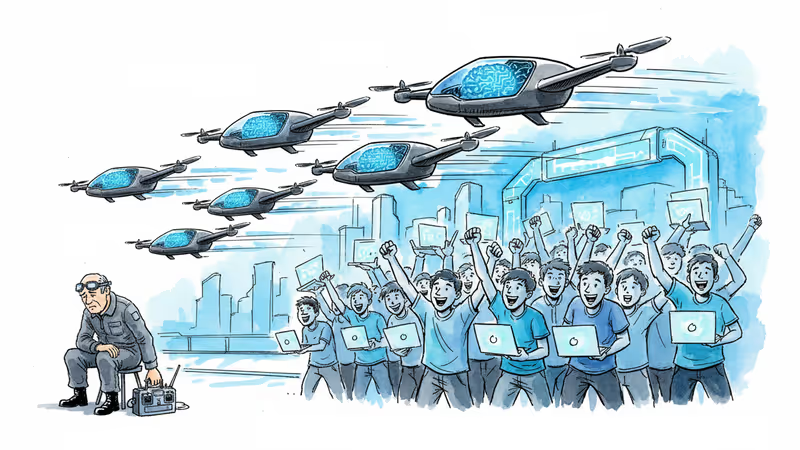
Drones race through the sky without pilots. Humans stand on the ground, fingers dancing across keyboards. This is Palmer Luckey's vision of future warfare—and the scene his company Anduril will create at this November's AI Grand Prix.
It's Recruiting, Not Racing
"When someone suggested sponsoring a drone racing tournament, I said, 'Guys, that would be a really dumb thing for Anduril to sponsor,'" Luckey told TechCrunch. His logic was crystal clear: if Anduril's entire pitch is that "autonomy has finally advanced to where you don't have to have a person micromanaging each drone," why sponsor human-piloted racing?
Instead, he proposed a competition testing how well programmers and engineers can make drones fly themselves. When they discovered no such event existed, Anduril decided to create it.
The prize pool? $500,000. But the real reward is different: winning teams get job offers at Anduril and can bypass the company's standard recruiting cycle. Luckey expects at least 50 teams, with multiple universities already showing interest.
The Hardware Genius's Software Thirst
Ironically, Luckey himself won't compete. "I'm not actually a very good software programmer," he admits candidly. "I'm more of a hardware guy. I'm an electromechanical and optical guy, and I know just enough about coding to glue stuff together in a way that works for my prototypes."
For the Oculus founder and father of the VR revolution to reveal this weakness is telling. He calls Anduril CEO Brian Schimpf "our de facto lead software brains," understanding better than most that future warfare belongs to code, not hardware.
The drones used won't even be Anduril's. Teams will fly machines built by another defense startup, Neros Technologies. Anduril's drones are "too physically big to run in the contained course in Ohio," Luckey explains.

China Yes, Russia No
The competition is open internationally—except to Russia. "Russia is actively engaged in the act of invading Europe," Luckey states, following the World Cup's lead in excluding Russian participants.
Chinese teams, however, are welcome despite China being the country "U.S. autonomous weapons hawks often name as their biggest fear." Of course, winning Chinese participants won't automatically land Anduril jobs. "If you work for the Chinese military, you're not going to be allowed to get a job at Anduril," Luckey clarifies. Certain laws apply.
From Sea to Space
If successful, the competition will expand beyond quadcopters. Underwater AI racing, ground AI racing, even spacecraft AI racing are on Luckey's wishlist. Three qualifying rounds begin in April, leading to November finals in Ohio—where Anduril's key manufacturing facility operates.
The location isn't coincidental. JobsOhio, the state's economic development arm, is a partner, making this as much about regional talent development as corporate recruitment.
Beyond the Spectacle
This isn't just about finding programmers. It's about normalizing autonomous warfare. By gamifying the technology that powers lethal autonomous weapons, Anduril is cultivating the next generation of defense engineers while desensitizing audiences to machines making life-and-death decisions.
The competition also reveals the defense industry's talent shortage. Traditional recruiting methods aren't attracting the software engineers needed for autonomous systems. Gamification might be the answer—turning military contractors into the cool kids' table of tech.
Authors
Related Articles

Scout AI raised $100M to build autonomous military vehicles and weapons drones powered by a model called Fury. As AI moves from the highway to the battlefield, the real question isn't whether it can fight—it's who's responsible when it gets it wrong.
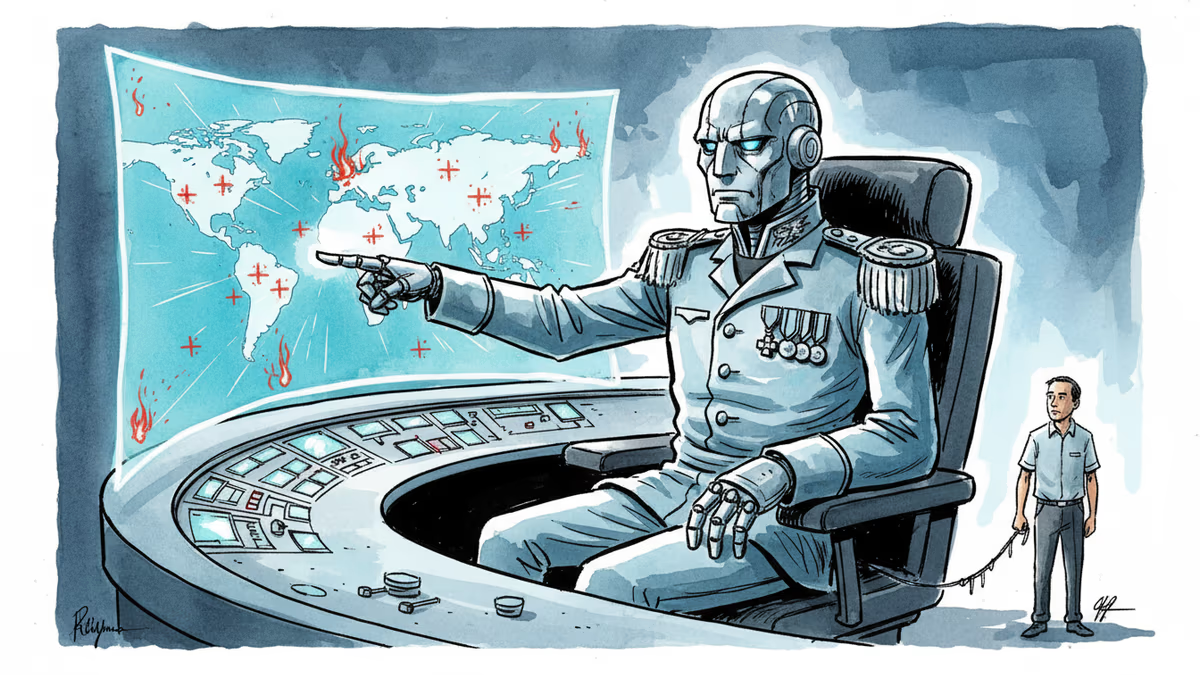
Anthropic's Claude AI is embedded in US military operations—from the capture of Maduro to the Iran war. A Pentagon dispute is exposing what "responsible AI" actually means in wartime.
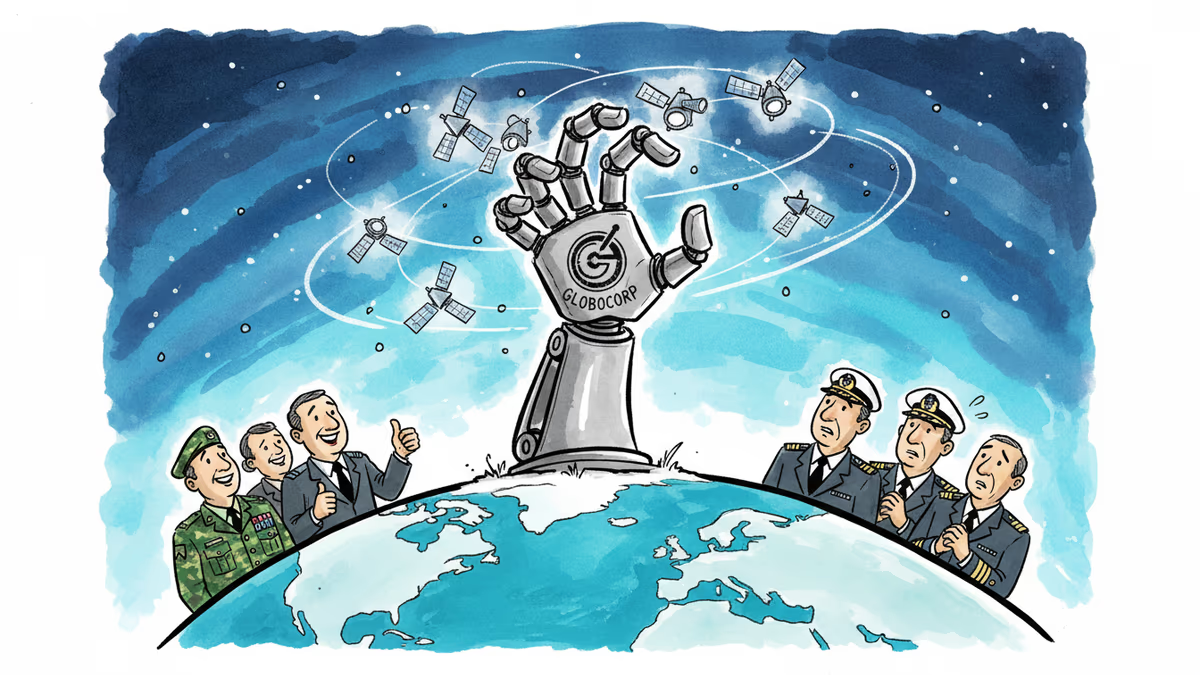
Anduril Industries acquires ExoAnalytic Solutions and its 400-telescope global network. As private firms take over space domain awareness, who really controls the eyes watching the skies?
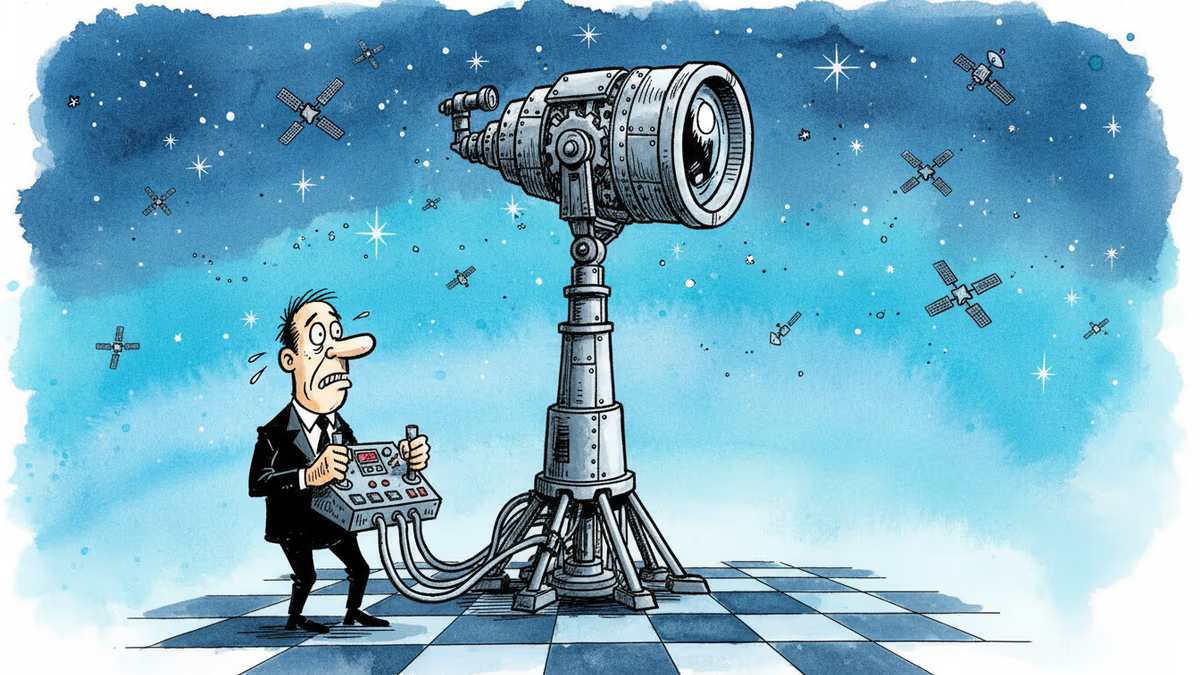
Anduril's acquisition of ExoAnalytic Solutions — the world's largest commercial telescope network — signals a fundamental shift in who controls space domain awareness. What are the stakes?
Scout AI raised $100M to build autonomous military vehicles and weapons drones powered by a model called Fury. As AI moves from the highway to the battlefield, the real question isn't whether it can fight—it's who's responsible when it gets it wrong.
Anthropic's Claude AI is embedded in US military operations—from the capture of Maduro to the Iran war. A Pentagon dispute is exposing what "responsible AI" actually means in wartime.
Anduril Industries acquires ExoAnalytic Solutions and its 400-telescope global network. As private firms take over space domain awareness, who really controls the eyes watching the skies?
Anduril's acquisition of ExoAnalytic Solutions — the world's largest commercial telescope network — signals a fundamental shift in who controls space domain awareness. What are the stakes?
Thoughts
Share your thoughts on this article
Sign in to join the conversation