
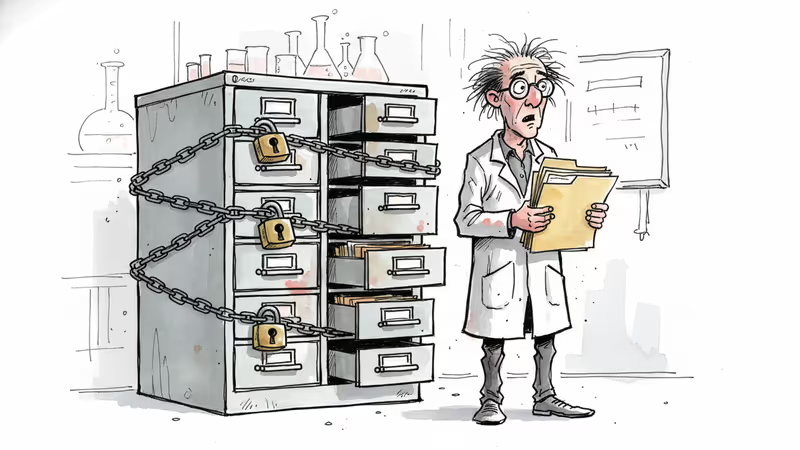
Half of CDC's Public Health Databases Quietly Go Dark
Study reveals 38 of 82 regularly updated CDC databases stopped without notice, with 87% of frozen databases containing vaccination data, raising transparency concerns
Nearly half of the databases that public health officials at the Centers for Disease Control and Prevention were updating monthly have gone silent—no warning, no explanation, just darkness where critical health data once flowed.
A study published in the Annals of Internal Medicine reveals a troubling pattern: 38 of 82 regularly maintained CDC databases stopped updating between early 2025 and October 2025. That's 46 percent of the agency's most current public health data simply vanishing from public view.
The Vaccination Data Blackout
Janet Freilich from Boston University and Jeremy Jacobs from Vanderbilt University led the investigation that uncovered what they term "stealth data freezes." Their findings reveal a stark pattern: 87 percent of the frozen databases contained vaccination data, while exactly zero of the still-active databases relate to vaccines.
This isn't random technical maintenance. Of the 33 vaccination-related databases that went dark, none received public notice or explanation. Meanwhile, other critical health information—including data on respiratory syncytial virus (RSV) hospitalizations and infectious disease burden—also disappeared from regular updates.
The timing raises uncomfortable questions. As vaccine policy remains a contentious political issue, the systematic removal of vaccination data from public access looks less like coincidence and more like policy.
Democracy's Data Deficit
Public health data serves as the foundation for informed decision-making by everyone from researchers to parents choosing whether to vaccinate their children. When that data disappears without explanation, it undermines the basic democratic principle that citizens deserve access to information that shapes government policy.

The CDC's silent approach is particularly troubling. Unlike budget cuts or policy changes that generate public debate, data freezes happen in the shadows. Citizens continue making decisions based on what they assume is current information, unaware that their trusted sources have gone stale.
This pattern extends beyond public health. Government agencies across sectors have been quietly reducing data transparency, often citing budget constraints or "modernization efforts." But the selective nature of these freezes—particularly the concentration on vaccination data—suggests something more deliberate.
The Trust Equation
Transparency builds trust; opacity destroys it. When government agencies control information flow without explanation, they're essentially asking citizens to trust them blindly. In an era when institutional trust is already fragile, such moves risk accelerating public skepticism about official health guidance.
For healthcare providers, researchers, and policy advocates, these data gaps create immediate practical problems. How do you track vaccination coverage trends without vaccination data? How do you assess the burden of infectious diseases when hospitalization data stops flowing?
The international implications are equally concerning. Global health surveillance depends on countries sharing timely, accurate data. When the world's largest public health agency starts going dark on key datasets, it undermines collaborative efforts to track and respond to health threats.
The Accountability Gap
Perhaps most troubling is the lack of accountability mechanisms. Unlike legislative changes that require public hearings or regulatory changes that mandate comment periods, data policy changes often happen through administrative decisions that escape public scrutiny.
The research by Freilich and Jacobs only came to light because they systematically tracked database status over time. How many other "stealth" changes in government data practices are happening without anyone noticing?
This situation demands immediate attention from Congress, health advocacy groups, and journalism organizations. The right to government information isn't just about transparency—it's about maintaining the informed citizenry that democracy requires.
Authors
Related Articles
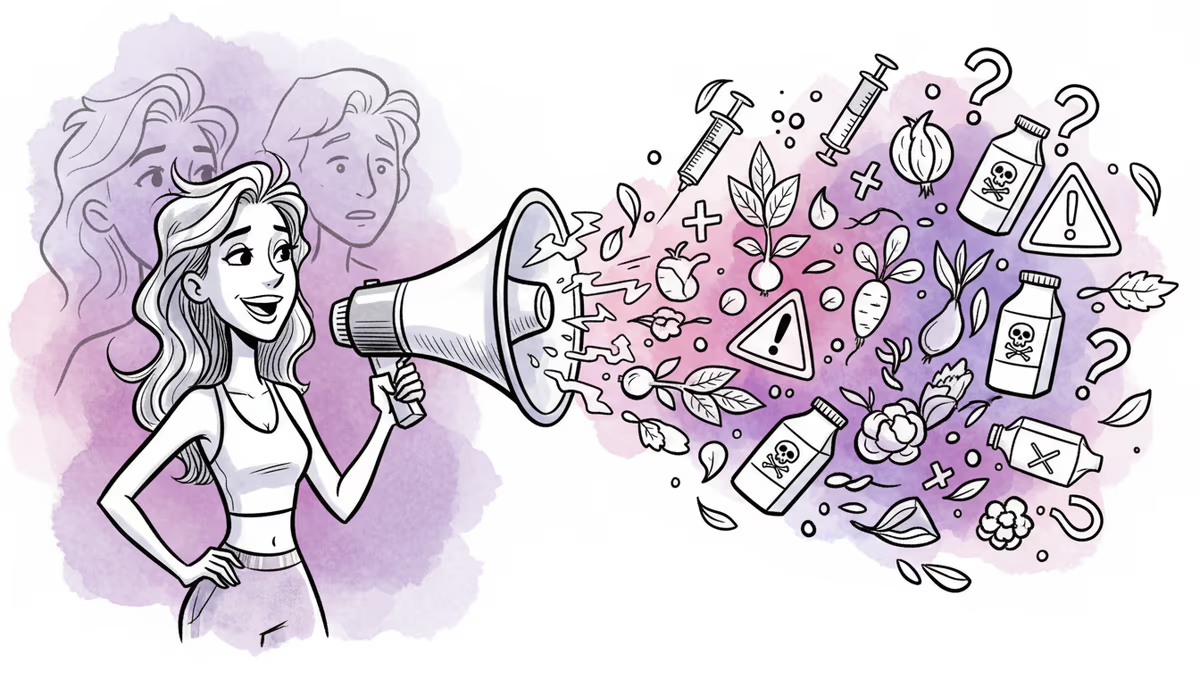
The journey from promoting healthy living to spreading medical misinformation reveals a troubling pattern in how selective science and algorithmic amplification create dangerous echo chambers.
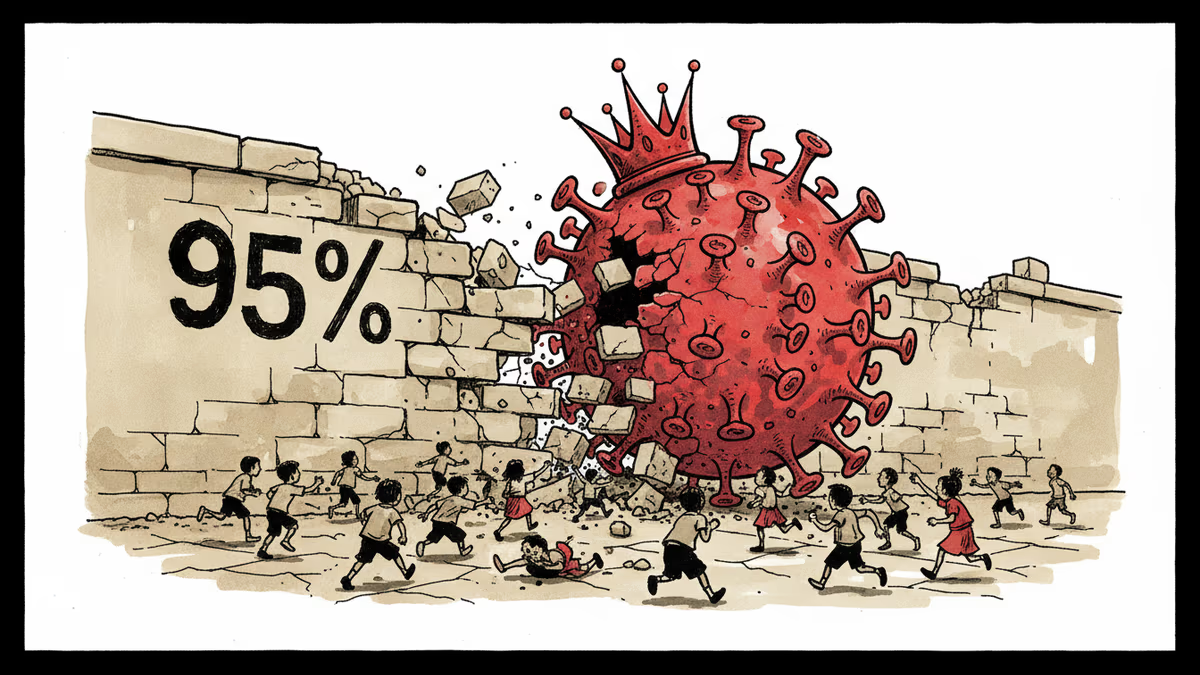
Vaccination rates plummet across London and US states as measles outbreaks surge. What happens when herd immunity collapses and childhood diseases return?
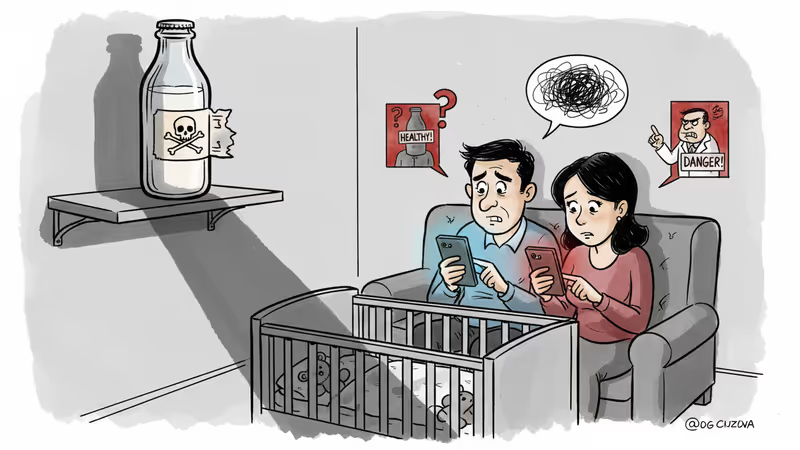
New Mexico reports infant death from Listeria linked to raw milk consumption during pregnancy, highlighting ongoing tensions between food freedom advocates and public health officials.
The new chair of America's vaccine advisory panel shocked medical experts by rejecting evidence-based science. What does this mean for public health policy?
The journey from promoting healthy living to spreading medical misinformation reveals a troubling pattern in how selective science and algorithmic amplification create dangerous echo chambers.
Vaccination rates plummet across London and US states as measles outbreaks surge. What happens when herd immunity collapses and childhood diseases return?
New Mexico reports infant death from Listeria linked to raw milk consumption during pregnancy, highlighting ongoing tensions between food freedom advocates and public health officials.
The new chair of America's vaccine advisory panel shocked medical experts by rejecting evidence-based science. What does this mean for public health policy?
Thoughts
Share your thoughts on this article
Sign in to join the conversation