
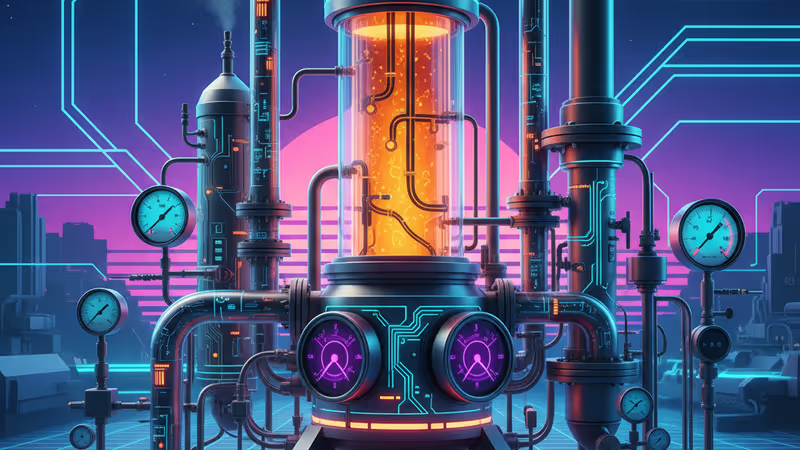
A Century in the Making: Ammobia low cost ammonia production secures $7.5M seed funding
Ammobia raised $7.5M to scale its low-cost ammonia production tech, cutting Haber-Bosch costs by 40% and offering a cleaner alternative to traditional methods.
The century-old process that feeds the world is getting a massive upgrade. Ammobia, a startup focused on decarbonizing the industrial sector, has exclusively told TechCrunch that it raised a $7.5 million seed round. The company's goal is to slash the costs of ammonia production by up to 40% by rethinking the traditional Haber-Bosch method, which currently accounts for nearly 2% of global greenhouse gas emissions.
The Edge of Ammobia Low Cost Ammonia Production
Traditional ammonia plants are massive, energy-hungry monoliths that require temperatures of 500°C and pressures around 200 bar. Ammobia's tech runs about 150°C cooler and at 10x lower pressure. This dramatic reduction allows for cheaper equipment and, more importantly, a modular approach to manufacturing. Investors backing this shift include ALIAD (Air Liquide), Chevron Technology Ventures, and Shell Ventures.

Scalability and Renewable Compatibility
“The big advantage of ammonia is that it’s much easier and more cost-effective to transport and store,” Ammobia co-founder and CEO Karen Baert said. Because the process operates at lower pressures, it can ramp production up or down quickly. This flexibility is key for integrating with renewable energy sources like wind and solar, which are inherently intermittent.
Authors
Related Articles
SolarSquare is raising $55-60M at a $450-500M valuation, more than doubling its worth in 18 months. Here's what's driving investor conviction in India's residential solar market.
TSMC has signed a 30-year power purchase agreement for 100% of output from Taiwan's Hai Long offshore wind project. The 1GW deal reveals how chipmakers are quietly becoming energy companies.
Nuclear energy is booming again, fueled by Big Tech's data center appetite. But 70 years of spent fuel still has nowhere permanent to go. Finland solved it. The US hasn't tried hard enough.
Skyward Wildfire raised millions claiming it can prevent wildfires by stopping lightning strikes. But is it just repackaging 60-year-old cloud seeding technology?
SolarSquare is raising $55-60M at a $450-500M valuation, more than doubling its worth in 18 months. Here's what's driving investor conviction in India's residential solar market.
TSMC has signed a 30-year power purchase agreement for 100% of output from Taiwan's Hai Long offshore wind project. The 1GW deal reveals how chipmakers are quietly becoming energy companies.
Nuclear energy is booming again, fueled by Big Tech's data center appetite. But 70 years of spent fuel still has nowhere permanent to go. Finland solved it. The US hasn't tried hard enough.
Skyward Wildfire raised millions claiming it can prevent wildfires by stopping lightning strikes. But is it just repackaging 60-year-old cloud seeding technology?
Thoughts
Share your thoughts on this article
Sign in to join the conversation