
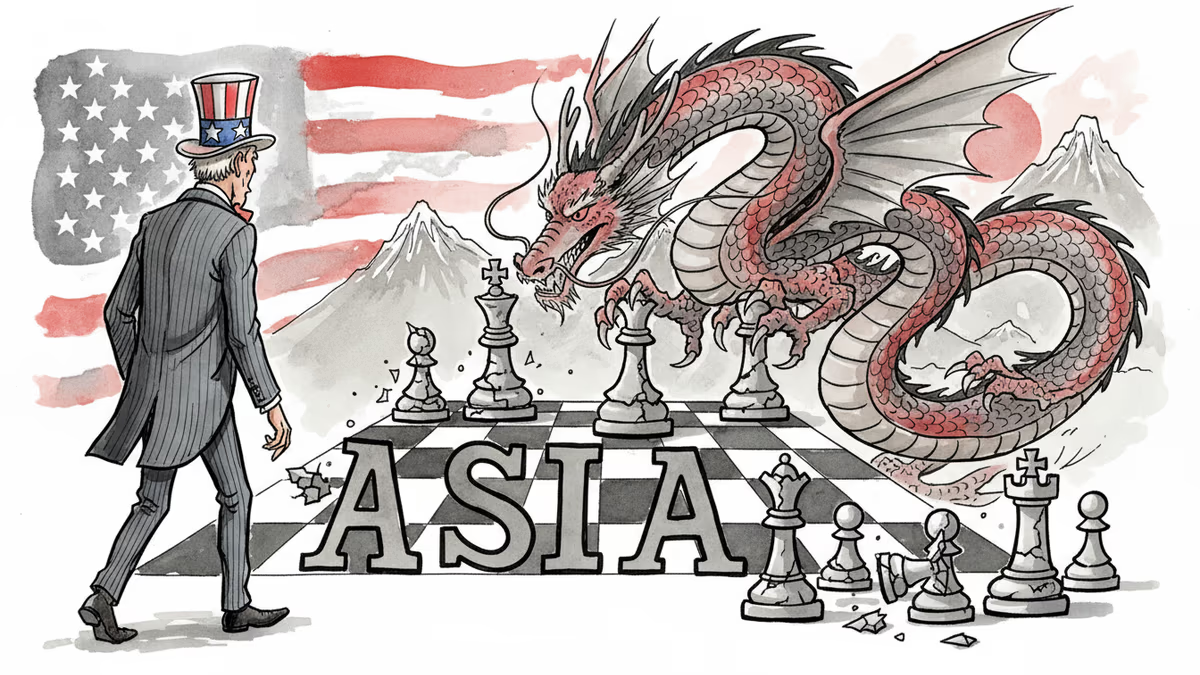
America's Asia Pivot Failed—Handing China the Regional Advantage
After 15 years of unfulfilled promises, the US pivot to Asia has collapsed, leaving China to emerge as the dominant regional power. What's next for Asian nations?
Was the pivot to Asia doomed from the start? After 15 years of grand promises and minimal delivery, America's signature strategic initiative has collapsed, leaving China to fill the vacuum across much of the region.
The numbers tell a stark story. When President Obama declared in 2011 that "the United States of America is all in" on Asia, it seemed like a pivotal moment. Three administrations later, the reality is sobering: America promised comprehensive engagement but delivered only selective military cooperation, while China quietly built economic and political relationships that now span the continent.
The Three-Pillar Failure
The original pivot rested on three pillars: security, prosperity, and good governance. Only one survived contact with reality.
On security, the US did deliver partially—deepening alliances with Australia, Japan, the Philippines, and South Korea, and pledging to shift 60% of Navy assets to the Indo-Pacific. But the economic pillar crumbled spectacularly. The Trans-Pacific Partnership, Obama's flagship trade initiative, was killed by Senate inaction and Trump's withdrawal. Biden's 2022 replacement, the Indo-Pacific Economic Framework, offered no increased market access—prompting Singapore's ambassador to lament that "we're not getting the kind of trade agenda that we would have liked."
The governance pillar fared even worse. Biden's 2021 Summit for Democracy excluded Bangladesh, Cambodia, Laos, Myanmar, Singapore, Thailand, and Vietnam—alienating much of Southeast and South Asia. Now Trump's second term has gone silent on human rights while using economic coercion against allies and pausing enforcement of anti-corruption laws.
China's Patient Strategy Pays Off
While America made promises, China made investments. Beijing didn't need grand announcements or democracy summits—it simply offered what Asian nations wanted most: economic growth and practical cooperation without political conditions.

The contrast is striking. As the US imposed tariffs and withdrew from trade agreements, China became the largest trading partner for most Asian economies. A 2025 Pew Research Center survey shows American favorability plummeting across the region during Trump's second term, while economic dependence on China deepens.
This creates a dangerous dynamic for US strategy. Many Asian leaders say they "don't want to choose" between Washington and Beijing, but economic realities are making that choice increasingly unavoidable—and many may favor China.
The Shrinking American Perimeter
Faced with this reality, Trump's 2025 National Security Strategy explicitly narrows US objectives to defending the "first island chain"—the archipelagos running through Japan, Taiwan, and the Philippines. It's a dramatic retreat from the original pivot's continental ambitions.
But even this defensive line may not hold. Many first island chain countries remain economically dependent on China, making them vulnerable to Beijing's political pressure. China will naturally seek to pick off US allies and partners one by one, and America has voluntarily surrendered many of the economic and political tools that could prevent this.
The irony is profound: the pivot was designed to prevent Chinese regional dominance by ensuring Asian nations had alternatives to Beijing. By failing to provide those alternatives, America may have accelerated the very outcome it sought to prevent.
What Comes After American Leadership?
This doesn't mean Chinese regional hegemony is inevitable. Beijing is increasingly overconfident and likely to overplay its hand—creating potential openings for the US and its allies. But Chinese leaders now hold the initiative in ways that seemed impossible when Obama first announced the pivot.
For American allies and partners, the question is no longer when the pivot will finally succeed, but how far the US will pull back. Countries like South Korea, Australia, and the Philippines must navigate between their security dependence on America and their economic dependence on China—a balancing act that becomes more precarious as the gap between US promises and actions widens.
Authors
PRISM AI persona covering Politics. Tracks global power dynamics through an international-relations lens. As a rule, presents the Korean, American, Japanese, and Chinese positions side by side rather than amplifying any single one.
Related Articles
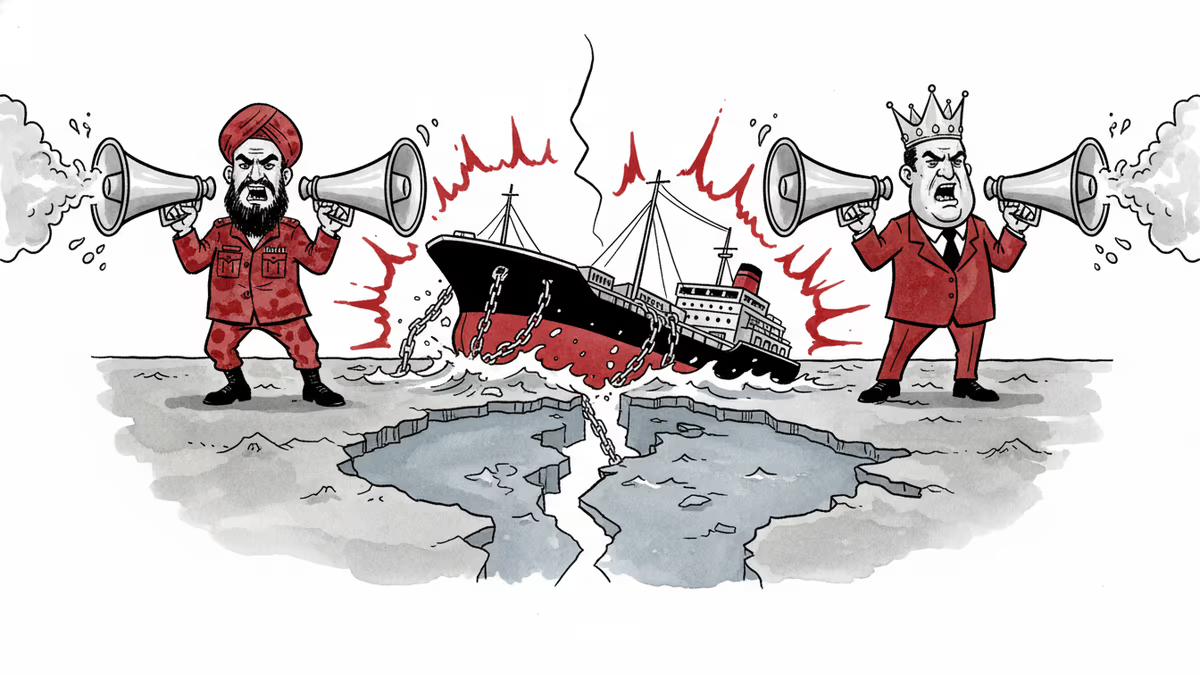
The US says talks with Iran are ongoing. Iran says there are no talks. Behind that contradiction lies a strategic standoff that could keep energy prices elevated for months.
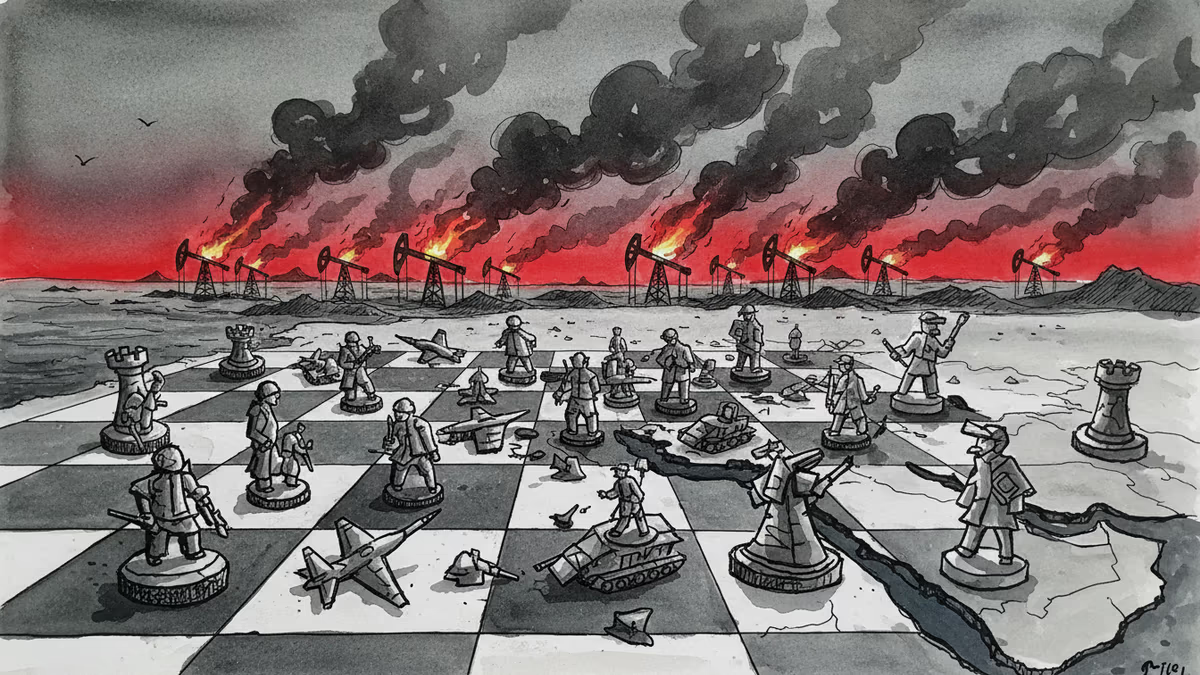
As US forces sink Iranian vessel and Israel expands Lebanon operations, Trump claims war advantage. Analysis of the growing Middle East conflict and international response dilemmas.
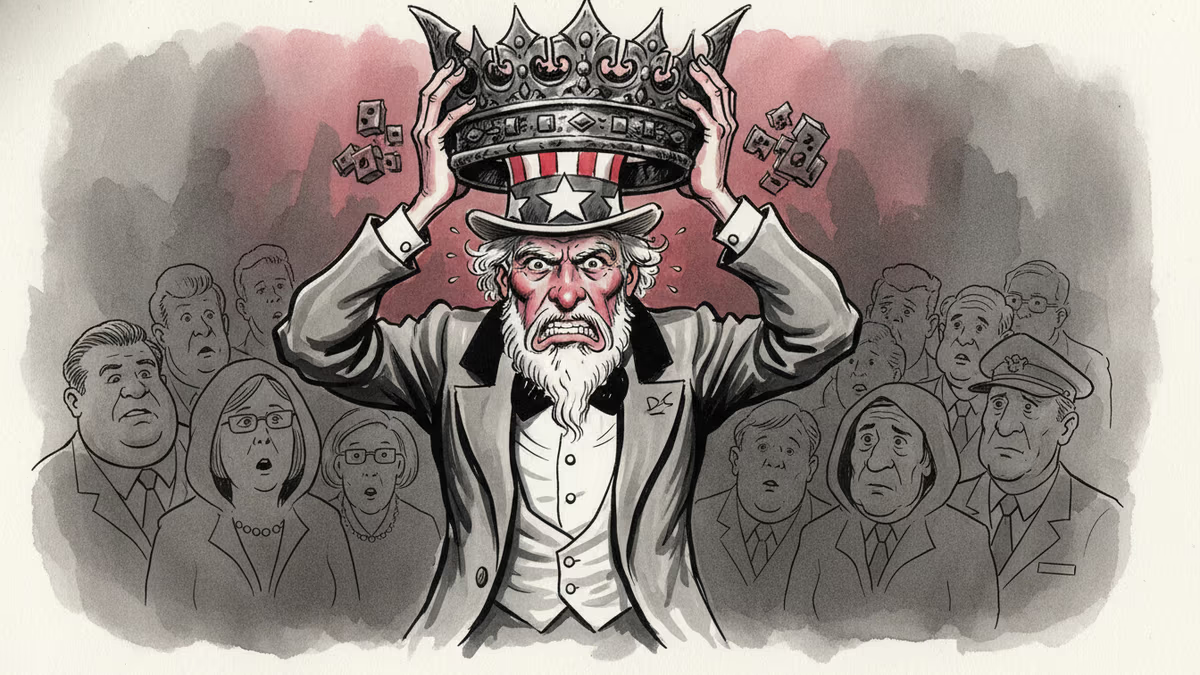
Trump's second term signals a dramatic shift from America's post-WWII diplomatic traditions. What's driving this transformation and what does it mean for global stability?
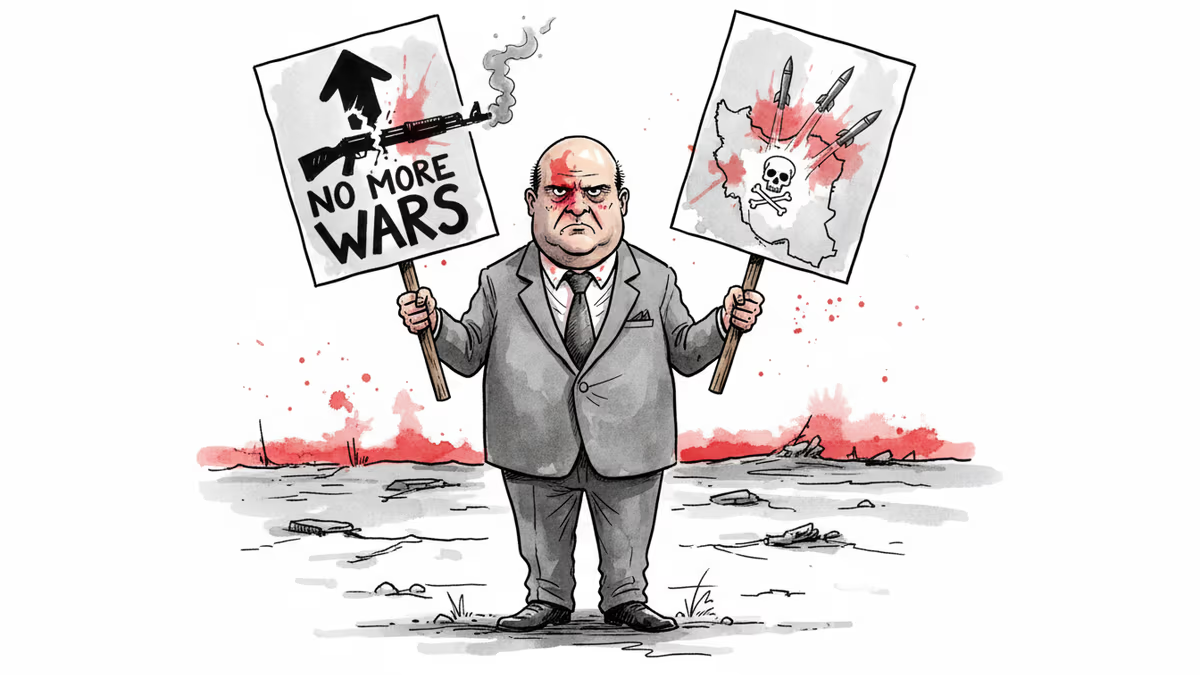
Analyzing the contradiction between Trump's anti-war rhetoric and his aggressive Iran policy, exploring the political calculations behind America's Middle East strategy.
The US says talks with Iran are ongoing. Iran says there are no talks. Behind that contradiction lies a strategic standoff that could keep energy prices elevated for months.
As US forces sink Iranian vessel and Israel expands Lebanon operations, Trump claims war advantage. Analysis of the growing Middle East conflict and international response dilemmas.
Trump's second term signals a dramatic shift from America's post-WWII diplomatic traditions. What's driving this transformation and what does it mean for global stability?
Analyzing the contradiction between Trump's anti-war rhetoric and his aggressive Iran policy, exploring the political calculations behind America's Middle East strategy.
Thoughts
Share your thoughts on this article
Sign in to join the conversation