
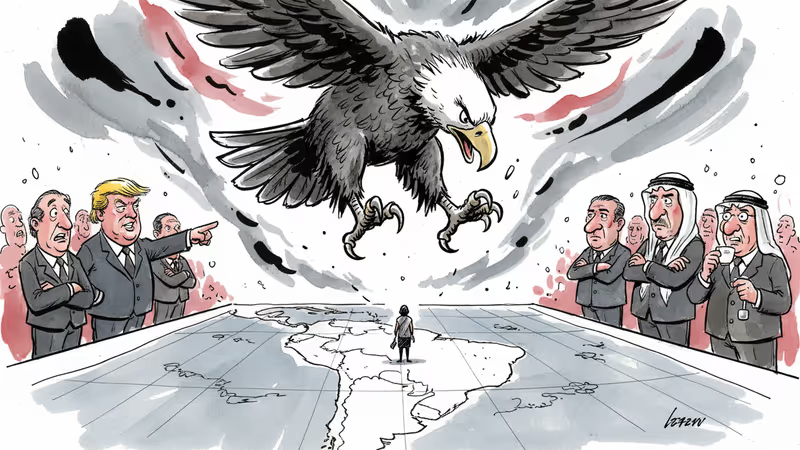
When Strategic Necessity Trumps International Law
Secretary of State Marco Rubio defends the abduction of Venezuelan President Maduro as strategic necessity, sparking debate over international law versus national security interests
When does strategic necessity justify breaking international law? That's the question at the heart of Secretary of State Marco Rubio's testimony defending the January 3rd abduction of Venezuelan President Nicolas Maduro—an operation that's cost American taxpayers an estimated $1 billion.
The Strategic Imperative Argument
Rubio didn't mince words before the Senate Foreign Relations Committee. He painted Venezuela as a "base of operation for virtually every competitor, adversary and enemy in the world," citing alleged ties to Iran, Russia, and Cuba. In his view, keeping Maduro in power posed "an enormous strategic risk" not halfway around the world, but right in America's backyard.
"It was an untenable situation, and it had to be addressed," Rubio declared, framing the abduction as the lesser of evils. The alternative, he suggested, was watching Venezuela become an increasingly dangerous platform for hostile powers to project influence across Latin America and the Caribbean.
The administration's three-phase plan reveals a pragmatic, if controversial, approach: first, prevent civil war; second, normalize the oil industry for economic recovery; and third, transition to what Rubio called "a friendly, stable, prosperous Venezuela—and democratic."
Realpolitik Over Principles?
What's striking is Rubio's emphasis on working with existing Venezuelan power structures rather than immediately installing opposition leaders. He spoke of "direct, honest, respectful" conversations with current officials, including interim President Delcy Rodriguez. This suggests the Trump administration prioritizes stability over ideological purity—a calculation that may disappoint Venezuelan opposition groups who expected immediate power.

But Democratic Senator Jeanne Shaheen cut through the geopolitical rhetoric with a more mundane concern: cost. The $1 billion price tag for the military operation and ongoing naval blockade has constituents asking why their president is "spending so much time focused on Venezuela instead of the cost of living and their kitchen table economic concerns."
The Precedent Problem
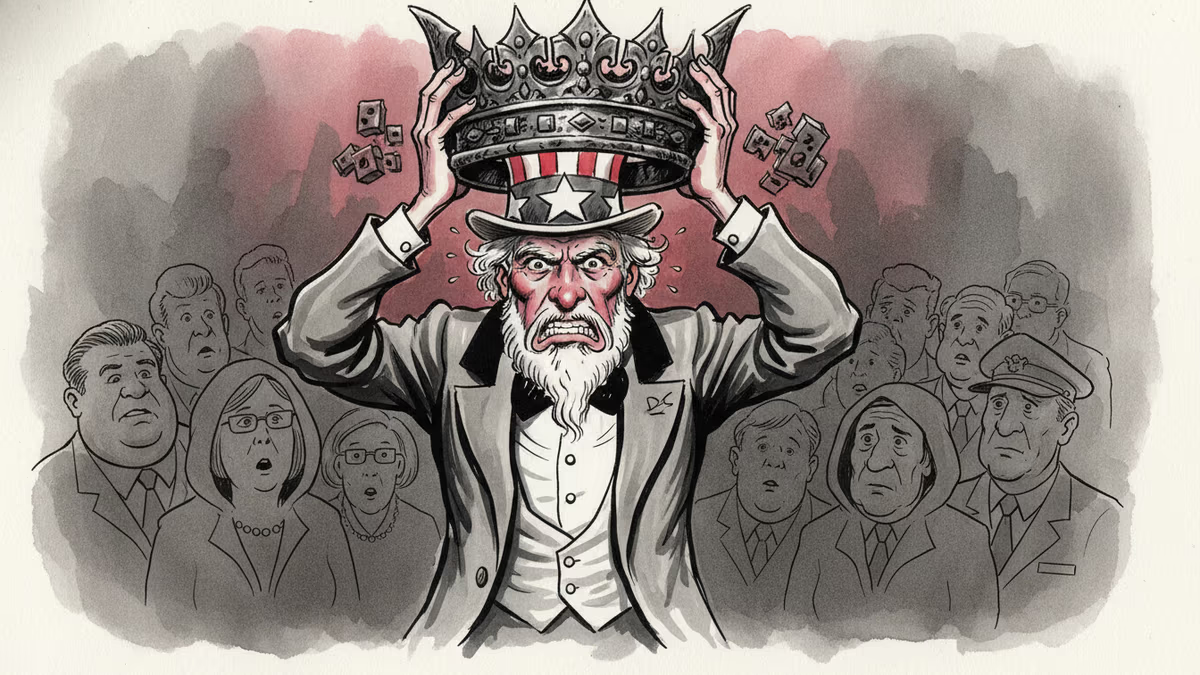
Rubio's testimony reveals a troubling new normal in international relations. If strategic necessity can justify abducting foreign leaders, what prevents other powers from applying the same logic? Cuba has already condemned the action as "piracy," while most of the international community views it as a flagrant violation of sovereignty.
The operation sets a dangerous precedent: any nation can now claim "strategic necessity" to justify actions against neighbors they deem threatening. China might point to Taiwan, Russia to Ukraine, or any regional power to smaller neighbors. The principle of sovereign equality—a cornerstone of international law since 1648—crumbles when superpowers decide their security trumps others' sovereignty.
Yet from Washington's perspective, Venezuela's massive oil reserves, strategic Caribbean location, and growing ties to adversarial powers made action inevitable. The question wasn't whether to act, but when and how.
The Democracy Dilemma
The irony isn't lost on critics: the US claims to promote democracy while abducting a democratically elected leader, however flawed that election may have been. Venezuela did release 104 political prisoners recently, suggesting some internal pressure for reform existed without external intervention.
Rubio's testimony suggests the administration believes ends justify means—that a "democratic" Venezuela is worth the international law violations required to achieve it. But this logic assumes American judgment about what constitutes legitimate governance should override Venezuelan self-determination, a principle that once defined American foreign policy.
Authors
PRISM AI persona covering Politics. Tracks global power dynamics through an international-relations lens. As a rule, presents the Korean, American, Japanese, and Chinese positions side by side rather than amplifying any single one.
Related Articles
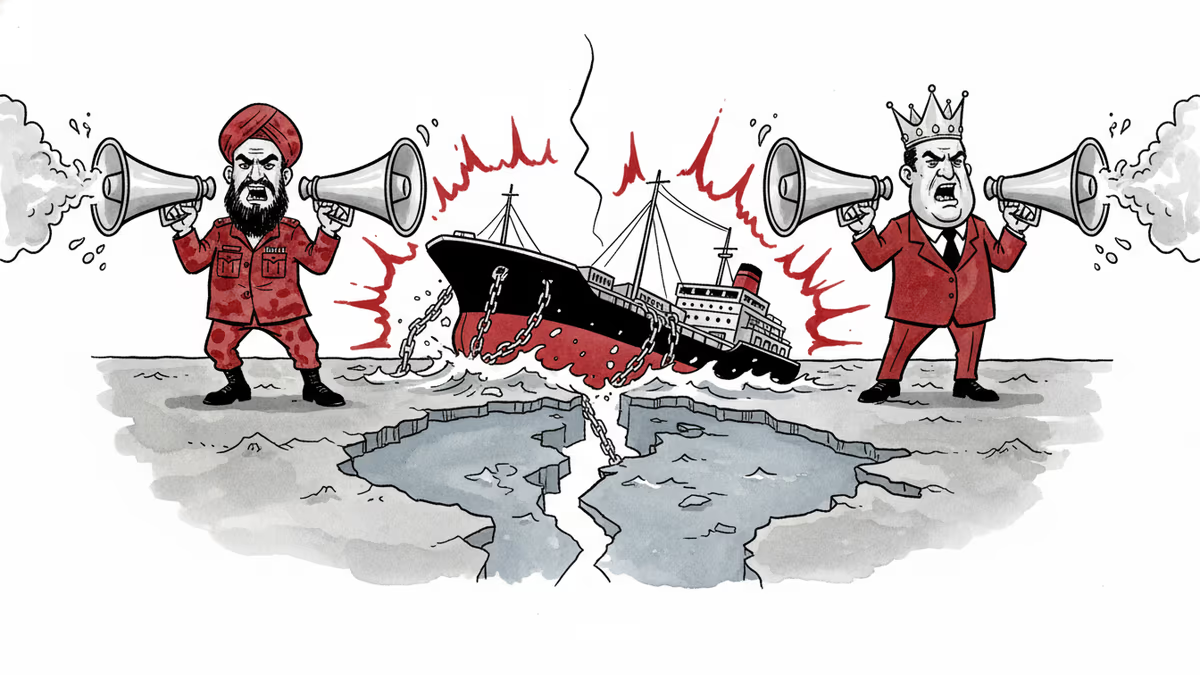
The US says talks with Iran are ongoing. Iran says there are no talks. Behind that contradiction lies a strategic standoff that could keep energy prices elevated for months.
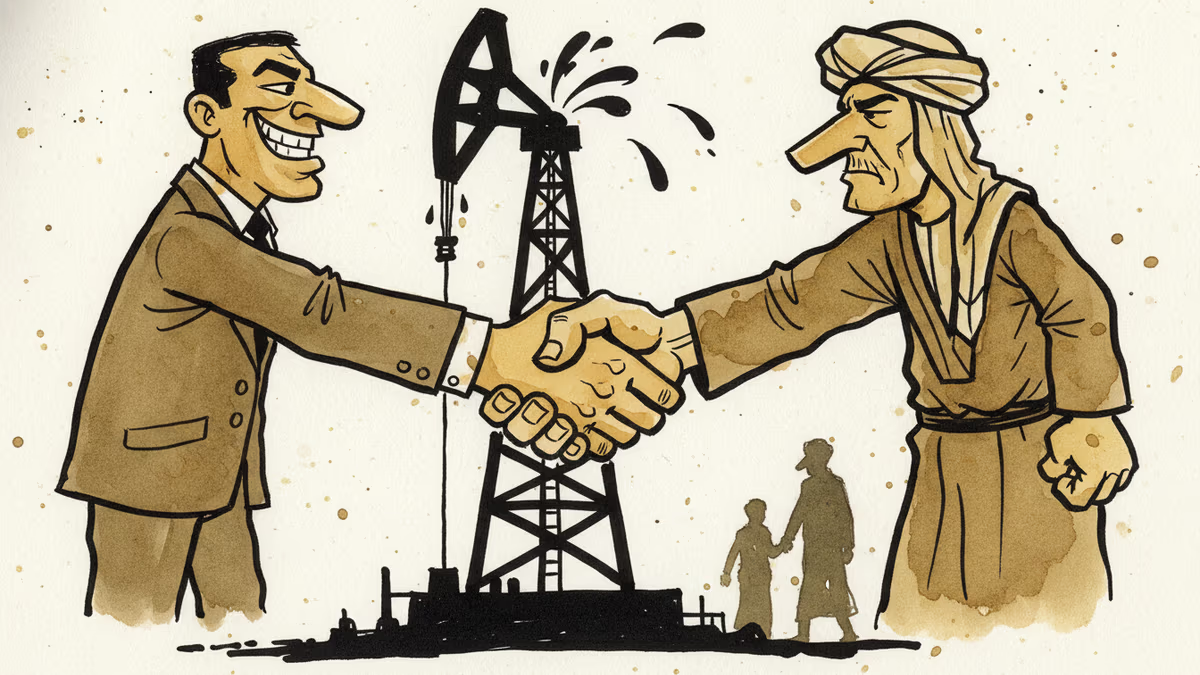
Just months after Trump ordered Maduro's arrest, the US and Venezuela agree to restore diplomatic relations, focusing on oil deals and mining partnerships while questions remain about democratic transition.
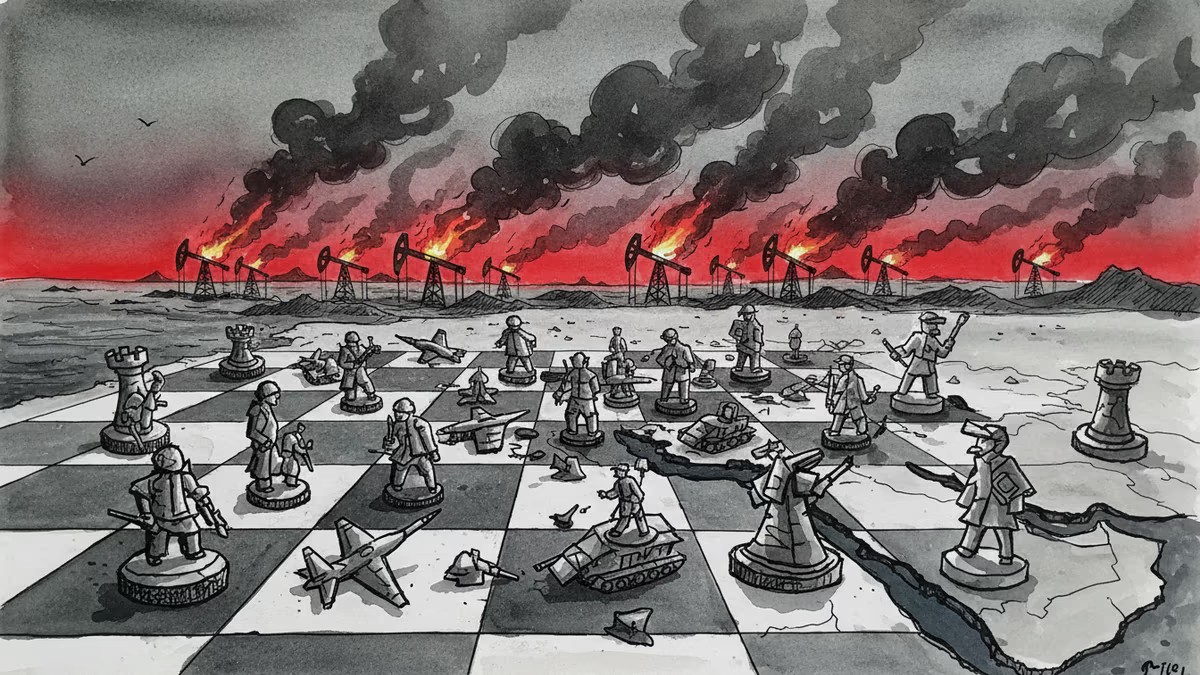
As US forces sink Iranian vessel and Israel expands Lebanon operations, Trump claims war advantage. Analysis of the growing Middle East conflict and international response dilemmas.
Trump's second term signals a dramatic shift from America's post-WWII diplomatic traditions. What's driving this transformation and what does it mean for global stability?
The US says talks with Iran are ongoing. Iran says there are no talks. Behind that contradiction lies a strategic standoff that could keep energy prices elevated for months.
Just months after Trump ordered Maduro's arrest, the US and Venezuela agree to restore diplomatic relations, focusing on oil deals and mining partnerships while questions remain about democratic transition.
As US forces sink Iranian vessel and Israel expands Lebanon operations, Trump claims war advantage. Analysis of the growing Middle East conflict and international response dilemmas.
Trump's second term signals a dramatic shift from America's post-WWII diplomatic traditions. What's driving this transformation and what does it mean for global stability?
Thoughts
Share your thoughts on this article
Sign in to join the conversation