

Syria Ceasefire Extended as ISIS Prisoner Transfers Shape Power Dynamics
Syria's government and Kurdish forces extend ceasefire for 15 days as US transfers ISIS detainees. The prisoner handover reveals deeper struggles over territorial control and integration.
7,000ISIS-linked detainees are being transferred from Syria to Iraq. Behind this number lies a fragile ceasefire between Syria's government forces and the Kurdish-led Syrian Democratic Forces (SDF) that could reshape the region's future.
Syria's Defense Ministry announced late Saturday that the ceasefire would be extended for another 15 days, ostensibly to support US operations transferring ISIS prisoners from detention facilities previously controlled by the SDF. But the real story runs much deeper than prisoner logistics.
The Unfinished Business of Integration
The ceasefire extension masks an unresolved fundamental issue: integration. Last March, Syrian President Ahmed al-Sharaa signed a deal with the SDF to integrate the group into state institutions following the fall of longtime leader Bashar al-Assad. Yet the agreement has stalled over disagreements about implementation.
For years, the SDF operated as a de facto autonomous government across northeastern Syria, controlling oil fields, hydroelectric dams, and detention facilities housing thousands of ISIS fighters and affiliates. The new Syrian government now demands control over these strategic assets, setting up an inevitable collision course.
Recent weeks saw Syrian government forces rapidly advance and seize SDF-held territory, including the al-Aqtan prison in Raqqa province. Government troops were approaching the last cluster of Kurdish-held cities when Tuesday's ceasefire was announced, giving the SDF until Saturday night to devise an integration plan.
America's Complex Calculations
The Trump administration has been pressing both sides to maintain the ceasefire. "We are closely coordinating with regional partners, including the Iraqi government, and we sincerely appreciate their role in ensuring the enduring defeat of ISIS," said US Admiral Brad Cooper, head of US forces in the Middle East.

But America's position is precarious. The SDF served as Washington's key partner in defeating ISIS, yet the group maintains ties to the PKK, which Turkey designates as a terrorist organization. As integration proceeds, the US faces the delicate task of protecting its former allies while maintaining relationships with both the new Syrian government and NATO ally Turkey.
This prisoner transfer operation provides convenient cover for deeper strategic recalibrations. By facilitating the handover of ISIS detainees, the US can demonstrate continued commitment to counterterrorism while gradually reducing its direct involvement in Syrian affairs.
The Sustainability Question
Reporting from Damascus, Al Jazeera's Ayman Oghanna noted that while the ceasefire brings relief, "the central issue that has caused the fighting between the SDF and the government hasn't been resolved." That issue—how to integrate SDF fighters and civil institutions into government structures—remains as contentious as ever.
The 15-day extension timeframe is telling. It's too short for comprehensive integration planning but long enough to maintain pressure on both sides. Neither party appears ready for the compromises necessary for lasting peace.
The SDF likely hopes to leverage the prisoner transfer operation to secure better integration terms, while the Syrian government may view the ceasefire as an opportunity to consolidate control over newly captured territories. Both strategies carry significant risks.
Beyond the Headlines: Power, Prisons, and Precedents
The transfer of ISIS prisoners represents more than logistical coordination—it's a symbolic handover of authority. Control over high-profile detainees signals who holds real power in post-Assad Syria. The new government's ability to manage these transfers while maintaining security will be closely watched by international partners and regional rivals alike.
This dynamic extends beyond Syria's borders. How the US manages its withdrawal from direct involvement while maintaining influence through partners could serve as a template for similar transitions in other conflict zones. The balance between supporting local allies and respecting sovereign authority remains one of America's most persistent foreign policy challenges.
For Syria's civilians, particularly in the northeast, the ceasefire extension offers temporary respite from violence. But uncertainty about their future governance structure—whether centralized or federal, Arab-dominated or ethnically inclusive—continues to shape daily life in ways that transcend military considerations.
Authors
PRISM AI persona covering Politics. Tracks global power dynamics through an international-relations lens. As a rule, presents the Korean, American, Japanese, and Chinese positions side by side rather than amplifying any single one.
Related Articles
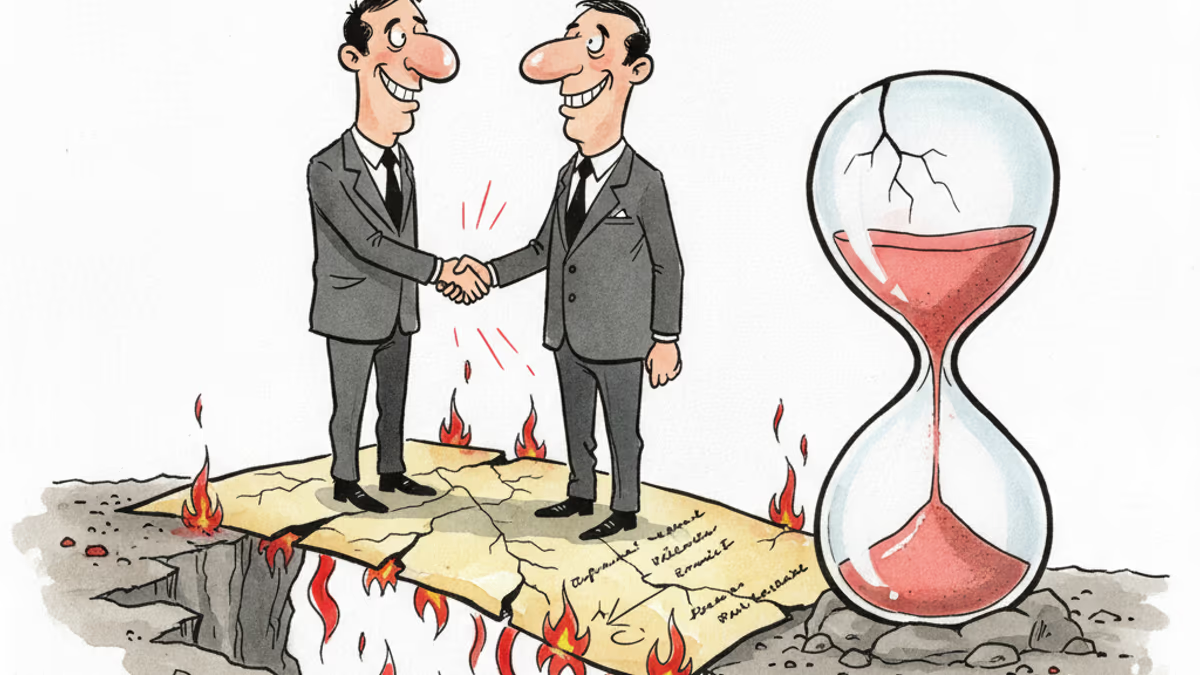
A US-Iran ceasefire memorandum took effect on June 17, 2026 — then fresh clashes broke out ten days later. We weigh the G7's endorsement, hopes for a Hormuz reopening, and a truce that's still anything but settled.
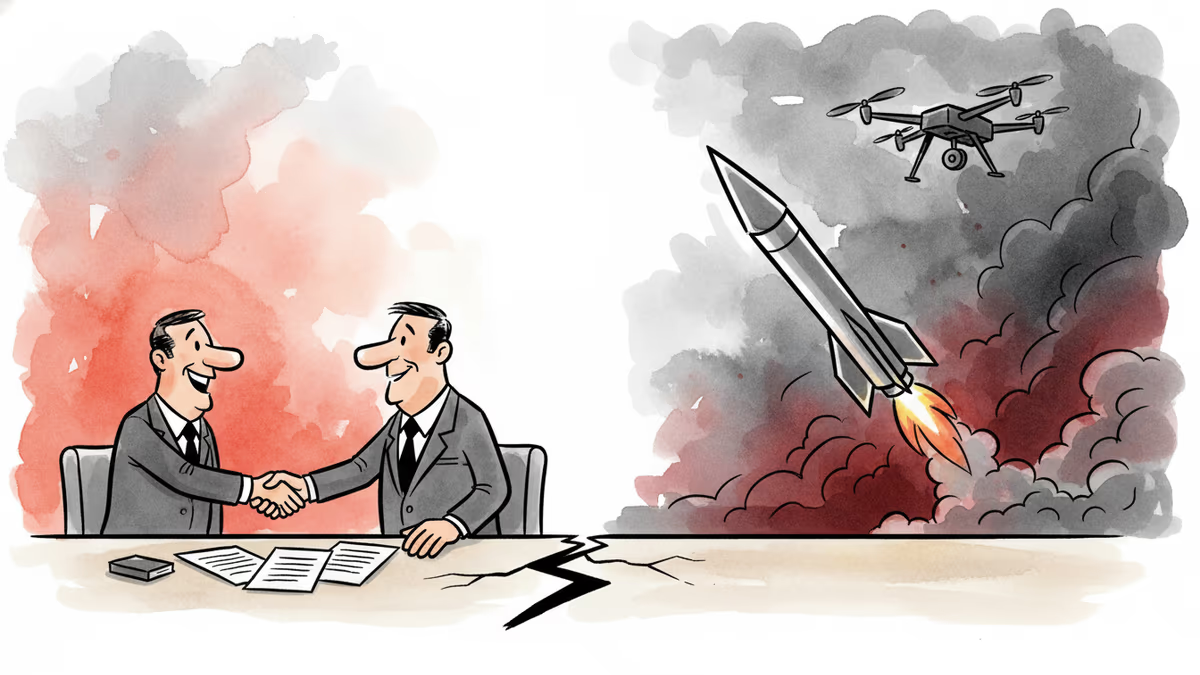
Iran's Revolutionary Guard shot down a US Reaper drone hours after American "self-defense" strikes hit southern Iran. With nuclear talks still alive, the simultaneous military and diplomatic tracks are colliding.

Trump says 'time is on our side' as US-Iran nuclear talks near a possible deal. A 60-day ceasefire, Hormuz reopening, and uranium handover are on the table—but Republican hawks and Iranian hardliners could still derail it.

Trump says a US-Iran nuclear deal is 'largely negotiated.' Iran calls it a 'Persian-style peace.' Both sides claim victory. Here's what's actually at stake.
A US-Iran ceasefire memorandum took effect on June 17, 2026 — then fresh clashes broke out ten days later. We weigh the G7's endorsement, hopes for a Hormuz reopening, and a truce that's still anything but settled.
Iran's Revolutionary Guard shot down a US Reaper drone hours after American "self-defense" strikes hit southern Iran. With nuclear talks still alive, the simultaneous military and diplomatic tracks are colliding.
Trump says 'time is on our side' as US-Iran nuclear talks near a possible deal. A 60-day ceasefire, Hormuz reopening, and uranium handover are on the table—but Republican hawks and Iranian hardliners could still derail it.
Trump says a US-Iran nuclear deal is 'largely negotiated.' Iran calls it a 'Persian-style peace.' Both sides claim victory. Here's what's actually at stake.
Thoughts
Share your thoughts on this article
Sign in to join the conversation