

Amazon Retreats from Cashier-Free Future, Bets on Whole Foods
Amazon closes most Go and Fresh stores while expanding Whole Foods, signaling a major shift in retail strategy. What does this mean for the future of shopping?
After over a decade of promising the "future of retail," Amazon just admitted that future isn't quite ready for prime time. The e-commerce giant announced Tuesday it's closing most of its Amazon Go and Fresh physical stores, converting others into Whole Foods Market locations instead.
The retreat marks a stunning reversal for a company that once positioned cashier-free shopping as the next retail revolution. Amazon Go stores, with their "just walk out" technology, were supposed to eliminate checkout lines forever. Customers could grab items and leave, with sensors and cameras automatically charging their accounts. But the reality proved more complicated than the vision.
When Innovation Meets Economics
The numbers tell the story Amazon doesn't want to highlight. Operating these high-tech stores required significant infrastructure costs, from installing hundreds of cameras and sensors to maintaining complex AI systems that could track every customer movement. Meanwhile, the limited product selection and urban-only locations restricted their appeal to a narrow customer base.
What's particularly telling is Amazon's pivot toward Whole Foods, the premium grocery chain it acquired in 2017 for $13.7 billion. Instead of doubling down on proprietary technology, Amazon is betting on an established brand with proven customer loyalty. Whole Foods already has the trust, the supply chains, and the shopping experience that Amazon's experimental stores struggled to replicate.
The decision also reflects changing consumer behavior post-pandemic. While contactless shopping gained appeal during COVID-19, many customers have returned to preferring human interaction, especially for grocery shopping where they want to inspect produce and ask questions about products.
The Broader Retail Reality Check

This isn't just about Amazon—it's a signal to the entire retail industry about the limits of technological disruption. Traditional retailers like Walmart and Target have been watching Amazon's experiments closely, and this retreat validates their more cautious approach to automation.
The closure also highlights a fundamental tension in modern retail: efficiency versus experience. While Amazon's technology could theoretically speed up shopping, it often created new friction points. Customers had to download apps, link payment methods, and navigate unfamiliar systems. Sometimes the old way—walking up to a cashier—was simply easier.
For investors, the move signals Amazon's maturation from a growth-at-all-costs company to one focused on profitable operations. The company is keeping its online Amazon Fresh delivery service and expanding same-day delivery to more cities, suggesting it sees the future of grocery shopping in logistics rather than physical innovation.
What This Means for Shopping's Future
The Amazon retreat doesn't mean technology has no place in retail—it means the integration needs to be more thoughtful. Successful retailers are finding that the best tech solutions are often invisible to customers: better inventory management, smarter supply chains, and more personalized recommendations.
Whole Foods itself represents this approach. It combines the premium, organic brand that attracts affluent customers with Amazon's backend logistics and delivery capabilities. It's evolution, not revolution.
For competitors, this creates both opportunity and caution. The opportunity lies in Amazon's admission that physical retail requires different skills than e-commerce. The caution comes from remembering that Amazon still dominates online grocery delivery and has deep pockets for future experiments.
Authors
Related Articles

Amazon has poured an additional $5 billion into Anthropic, bringing its total stake to $13 billion—with up to $20 billion more on the table. Here's what the deal really signals about the AI infrastructure race.
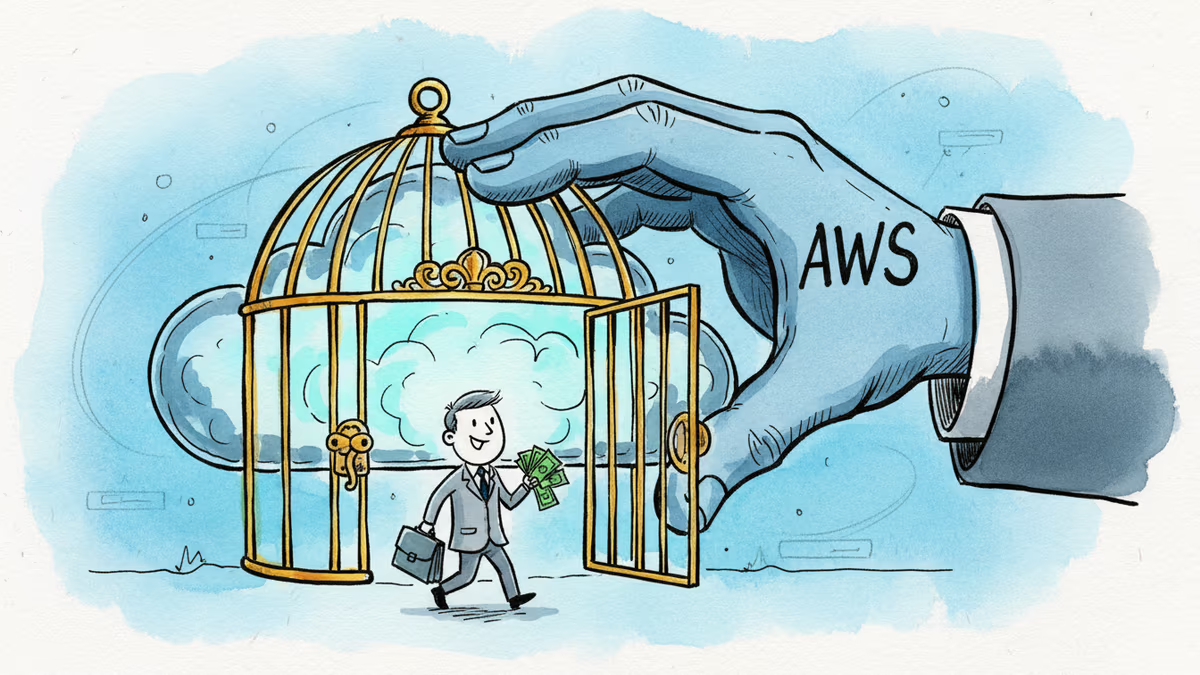
Amazon's fresh $5B investment in Anthropic brings its total to $13B. But the real story is a $100B AWS spending pledge and a bet on Amazon's own AI chips over Nvidia.
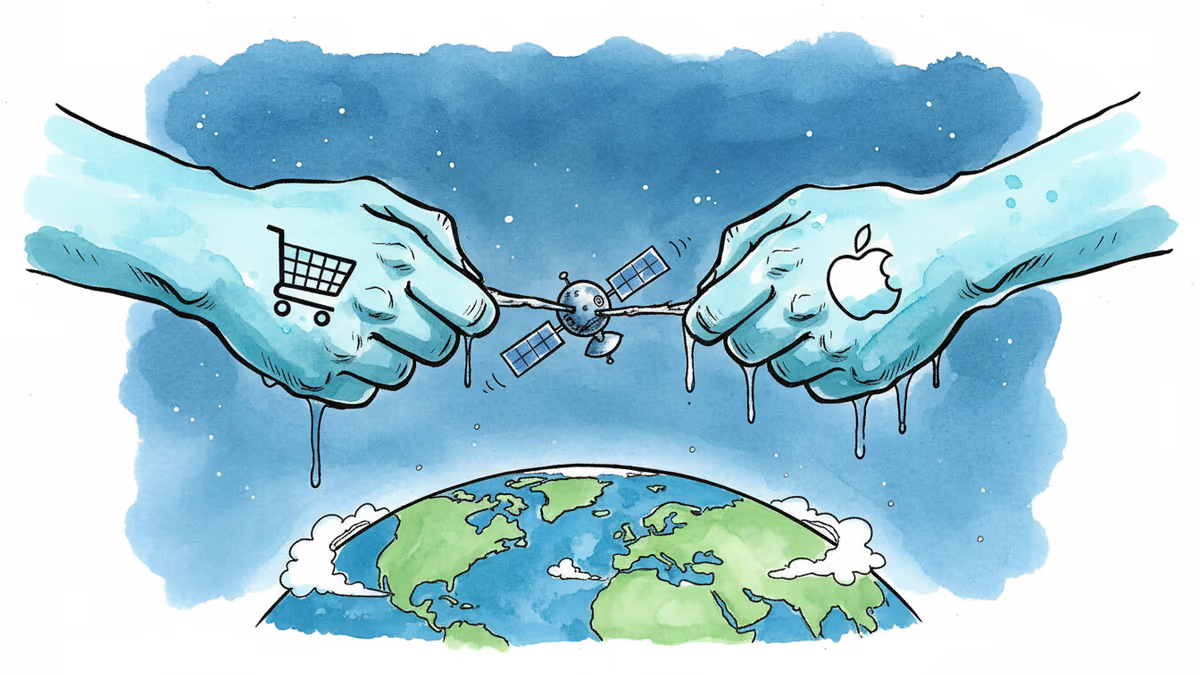
Amazon is in talks to acquire Globalstar, the satellite telecom firm that powers Apple's emergency SOS feature. A 20% Apple stake is complicating everything — and the stakes go beyond one deal.
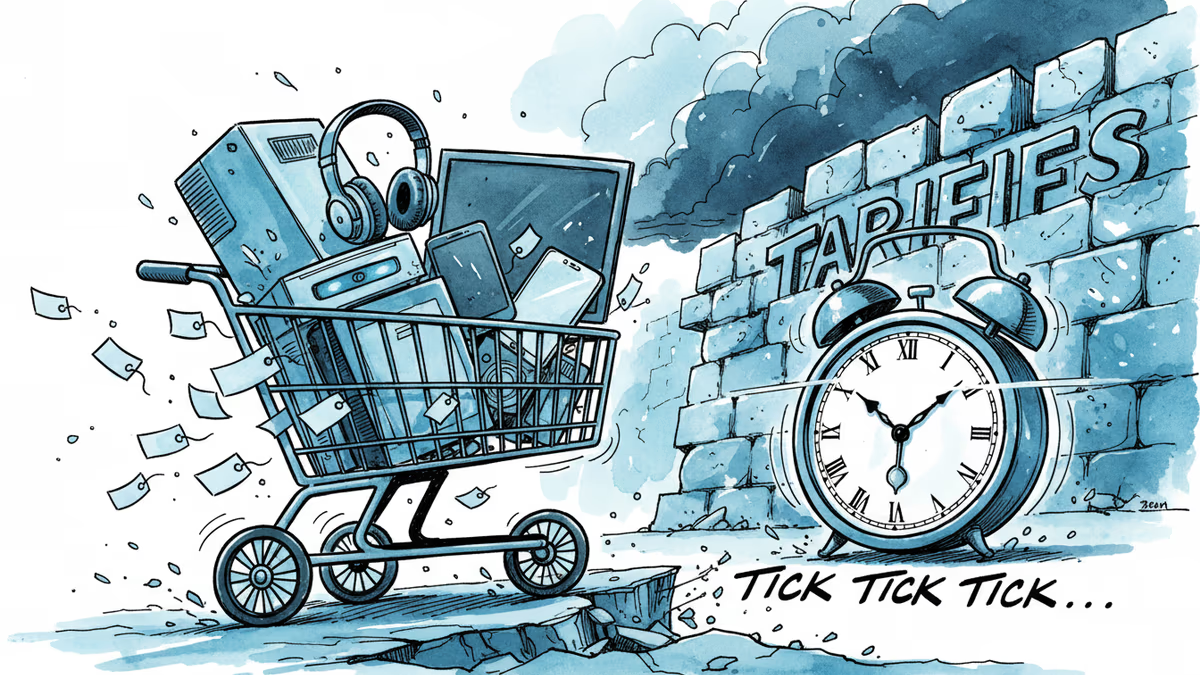
Amazon's Big Spring Sale runs through March 31st with record-low prices on robot vacuums, headphones, and smart home gear — but the real story is why it's happening now.
Amazon has poured an additional $5 billion into Anthropic, bringing its total stake to $13 billion—with up to $20 billion more on the table. Here's what the deal really signals about the AI infrastructure race.
Amazon's fresh $5B investment in Anthropic brings its total to $13B. But the real story is a $100B AWS spending pledge and a bet on Amazon's own AI chips over Nvidia.
Amazon is in talks to acquire Globalstar, the satellite telecom firm that powers Apple's emergency SOS feature. A 20% Apple stake is complicating everything — and the stakes go beyond one deal.
Amazon's Big Spring Sale runs through March 31st with record-low prices on robot vacuums, headphones, and smart home gear — but the real story is why it's happening now.
Thoughts
Share your thoughts on this article
Sign in to join the conversation