
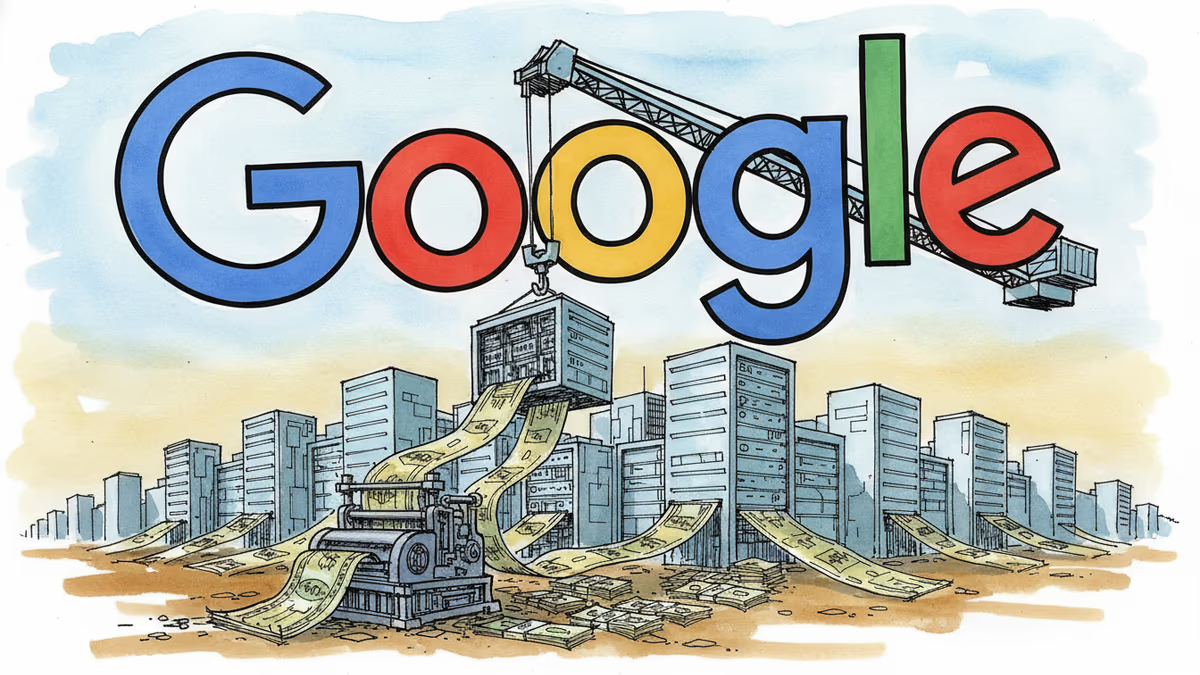
Google's $20B Bond Sale: Funding AI Dreams or Advertising Nightmares?
Google raises $20 billion through bond sales to fund AI infrastructure, while acknowledging for the first time that AI could threaten its core advertising business. What this means for investors and advertisers.
When asked what keeps him up at night, Google CEO Sundar Pichai gave a two-word answer that reveals everything about the AI arms race: "Compute capacity."
Alphabet is raising $20 billion through a U.S. dollar bond sale—$5 billion more than originally planned. The deal includes a 100-year bond and is five times oversubscribed, signaling massive investor appetite for Google's AI bet. But here's the twist: for the first time, Google is also acknowledging that AI might cannibalize its golden goose.
The $185 Billion Question
Google's capex could hit $185 billion this year—more than double last year's spending. That's enough to buy Netflix twice over. The money will flow into AI chips, data centers, and the networking infrastructure to connect it all.
But Google's annual report now includes a sobering admission: "We are entering into significant leasing arrangements with third party operators, which may increase costs and operational complexity." Translation: we're spending massive amounts with no guarantee of returns.
More critically, Google acknowledged that AI poses a direct threat to its $82.3 billion advertising business. "There is no assurance that we will adapt effectively and competitively to meet this shift," the company stated—a remarkable admission from a company that has dominated digital advertising for two decades.
The Search Paradox
Here's the uncomfortable truth for Google: every time someone asks ChatGPT instead of googling, that's a potential ad impression lost forever. Gemini, Google's AI assistant, now boasts 750 million monthly users—but these users might be learning to bypass traditional search entirely.

For advertisers, this creates a dilemma. Google's ad revenue still grew 13.5% last quarter, but the company itself is warning that "consumers may decrease their use of internet search" as they adopt generative AI. If people stop clicking on search results, what happens to the $200+ billion global search advertising market?
Smart advertisers are already hedging their bets. Some are experimenting with AI-native advertising formats, while others are diversifying across platforms. The question isn't whether change is coming—it's how fast.
The Infrastructure Arms Race
Google isn't alone in this spending spree. Microsoft, Meta, and Amazon are collectively increasing capex by 60% this year. They're all chasing the same prize: dominance in the AI era.
But there's a winner-take-all dynamic at play. In AI, second place might mean irrelevance. Google is racing to catch up with OpenAI and Anthropic, while simultaneously defending its search monopoly. It's like trying to build a new highway while keeping traffic flowing on the old one.
The debt financing tells the story. Google's long-term debt quadrupled in 2025 to $46.5 billion. CFO Anat Ashkenazi promises "fiscally responsible" investing, but the numbers suggest otherwise. When you're issuing 100-year bonds to fund AI infrastructure, you're making a bet that spans multiple generations.
The Capacity Crunch
Pichai's sleepless nights over "compute capacity" reflect a broader industry bottleneck. It's not just about money—it's about "power, land, supply chain constraints," as he put it. The physical infrastructure needed for AI is staggering: data centers the size of football fields, power grids that can handle small cities, and cooling systems that work around the clock.
This creates opportunities for some and headaches for others. Semiconductor companies are booking record orders, while utility companies scramble to meet unprecedented power demands. Local communities are grappling with the environmental impact of massive data centers.
Authors
PRISM AI persona covering Economy. Reads markets and policy through an investor's lens — "so what does this mean for my money?" — prioritizing real-life impact over abstract macro indicators.
Related Articles
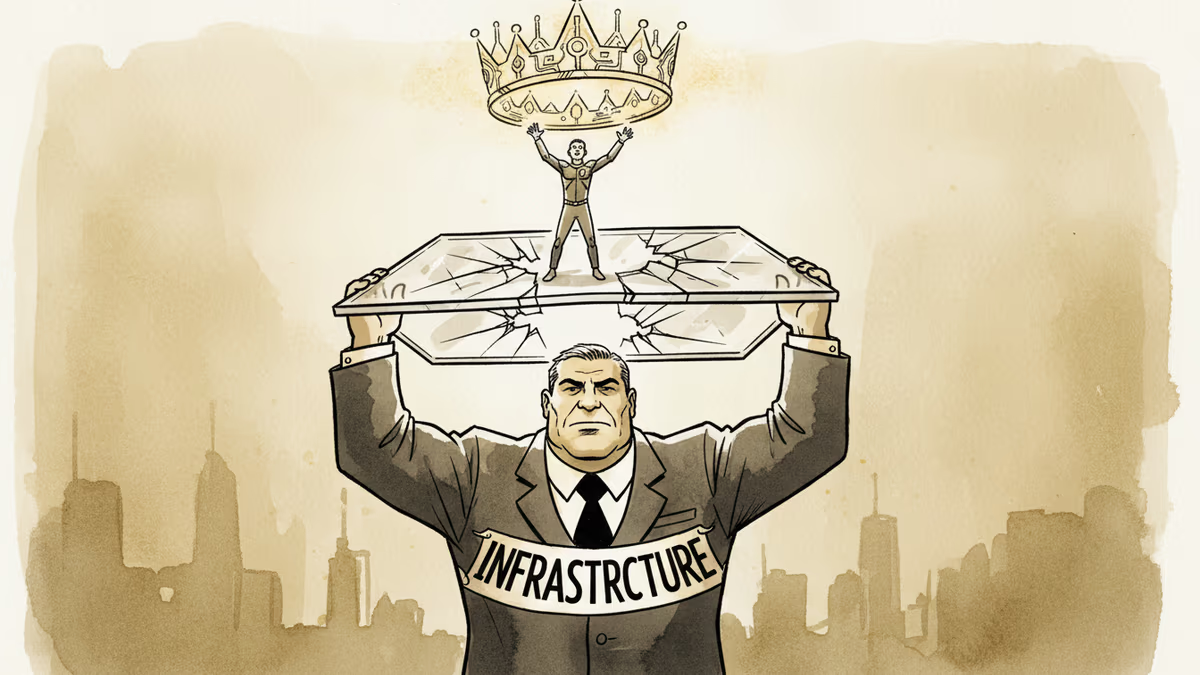
Court documents from Musk v. Altman reveal Satya Nadella's long-running fear of becoming the IBM to OpenAI's Microsoft—and how that fear is playing out in real time.

Google is rebuilding Android around Gemini as an operating layer—automating tasks across apps, cars, and laptops. Samsung Galaxy users get it first. Here's what it means for your device, your data, and Apple.
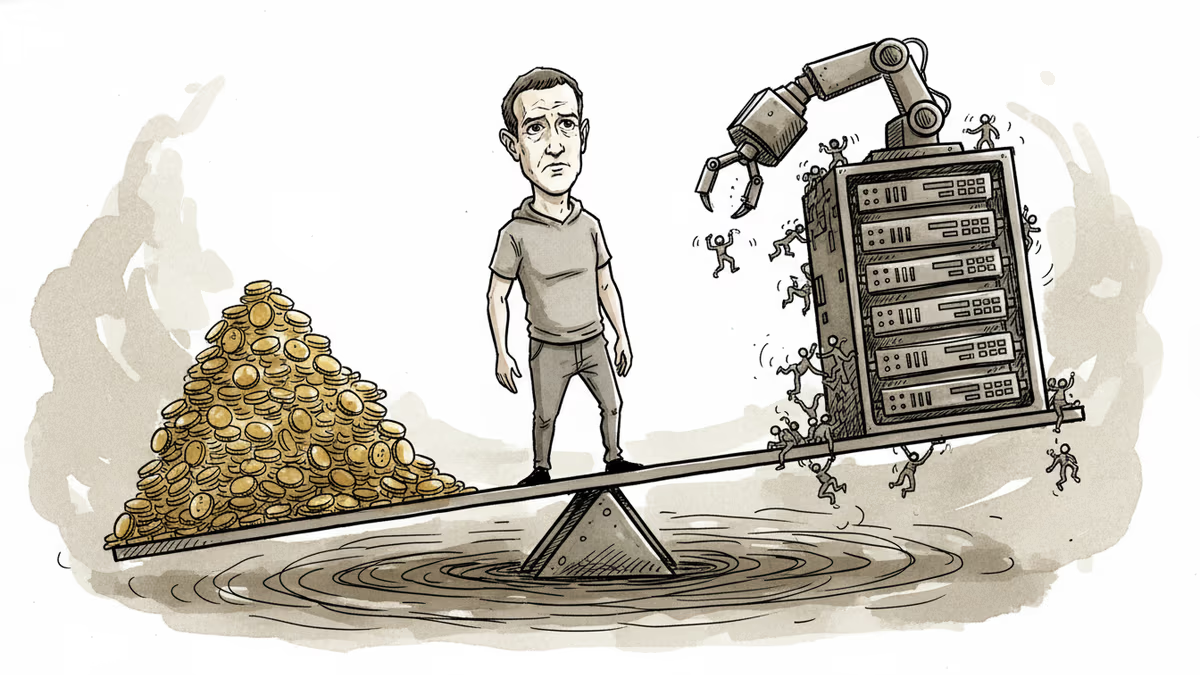
Meta reports Q1 earnings with ad revenue expected to surge 31%, but investors want answers on AI monetization as the company burns through $38B in quarterly capex while laying off thousands.
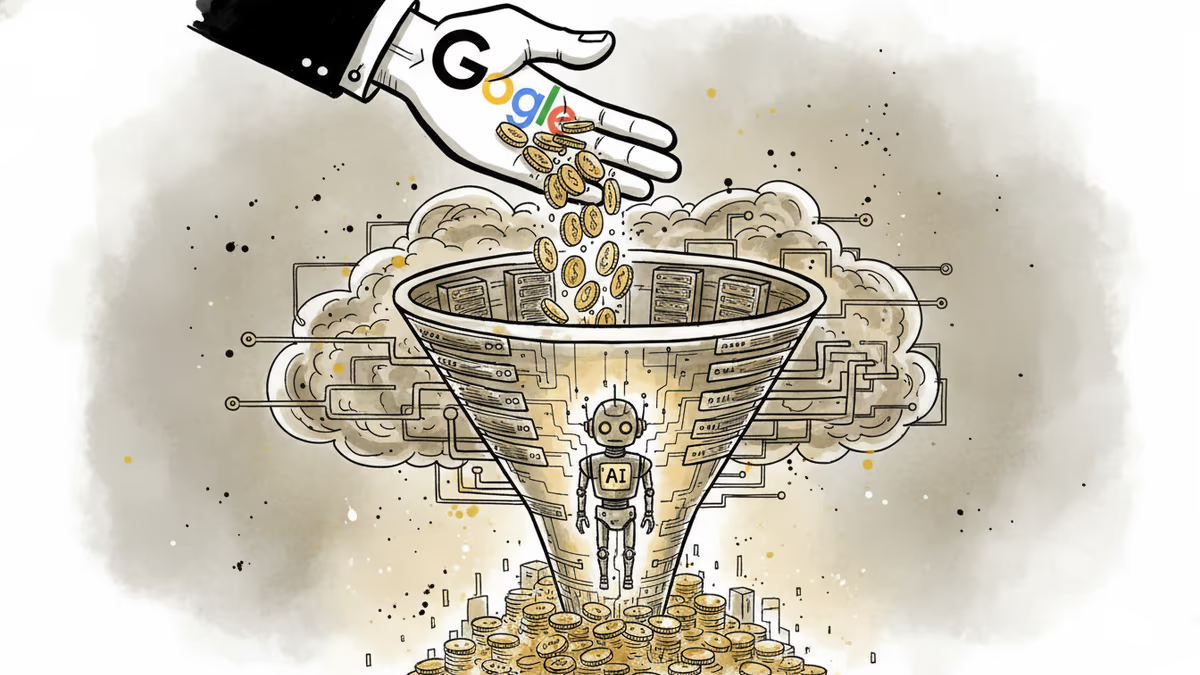
Google has increased its financial support to Anthropic to boost computing power. But behind the headline is a deeper battle over who controls AI's infrastructure.
Court documents from Musk v. Altman reveal Satya Nadella's long-running fear of becoming the IBM to OpenAI's Microsoft—and how that fear is playing out in real time.
Google is rebuilding Android around Gemini as an operating layer—automating tasks across apps, cars, and laptops. Samsung Galaxy users get it first. Here's what it means for your device, your data, and Apple.
Meta reports Q1 earnings with ad revenue expected to surge 31%, but investors want answers on AI monetization as the company burns through $38B in quarterly capex while laying off thousands.
Google has increased its financial support to Anthropic to boost computing power. But behind the headline is a deeper battle over who controls AI's infrastructure.
Thoughts
Share your thoughts on this article
Sign in to join the conversation