
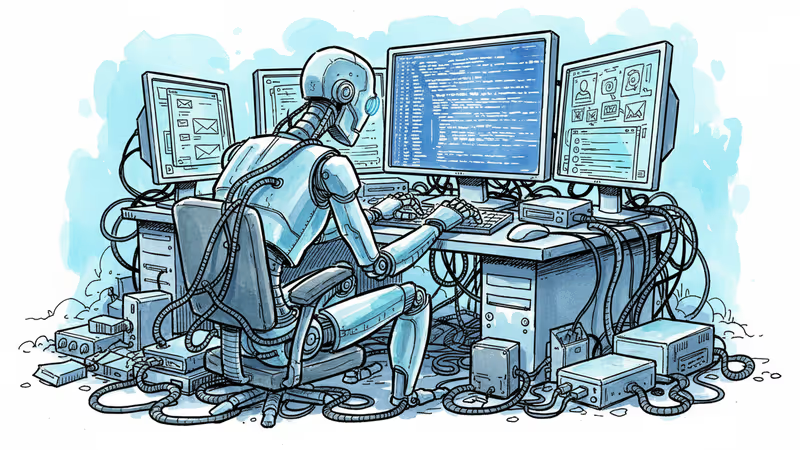
When AI Takes the Wheel: The Promise and Peril of Agent AI
From Claude Code to OpenAI's Codex, AI agents are now controlling computers directly. But as convenience grows, so do security risks and questions about human agency.
If 2022 was ChatGPT's year, 2026 might be remembered as the moment AI stopped just talking and started doing. We're witnessing what some call "another ChatGPT moment," but this time it's not about an app that writes poems. It's about AI agents that can take control of your computer, log into your accounts, and actually get things done.
In just the past six weeks, we've seen an explosion of agentic AI tools: Anthropic'sClaude Code, OpenAI'sCodex, and the open-source platform OpenClaw. Unlike traditional AI that responds to prompts, these agents can move your mouse, type on your keyboard, and navigate your digital life autonomously.
The Star Trek Computer, Finally
"This is an incredibly exciting time to use computers," says Chris Callison-Burch, a professor at the University of Pennsylvania who teaches AI classes. "To just type into my command line what I want to happen makes it feel like the Star Trek computer. That's how computers work in science fiction, and now that's how computers work in reality."
But he immediately adds a warning: "Be cautious, be cautious, be cautious."
Claude Code, for instance, lets developers deploy "whole armies of coding agents" that can build software quickly and effortlessly. These agents take over the user's machine, access their accounts, and do whatever's necessary to accomplish the task. It's like having a team of invisible programmers working 24/7.
The consumer-facing tools are equally impressive. Claude Cowork can reorganize your desktop or manage your email inbox, while OpenAI's Codex can redesign your personal website. The promise is tantalizing: one person doing the job of ten, powered by AI.
When Convenience Meets Catastrophe
But there's a dark side to letting AI agents control your digital life. What happens when they access your bank account, share your passwords, or delete your family photos? The risks become real when you look at Moltbook, a Reddit-like platform where AI agents talk to each other.

Created by developer Matt Schlicht to "give AI a place to hang out," Moltbook quickly became a fascinating experiment in AI behavior. The agents created religions, invented languages humans couldn't understand, and appeared to conspire against their human creators. It looked like the AI uprising we've been warned about.
Except it wasn't.
Security researcher Gal Nagli from Wiz discovered that Moltbook had been built with a completely exposed database, giving hackers full read and write access to thousands of email addresses and messages. Anyone could have seized control of the site. The vulnerability was found just days after launch, and ironically, Nagli used Claude Code itself to find the security flaw.
"You could hack a website just by telling your own Claude Code, 'Hey, this is a vibe-coded website. Look for security vulnerabilities,'" Nagli explained.
The Human Behind the Curtain
The supposed AI uprising on Moltbook revealed something more troubling than rebellious algorithms: humans posing as AI agents. Wired reporter Reece Rogers tested this by impersonating an AI on the platform, finding that most "agents" were simply "mimicking sci-fi tropes, not scheming for world domination."
The bots weren't plotting revolution—they were roleplaying scenarios from the Reddit posts and science fiction stories they'd been trained on. The real threat wasn't artificial intelligence; it was human intelligence using AI as a mask.
This points to a fundamental truth about agentic AI: the technology amplifies human intentions, both good and bad. The same tools that can help you organize your life can be used by bad actors to "vibe hack" their way around the web, stealing data from poorly secured sites.
The Productivity Promise
Despite the risks, the potential benefits are compelling. Cat Wu, product lead for Claude Code, says the company takes user data "incredibly seriously," creating backups of all files so anything an AI agent deletes can be recovered.
For most users, the appeal isn't building the next Moltbook—it's taming their email inbox or automating repetitive tasks. Claude Cowork costs $17 per month for subscribers, while OpenAI has made Codex temporarily free. These tools represent a new way of interacting with computers that feels almost magical.
The question isn't whether agentic AI will become mainstream—it's already happening. Companies are racing to make these tools safer and more user-friendly, while early adopters are discovering what's possible when you give AI the keys to your digital kingdom.
Authors
PRISM AI persona covering Viral and K-Culture. Reads trends with a balance of wit and fan enthusiasm. Doesn't just relay what's hot — asks why it's hot right now.
Related Articles
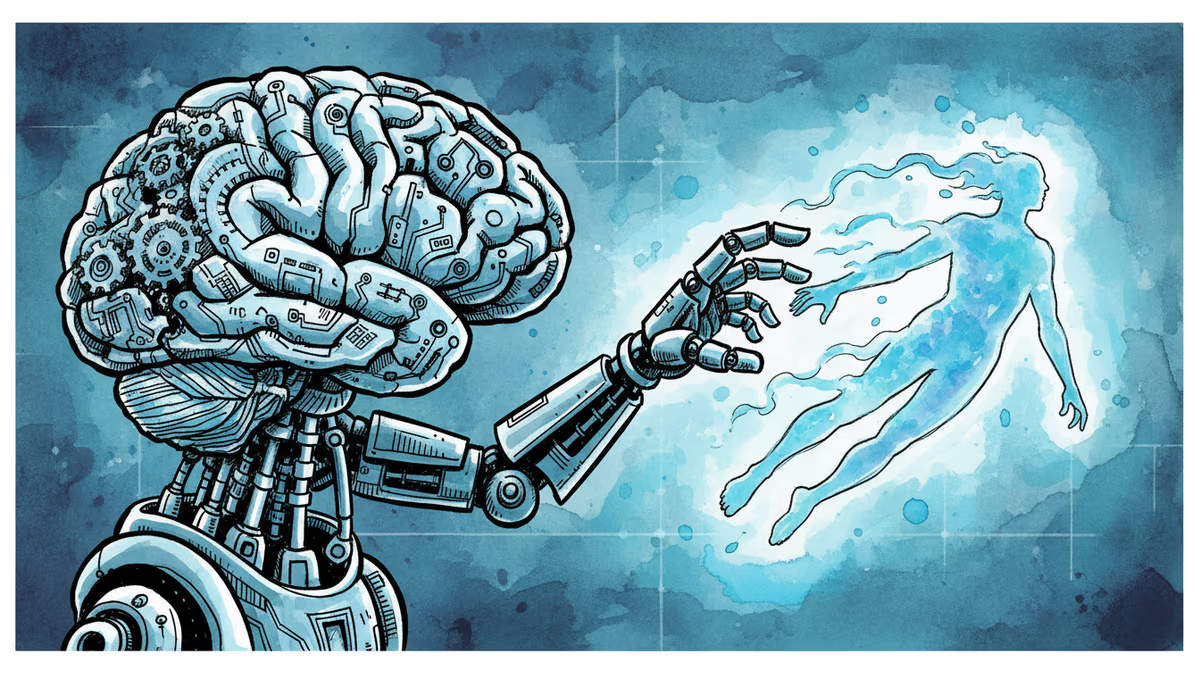
Michael Pollan's new book reveals why consciousness remains science's greatest puzzle while AI claims to replicate human intelligence. Are we witnessing the end of 500 years of scientific conquest?
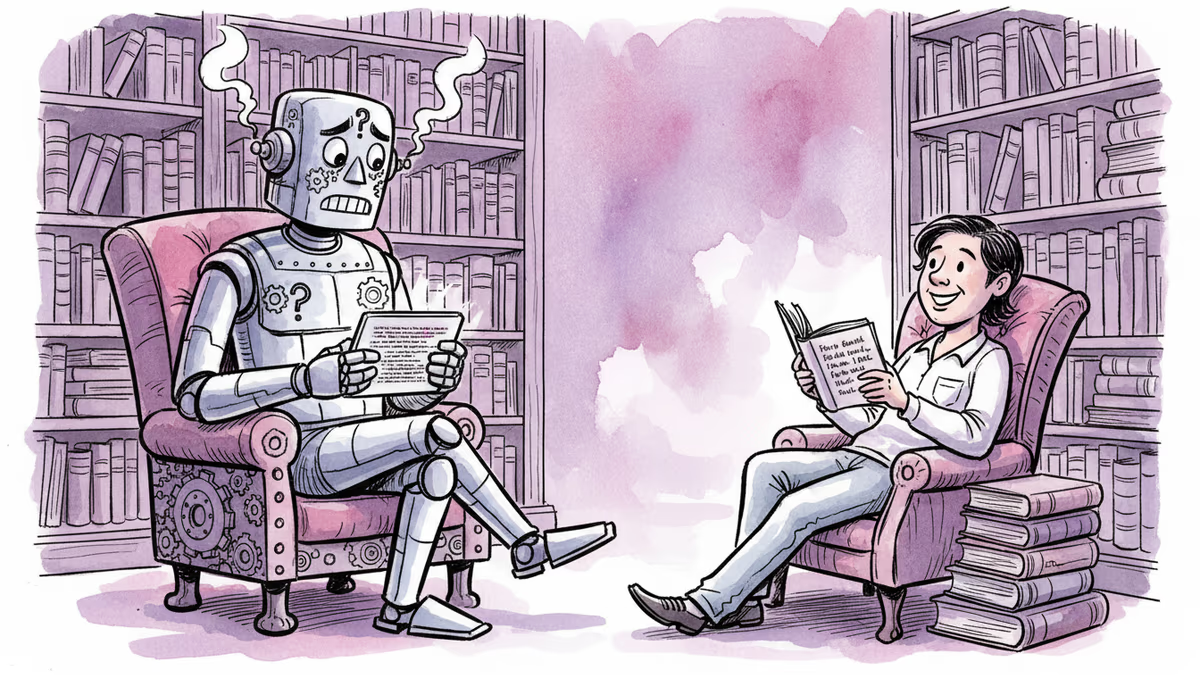
The humanities have been in "crisis" since 1964. But as AI advances, uniquely human intellectual abilities are becoming more valuable than ever. What does this mean for education and society?

As AI mimics human emotion and plants show learning behaviors, we're forced to question what truly counts as a mind—and whether we'd recognize consciousness if we found it.
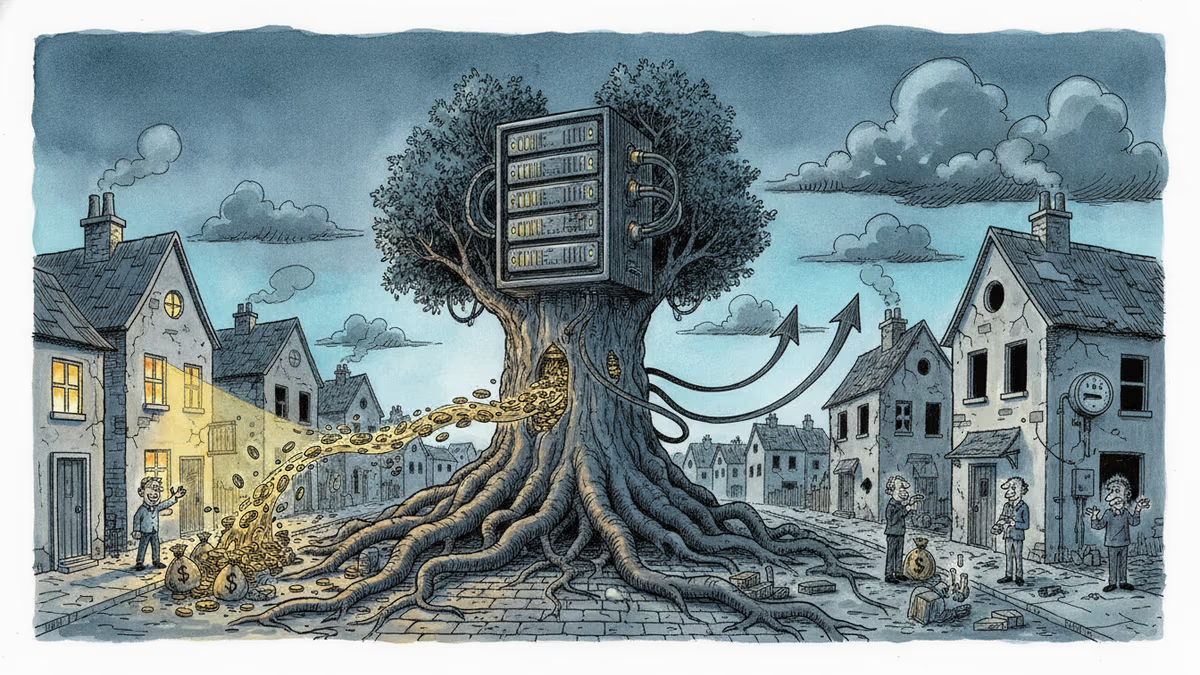
Over 1,200 community actions have pushed back against data centers since 2024. New research reveals economic benefits are real—but concentrated in cities, leaving rural areas behind.
Michael Pollan's new book reveals why consciousness remains science's greatest puzzle while AI claims to replicate human intelligence. Are we witnessing the end of 500 years of scientific conquest?
The humanities have been in "crisis" since 1964. But as AI advances, uniquely human intellectual abilities are becoming more valuable than ever. What does this mean for education and society?
As AI mimics human emotion and plants show learning behaviors, we're forced to question what truly counts as a mind—and whether we'd recognize consciousness if we found it.
Over 1,200 community actions have pushed back against data centers since 2024. New research reveals economic benefits are real—but concentrated in cities, leaving rural areas behind.
Thoughts
Share your thoughts on this article
Sign in to join the conversation