

Agentic AI Framework Strategy: Stop Building Bigger Brains, Start Building Better Tools
Discover the most efficient agentic AI framework strategy. Compare agent vs. tool adaptation with case studies like DeepSeek-R1 and s3.
Why spend massive compute training a giant model when you can achieve the same results with 70x less data? As the ecosystem of AI agents explodes, developers are facing a choice paralysis. A new study simplifies this landscape, revealing that the secret to high-performance AI isn't necessarily a smarter brain, but a more integrated set of tools.
The Four Pillars of Agentic AI Framework Strategy
Researchers categorize the landscape into two dimensions: Agent Adaptation and Tool Adaptation. Depending on whether you rewire the model or optimize its environment, four distinct strategies emerge.

- A1 (Tool Execution Signaled): Learning from direct feedback (e.g., code success/failure). DeepSeek-R1 uses this to master technical domains.
- A2 (Agent Output Signaled): Optimizing based on the final answer quality. Search-R1 is a prime example of complex orchestration learning.
- T1 (Agent-Agnostic): Plugging off-the-shelf tools like standard retrievers into a frozen LLM. Fast and zero-training required.
- T2 (Agent-Supervised): Training specialized sub-agents to serve a frozen core. The s3 system uses this to fill specific knowledge gaps efficiently.
The Efficiency Gap: Cost vs. Modularity
For enterprise teams, the choice often comes down to budget. While an A2 system like Search-R1 requires over 170,000 examples to learn search strategies, the T2-based s3 system achieved comparable results with only 2,400 examples. That's a staggering 70-fold increase in data efficiency. Tool adaptation also allows for 'hot-swapping' modules without risking catastrophic forgetting in the core model.
Authors
Related Articles
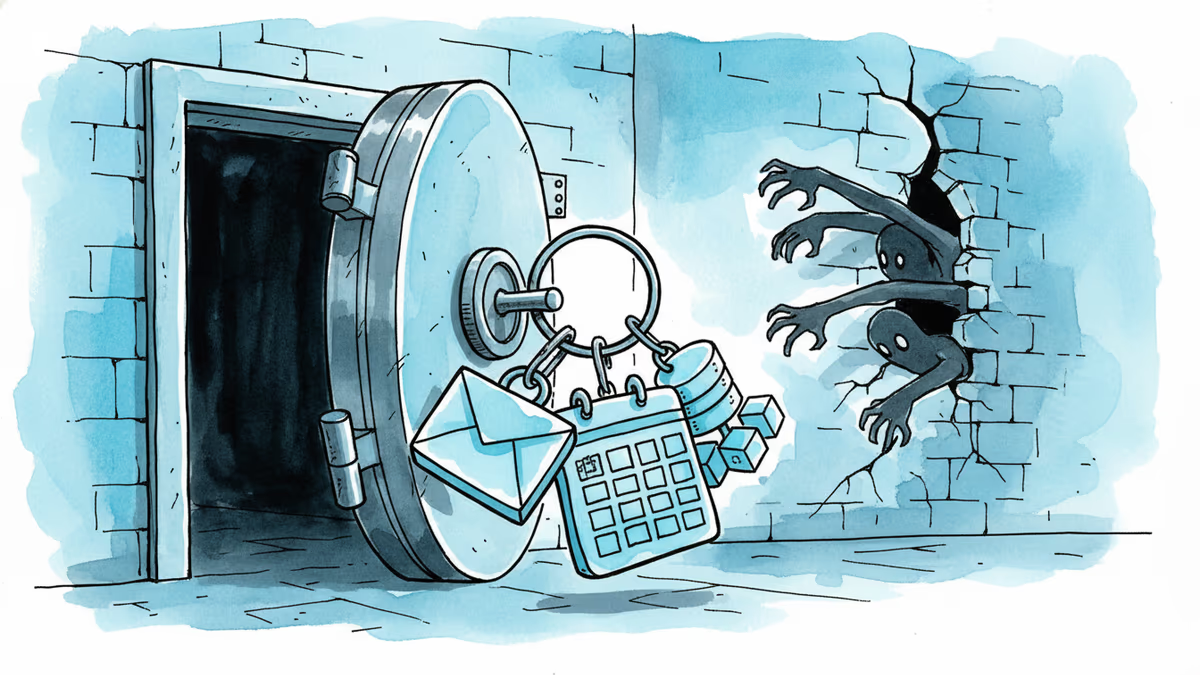
A critical vulnerability in Starlette—downloaded 325 million times per week—puts millions of AI agent servers at risk, exposing stored credentials for email, databases, and third-party services.

A small but growing group of developers has gone all-in on AI coding agents like Claude Code and OpenClaw. History suggests the rest of us won't be far behind.
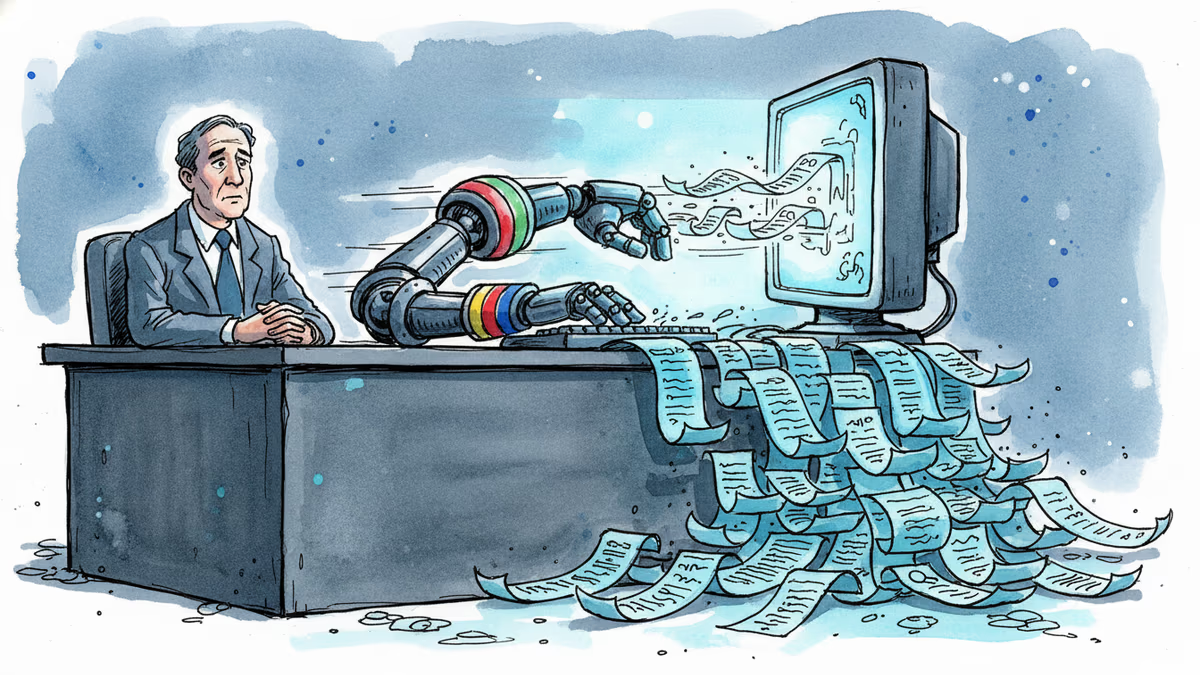
Google is building AI agents that search the web proactively, without user prompting. That's not just a product update — it's a fundamental shift in who controls the information you receive.

OpenAI has reorganized for the second time in a month, merging ChatGPT and Codex into a single agentic platform under president Greg Brockman's unified product leadership.
A critical vulnerability in Starlette—downloaded 325 million times per week—puts millions of AI agent servers at risk, exposing stored credentials for email, databases, and third-party services.
A small but growing group of developers has gone all-in on AI coding agents like Claude Code and OpenClaw. History suggests the rest of us won't be far behind.
Google is building AI agents that search the web proactively, without user prompting. That's not just a product update — it's a fundamental shift in who controls the information you receive.
OpenAI has reorganized for the second time in a month, merging ChatGPT and Codex into a single agentic platform under president Greg Brockman's unified product leadership.
Thoughts
Share your thoughts on this article
Sign in to join the conversation