

AI Agent Machine Identity Security 2026: Why the 82-to-1 Ratio Changes Everything
Machines now outnumber us 82:1. Discover how AI agents are challenging enterprise security and why dynamic service identity is the critical defense for 2026.
For every human employee, there are now 82 machine identities roaming your network. As AI agents evolve from simple chatbots into autonomous actors, the traditional human-first security model is hitting a breaking point. ServiceNow's massive $11.6 billion investment in security acquisitions throughout 2025 signals a major shift: identity, not models, is the new control plane for AI risk.
The Crisis of Scale in AI Agent Machine Identity Security
Legacy architectures like Active Directory weren't built for a world where machines outnumber humans by such a wide margin. In a single quarter, Microsoft Copilot Studio users created over 1 million AI agents—a staggering 130% increase. These agents don't just generate text; they act on behalf of the enterprise, often with excessive permissions.
Gartner predicts that by 2028, 25% of enterprise breaches will be traced back to the abuse of AI agents. Despite this, 88% of organizations still only define humans as 'privileged users,' leaving millions of API keys and service accounts in a governance blind spot.

| Identity Type | Human | AI Agent / Machine |
|---|---|---|
| Ratio | 1 | 82 |
| Access Duration | Shift-based | Always-on / 24/7 |
| Governance | Mature (MFA/SSO) | Immature (Static Secrets) |
| Risk Profile | Phishing/Social Eng. | Privilege Escalation/Orphaned Keys |
Transitioning to Dynamic Service Identities
The path forward involves moving away from static credentials toward dynamic service identities. These are ephemeral, policy-driven credentials that drastically reduce the attack surface. CrowdStrike CTO Elia Zaitsev noted that adversaries are increasingly targeting legitimate credentials rather than endpoints because it's the path of least resistance in complex cloud environments.
Authors
Related Articles
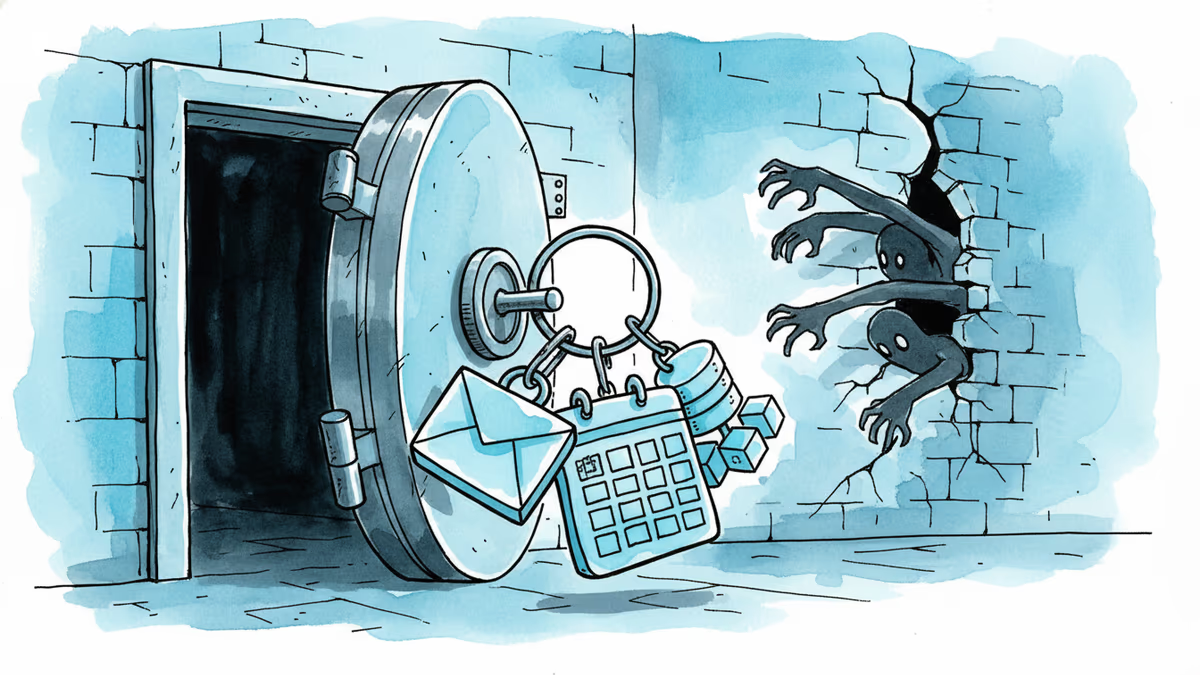
A critical vulnerability in Starlette—downloaded 325 million times per week—puts millions of AI agent servers at risk, exposing stored credentials for email, databases, and third-party services.
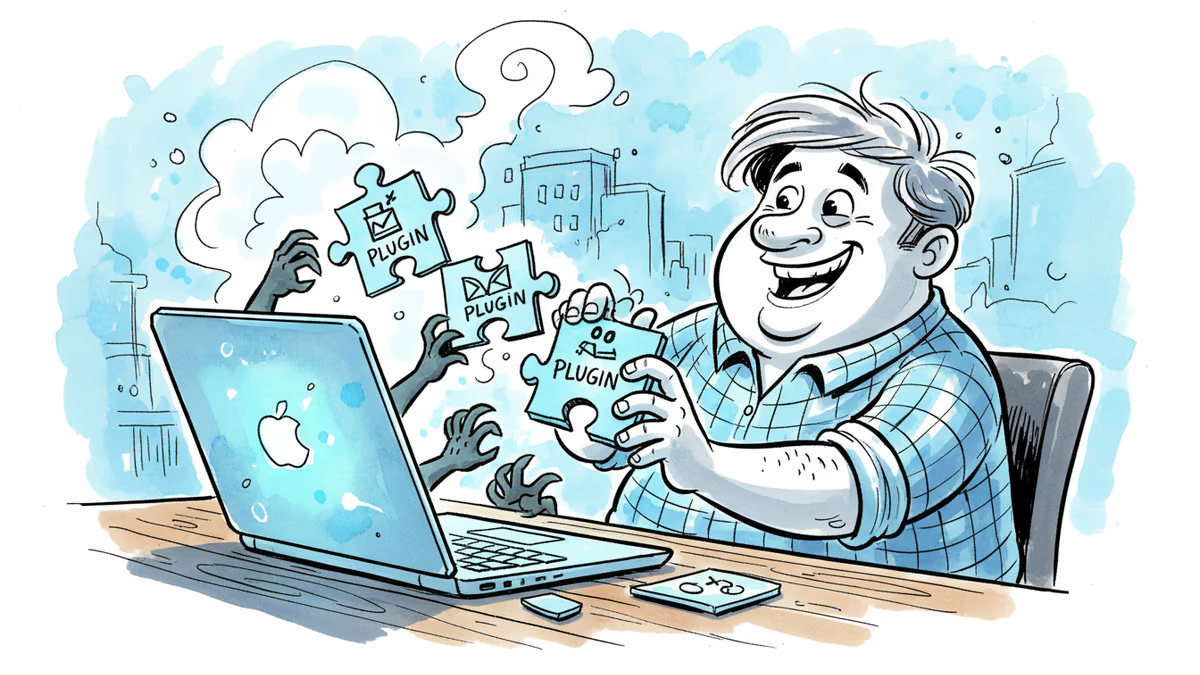
GitHub confirmed hackers stole data from 3,800 internal repositories via a poisoned VS Code extension. Here's why developer tools are now the most dangerous attack surface in tech.
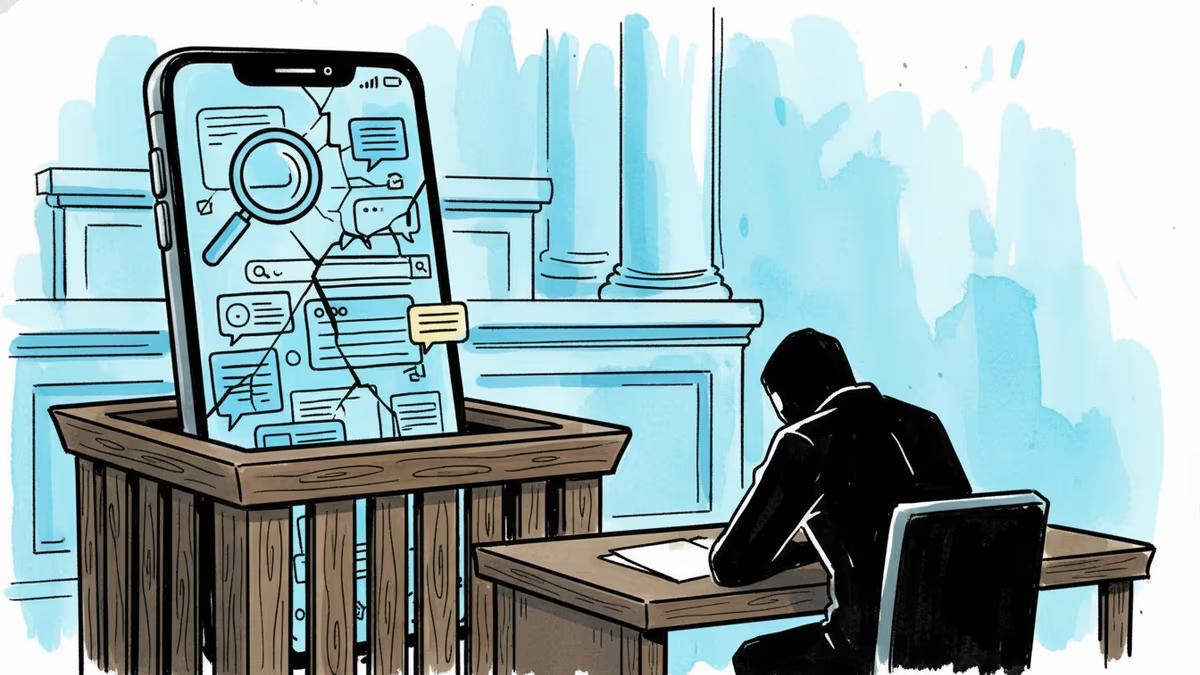
A Utah woman was sentenced to life in prison partly because of her Google searches and deleted texts. The Kouri Richins case reveals how digital footprints have become the courtroom's most reliable witness.
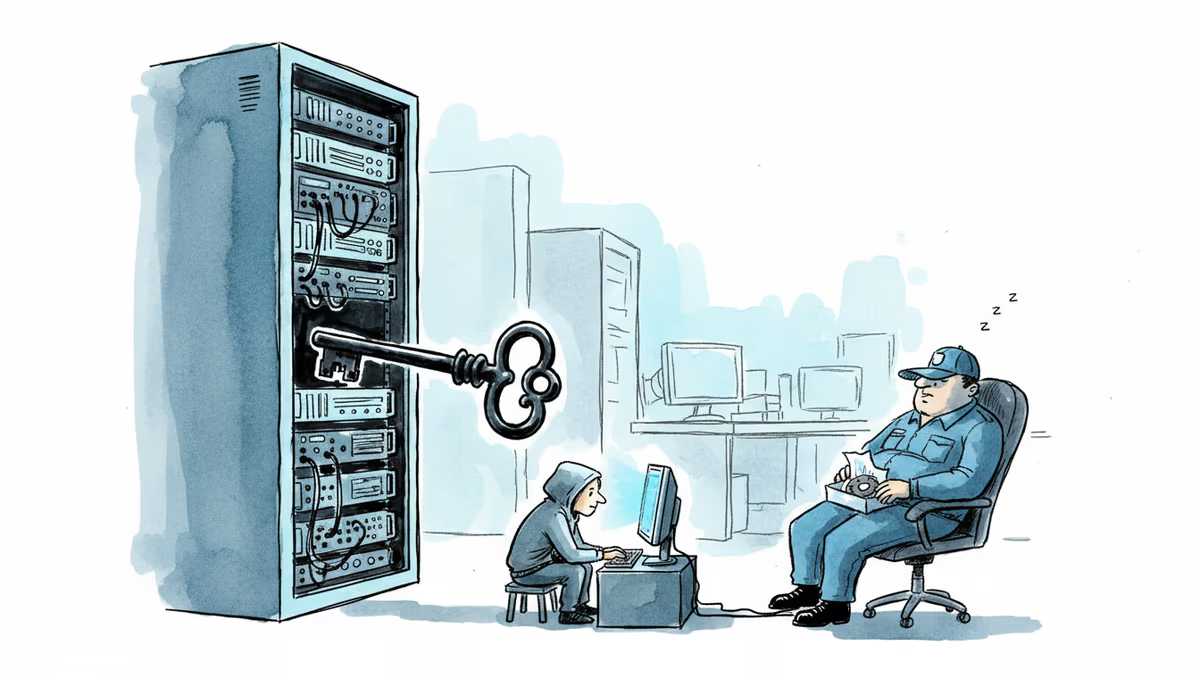
Dirty Frag gives low-privilege users root access on virtually every Linux distro. The exploit code leaked three days ago. Microsoft says attackers are already experimenting with it.
A critical vulnerability in Starlette—downloaded 325 million times per week—puts millions of AI agent servers at risk, exposing stored credentials for email, databases, and third-party services.
GitHub confirmed hackers stole data from 3,800 internal repositories via a poisoned VS Code extension. Here's why developer tools are now the most dangerous attack surface in tech.
A Utah woman was sentenced to life in prison partly because of her Google searches and deleted texts. The Kouri Richins case reveals how digital footprints have become the courtroom's most reliable witness.
Dirty Frag gives low-privilege users root access on virtually every Linux distro. The exploit code leaked three days ago. Microsoft says attackers are already experimenting with it.
Thoughts
Share your thoughts on this article
Sign in to join the conversation