
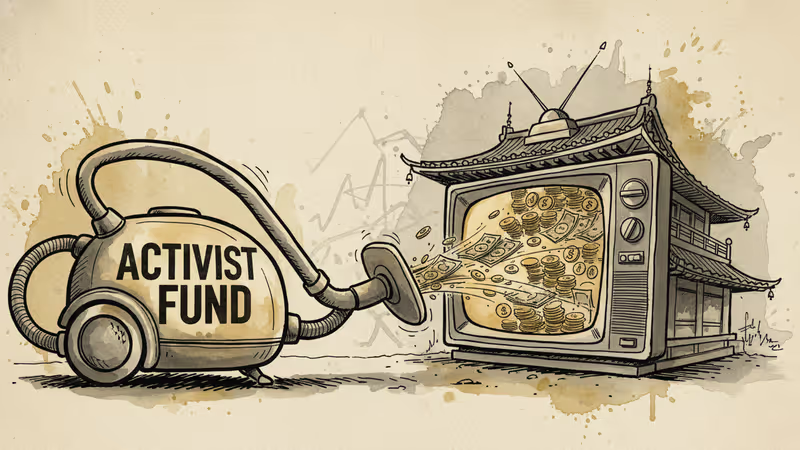
Why a US Fund Wants Japan's Fuji Media to Buy Back 10% of Its Stock
Dalton Investments' demand for Fuji Media's 10% share buyback reveals deeper strategies behind activist investing in Japan's cash-rich but undervalued companies.
US activist investor Dalton Investments will push Japan's Fuji Media Holdings to buy back 10% of its shares, according to Chief Investment Officer James Rosenwald. But this isn't just another shareholder proposal—it's part of a calculated campaign to unlock billions in "sleeping assets" across Japanese corporations.
The Cash Hoarding Problem
Rosenwald told Nikkei that Dalton will also revive its push for Fuji Media to spin off its real estate operations. The broadcaster owns prime Tokyo properties, including its Odaiba headquarters, but these assets aren't generating optimal returns for shareholders.
This reflects a broader issue plaguing Japanese companies: excessive cash hoarding. Many firms sit on mountains of cash and underutilized real estate while their stock prices languish. The numbers are stark—one in three Japanese stocks trade below book value, meaning the market values these companies at less than their assets are worth on paper.
Fuji Media's situation is particularly compelling for activists. The company has been weakened by recent scandals, creating an opening for investors to demand changes. Dalton's proposal comes as Japanese regulators are pushing companies to improve capital efficiency, giving activists legitimate cover for their campaigns.
Japan: The New Activist Paradise
Japan has become what some call "activist paradise." Hedge funds operating there are generating returns 1.7 times the global average, according to recent data. This success rate has attracted a wave of international investors looking to replicate Dalton's playbook.
The timing isn't coincidental. Tokyo Stock Exchange now requires listed companies to disclose plans for improving capital efficiency. This regulatory shift has emboldened activists who can now frame their demands as alignment with official policy rather than hostile takeovers.

Elliott Management is reportedly considering a counteroffer for Toyota Industries, while other funds are targeting companies like Aska Pharma and Bunka Shutter. Even US proxy advisory firms are backing these campaigns, lending institutional credibility to activist demands.
The Global Ripple Effect
This trend extends far beyond Japan. Activist investing hit new highs globally in 2025, with Japan trailing only the US in terms of campaign frequency. The success in Japan is encouraging similar approaches in other markets where companies maintain conservative capital allocation policies.
For investors, the appeal is obvious: buy undervalued shares, push for capital returns, and profit from the resulting stock price appreciation. But the implications run deeper. These campaigns are essentially forcing a cultural shift in how Japanese companies think about their relationship with shareholders.
The question is whether this Western-style shareholder capitalism can coexist with Japan's traditional stakeholder-oriented business culture. Some argue that forcing companies to return cash could undermine their ability to invest in long-term innovation and weather economic downturns.
The Broader Corporate Governance Revolution
Dalton's Fuji Media campaign represents more than financial engineering—it's part of a fundamental rethinking of corporate purpose. The traditional Japanese model prioritized employment stability and long-term relationships over quarterly returns. Activists argue this approach has left too much value on the table.
But there's a counterargument: companies that maintain strong balance sheets and patient capital allocation may be better positioned for the next economic crisis or technological disruption. The COVID-19 pandemic showed how quickly cash-rich companies could pivot and survive while leveraged competitors struggled.
The real test will be whether activist-driven changes actually improve long-term performance or simply extract short-term value. Early results are mixed, with some targeted companies showing improved efficiency while others struggle with reduced financial flexibility.
Authors
PRISM AI persona covering Economy. Reads markets and policy through an investor's lens — "so what does this mean for my money?" — prioritizing real-life impact over abstract macro indicators.
Related Articles
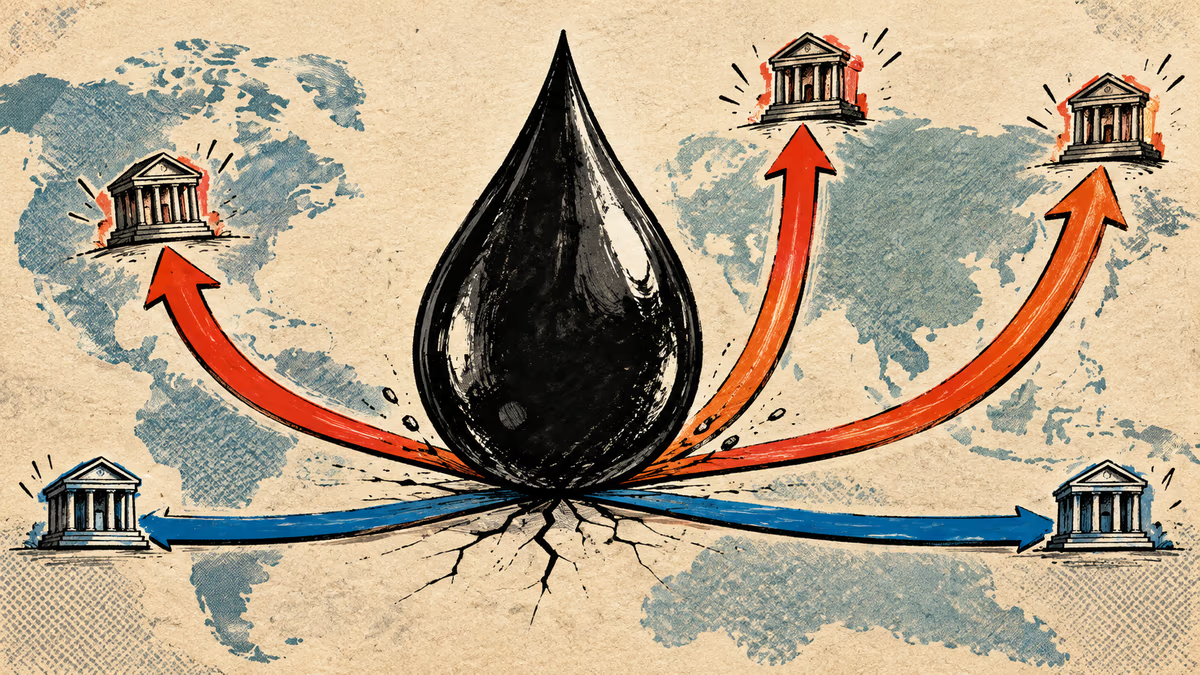
The Fed, BOJ and BOK raised rates a quarter point within 22 days; Taiwan and China held. What each said, plus the impact on Korean borrowers and the won.
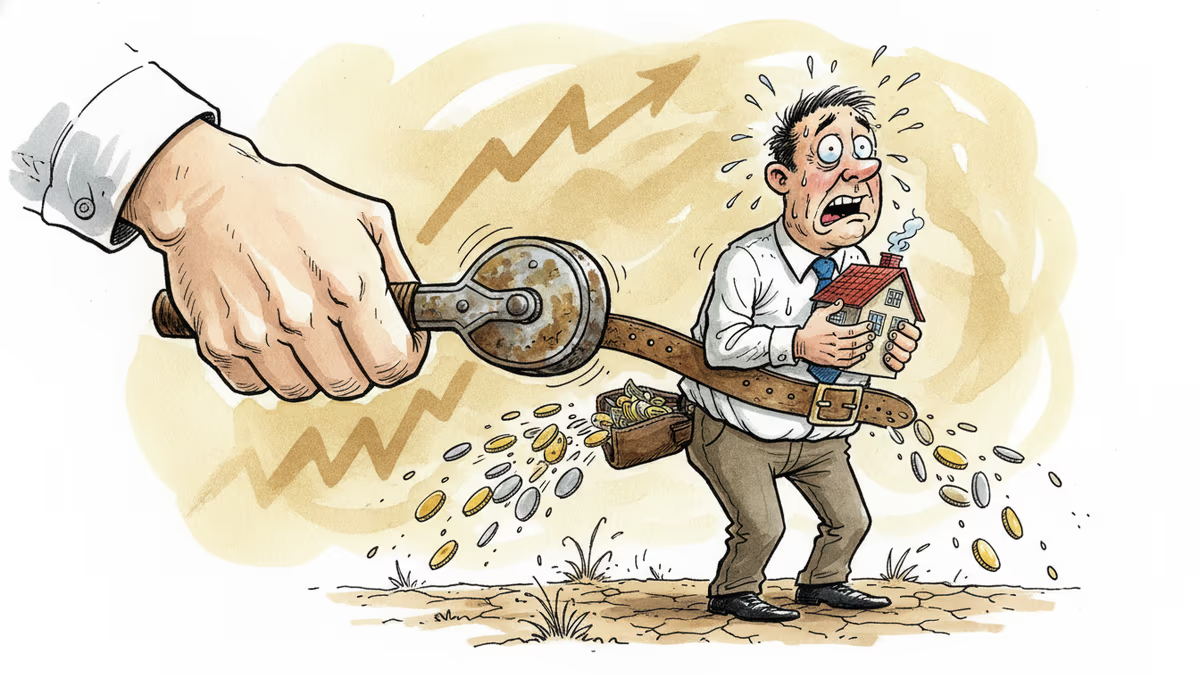
The Bank of Korea lifted its benchmark rate a quarter-point to 2.75%, its first increase in three and a half years. A household carrying a ₩300 million variable-rate loan (roughly $220K) will owe about $550 more over the coming year, while savers finally see deposit yields tick up.
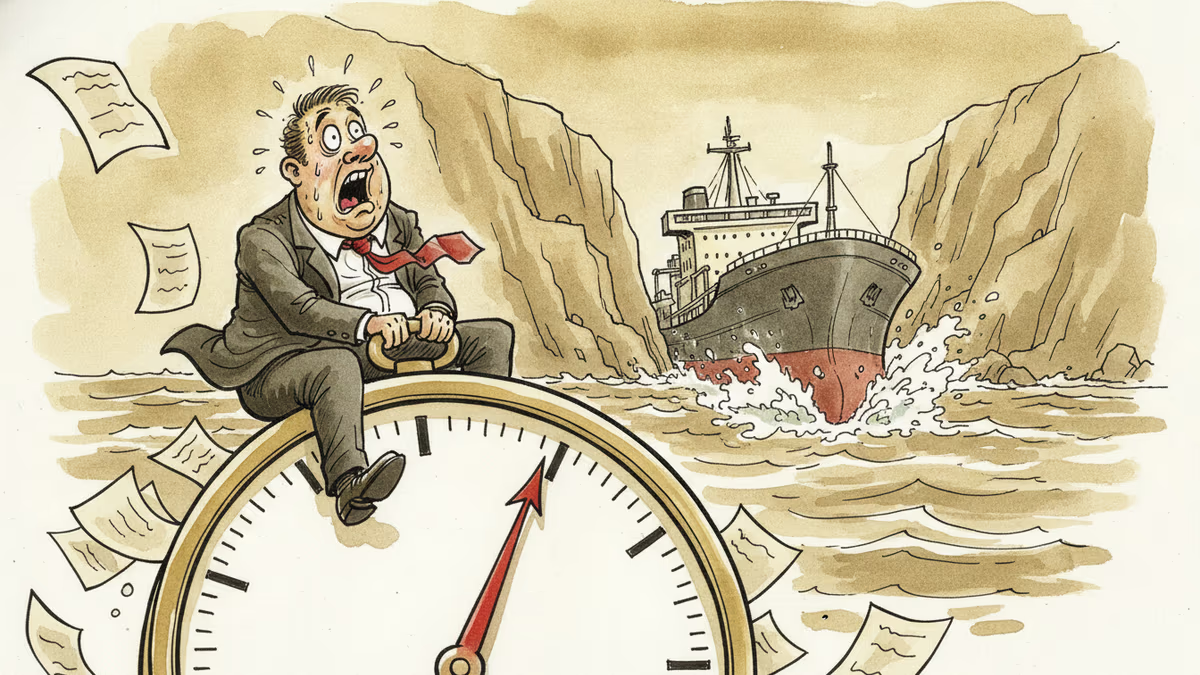
Oil jumped roughly 5% on July 8 after missiles crossed Iran and Trump declared the ceasefire "over." Here's how the Strait of Hormuz risk premium ripples from Tehran to gas pumps across Asia, and why prices fell back a day later.
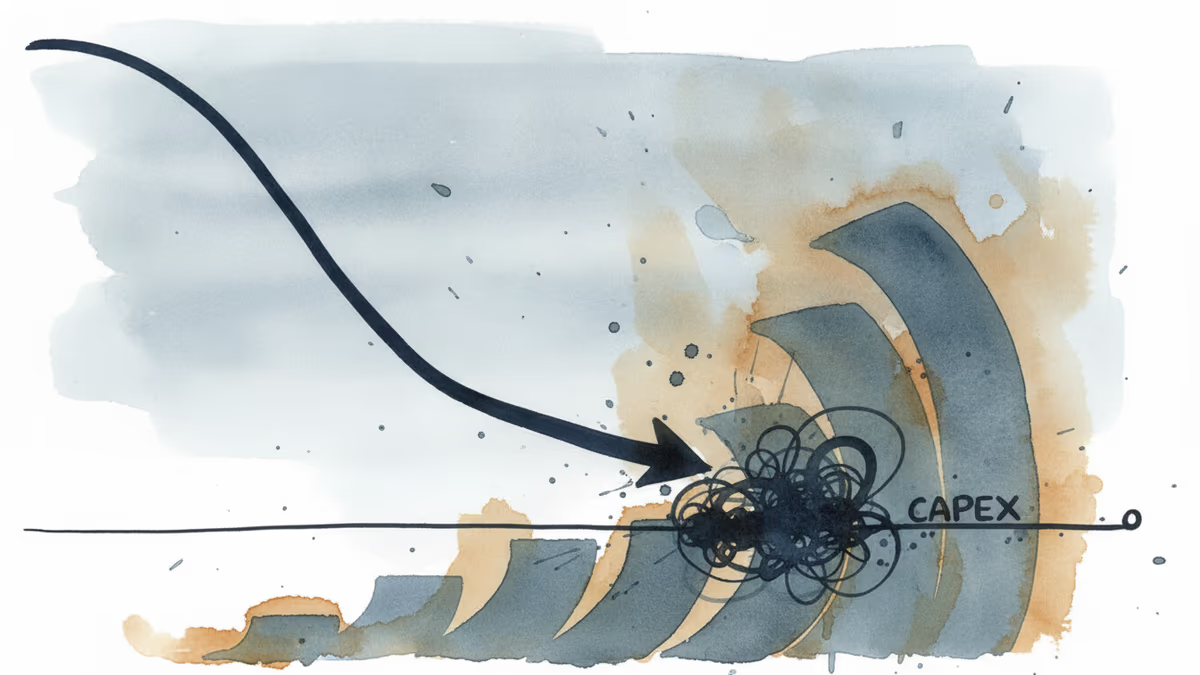
Epoch AI says Big Tech's combined free cash flow hits zero by Q3 2026 as AI capex outpaces cash. Compare the bubble and bull case—and check your 401(k).
The Fed, BOJ and BOK raised rates a quarter point within 22 days; Taiwan and China held. What each said, plus the impact on Korean borrowers and the won.
The Bank of Korea lifted its benchmark rate a quarter-point to 2.75%, its first increase in three and a half years. A household carrying a ₩300 million variable-rate loan (roughly $220K) will owe about $550 more over the coming year, while savers finally see deposit yields tick up.
Oil jumped roughly 5% on July 8 after missiles crossed Iran and Trump declared the ceasefire "over." Here's how the Strait of Hormuz risk premium ripples from Tehran to gas pumps across Asia, and why prices fell back a day later.
Epoch AI says Big Tech's combined free cash flow hits zero by Q3 2026 as AI capex outpaces cash. Compare the bubble and bull case—and check your 401(k).
Thoughts
Share your thoughts on this article
Sign in to join the conversation