

Tech’s Great Reset: Over 240,000 Jobs Vanish in 2025 as AI-Driven Layoffs Reshape the Industry
A brutal year for tech jobs. Over 240,000 positions were eliminated in 2025. PRISM breaks down why this wasn't just about cost-cutting, but a fundamental industry reset driven by the race for AI supremacy.
The tech industry's wave of layoffs continued in 2025, with more than 240,000 workers losing their jobs globally, according to data tracked by PRISM. While the year's total is slightly below the highs of the post-pandemic correction, the motivation has fundamentally shifted. This wasn't just about cutting costs; it was a sweeping, industry-wide reallocation of resources toward the generative AI gold rush.
The year began with legacy tech giants like Dell and SAP trimming their workforces, citing persistent economic uncertainty. But by mid-year, the narrative changed. Big Tech firms, including Google and Meta, began shuttering or downsizing entire divisions, not because they were unprofitable, but to free up billions in capital and talent for their burgeoning AI ambitions. Companies internally referred to these moves as "resource realignment" and a drive for "efficiency."
Three core drivers fueled the 2025 layoffs. First, the lingering effects of high-interest rates and slower market growth. Second, intense pressure from investors to demonstrate profitability. But the most powerful catalyst was AI. Companies were engaged in a fierce talent war, laying off staff in legacy roles to fund astronomical salaries for AI specialists. It was less a traditional restructuring and more a strategic reconstitution of their human capital.

This great reset didn't impact all roles equally. The enterprise SaaS, ad-tech, and project management sectors were among the hardest hit. Conversely, demand for AI infrastructure engineers, cybersecurity experts, and AI model researchers skyrocketed, creating a starkly bifurcated job market where specialized AI skills commanded unprecedented premiums.
Heading into 2026, the key question is whether the productivity gains from AI will be enough to offset the human cost and drive a new wave of growth. The tug-of-war between AI-driven job destruction and job creation, it seems, has only just begun.
Authors
Related Articles
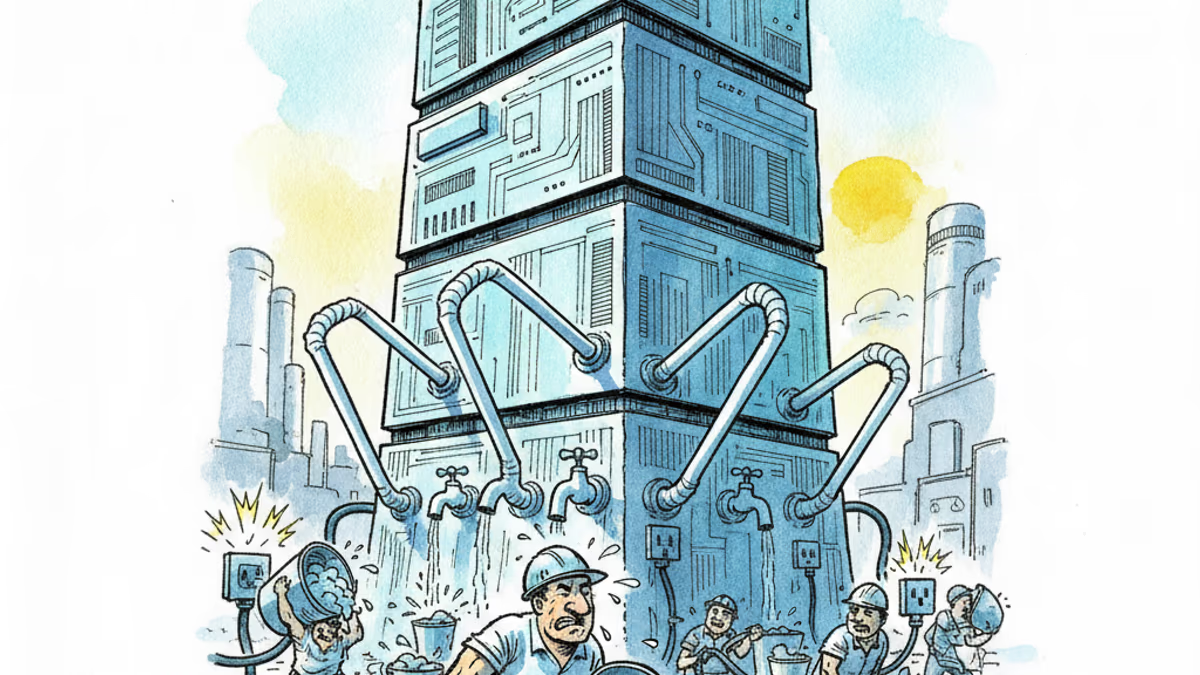
Samsung and SK unveiled a chip and AI investment package worth thousands of trillions of won on June 29. The headline number swings wildly by outlet, but the real contest isn't capital — it's water and power.

Viral videos show 2026 graduates jeering executives who praise AI at commencement ceremonies. It's not just rudeness — it's a signal about who pays for technological optimism.

Google's Gmail Live lets you ask your inbox questions out loud. Announced at I/O 2026, it's AI's pitch to skeptics — and a reminder of how much Google already knows about you.

Filipino virtual assistants using AI to ghost-manage LinkedIn profiles for executives is now a structured industry. 30 comments a day, fake engagement rings, and a platform struggling to tell real from fabricated.
Samsung and SK unveiled a chip and AI investment package worth thousands of trillions of won on June 29. The headline number swings wildly by outlet, but the real contest isn't capital — it's water and power.
Viral videos show 2026 graduates jeering executives who praise AI at commencement ceremonies. It's not just rudeness — it's a signal about who pays for technological optimism.
Google's Gmail Live lets you ask your inbox questions out loud. Announced at I/O 2026, it's AI's pitch to skeptics — and a reminder of how much Google already knows about you.
Filipino virtual assistants using AI to ghost-manage LinkedIn profiles for executives is now a structured industry. 30 comments a day, fake engagement rings, and a platform struggling to tell real from fabricated.
Thoughts
Share your thoughts on this article
Sign in to join the conversation