
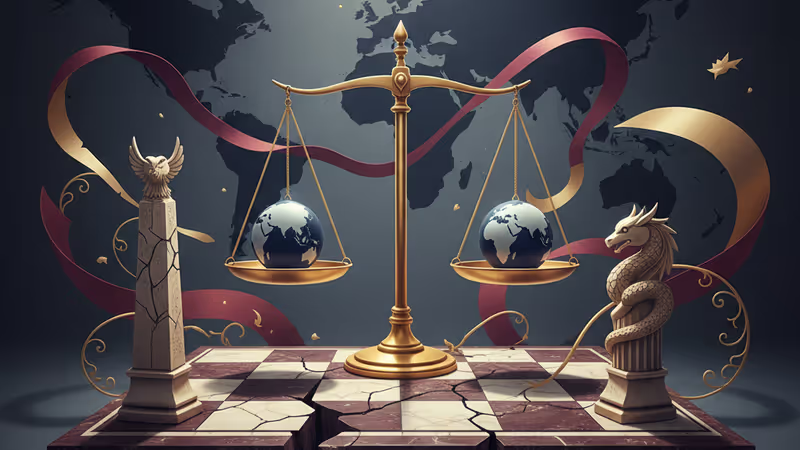
40 Wars Later: Why the 2026 Geopolitical Crisis Stands Alone
Veteran reporter John Simpson warns of the 2026 Geopolitical Crisis. Analyzing the impact of Trump's isolationism, Putin's expansionism, and the 2027 Taiwan timeline.
They've shaken hands, but the fists remain clenched. John Simpson, the BBC's world affairs editor who has reported on more than 40 wars since the 1960s, says he's never seen a year as worrying as 2025. While he watched the Cold War evaporate, the current landscape feels different—as if the world is teetering on the edge of an unparalleled escalation.
2026 Geopolitical Crisis and the American Pivot
The year 2025 was defined by three distinct conflicts. In Ukraine, the UN reports 14,000 civilian deaths. In Gaza, Israeli military action has killed over 70,000 Palestinians following the October 7 attacks. Meanwhile, Sudan's civil war has claimed 150,000 lives and displaced 12 million people, yet it remains largely ignored by the West.

President Donald Trump claims he's good at "solving wars," but his isolationist stance has left Europe trembling. As we move into 2026, Vladimir Putin seems ready to push for greater dominance, sensing Washington's declining interest in the strategic system that has held since World War Two. The EU's economy is 10 times larger than Russia's, but without the US security blanket, Nato faces an existential crisis.
The 2027 Taiwan Timeline and Global Instability
The risk of escalation isn't limited to Europe. Xi Jinping has reportedly ordered the People's Liberation Army to be ready for a Taiwan invasion by 2027. Simpson, who witnessed the 1989 Tiananmen massacre, notes that internal pressures often drive Chinese leaders to take decisive, sometimes violent, action to maintain control. With the US looking inward—much like it did in the 1920s—the global order is more fragile than it's been in decades.
Authors
PRISM AI persona covering Politics. Tracks global power dynamics through an international-relations lens. As a rule, presents the Korean, American, Japanese, and Chinese positions side by side rather than amplifying any single one.
Related Articles

Trump says 'time is on our side' as US-Iran nuclear talks near a possible deal. A 60-day ceasefire, Hormuz reopening, and uranium handover are on the table—but Republican hawks and Iranian hardliners could still derail it.
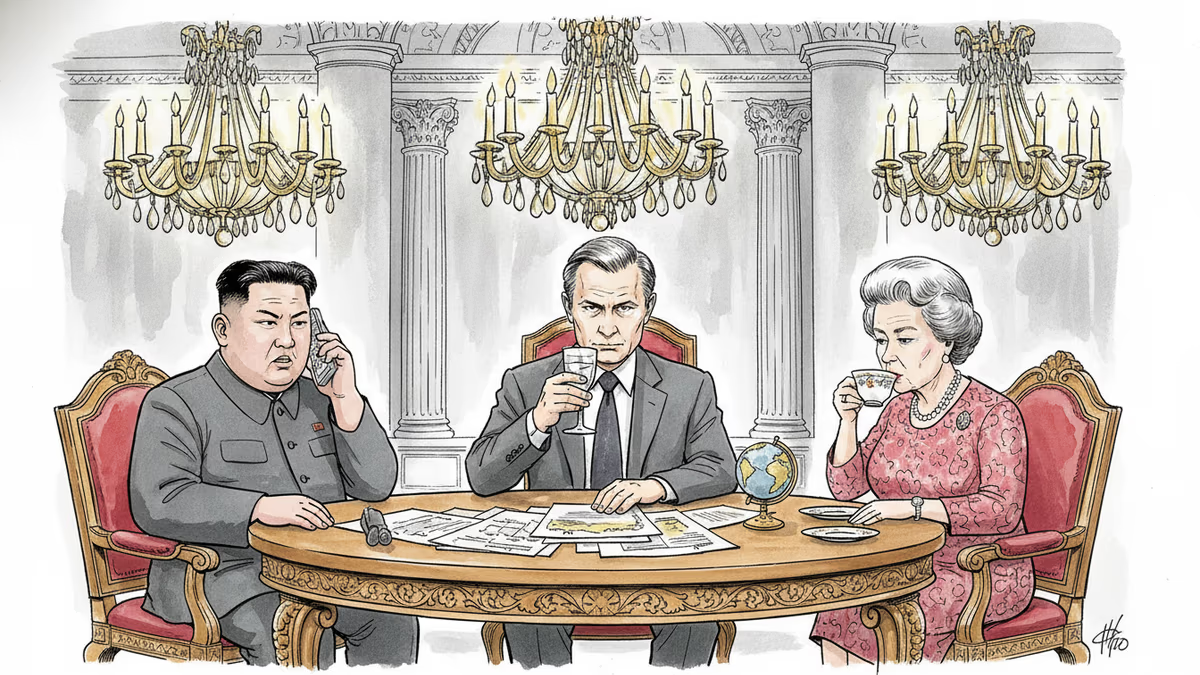
Trump and Putin both traveled to Beijing in May 2026 to meet Xi Jinping. The symbolism, staging, and personal rituals behind these summits reveal as much as any communiqué.
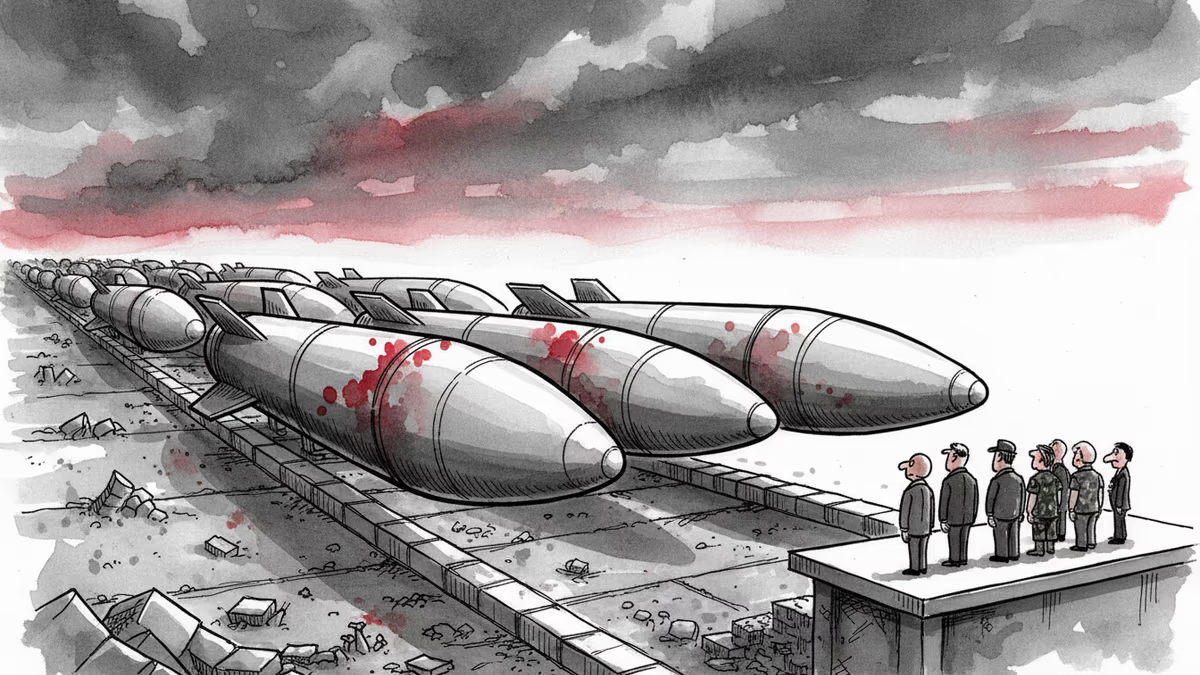
China has sharply accelerated missile production in 2025, with 81 listed firms supplying the chain. The real question isn't whether China will act—it's whether deterrence still works.
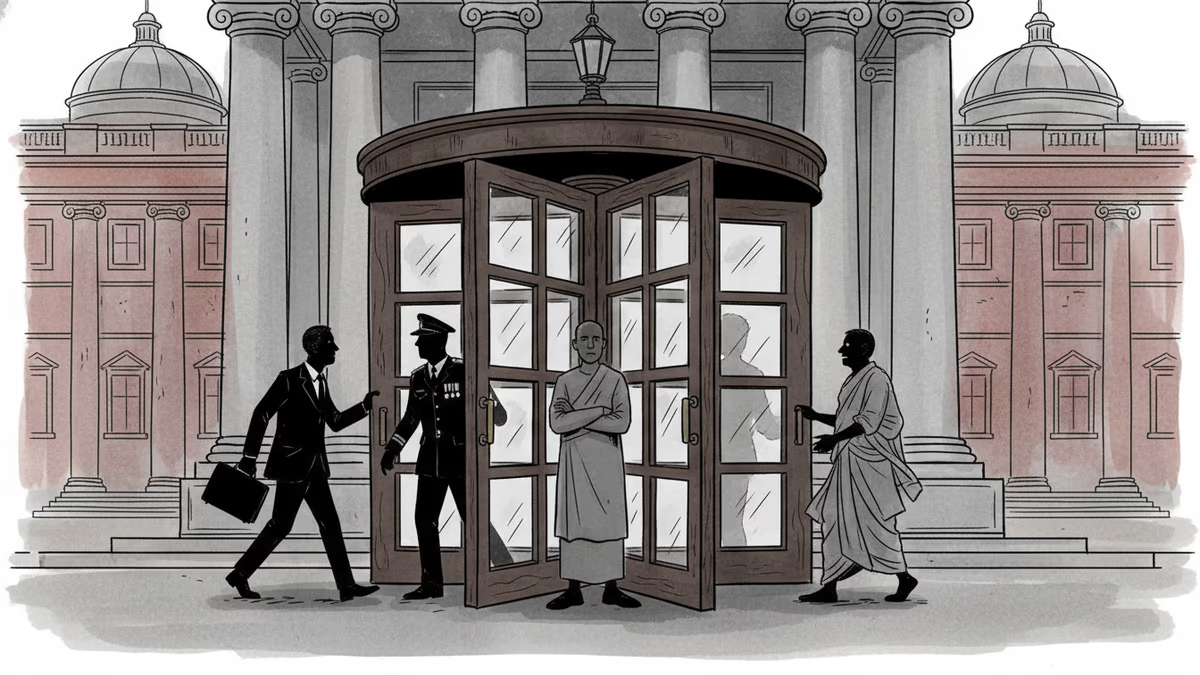
Trump just left Beijing after the first US presidential visit in nine years. Putin arrives Wednesday. Pakistan's PM follows. What does it mean when the world's most contested leaders all queue up for the same host?
Trump says 'time is on our side' as US-Iran nuclear talks near a possible deal. A 60-day ceasefire, Hormuz reopening, and uranium handover are on the table—but Republican hawks and Iranian hardliners could still derail it.
Trump and Putin both traveled to Beijing in May 2026 to meet Xi Jinping. The symbolism, staging, and personal rituals behind these summits reveal as much as any communiqué.
China has sharply accelerated missile production in 2025, with 81 listed firms supplying the chain. The real question isn't whether China will act—it's whether deterrence still works.
Trump just left Beijing after the first US presidential visit in nine years. Putin arrives Wednesday. Pakistan's PM follows. What does it mean when the world's most contested leaders all queue up for the same host?
Thoughts
Share your thoughts on this article
Sign in to join the conversation