

5 Things This Week — Shenzhen APEC, Nvidia Earnings
Per China's readout, Xi called Korea-China FTA phase 2 talks 'substantially completed' (PRISM translation); Seoul's trade ministry gave no signing date.
According to China's foreign ministry record, President Xi Jinping said on November 18 that the second phase of talks on the South Korea-China free trade agreement (FTA) had been "substantially completed" (PRISM translation), and South Korea's Ministry of Trade, Industry and Resources announced the same day that the talks had been declared substantially concluded, giving no date for signing or entry into force. The same week, Nvidia forecast $130.0 billion in revenue for its next quarter, and Japan's July–September GDP came in at -0.0% in the first tally, negative for the first time in four quarters. For this eighth issue, we picked one item each from diplomacy, the economy, semiconductors, music and tourism, drawn from releases dated November 14–20 that we could verify against the original documents. Figures we confirmed only through media reports are marked as such, and the Insight at the end sums up how far each of the five figures can be used right now.
1. South Korea and China 'Substantially Conclude' FTA Phase 2 in Shenzhen; China, Russia and the US Issue a 'Declaration toward Peace'
According to China's foreign ministry record of the South Korea-China summit in Shenzhen on November 18, Xi said the two countries had "substantially completed" the second phase of their FTA negotiations (PRISM translation), and South Korea's Ministry of Trade, Industry and Resources announced the same day that the talks, which it calls the follow-up negotiations on services and investment, had been declared substantially concluded. In the ministry's release, a substantial conclusion is the stage at which "negotiations have concluded, but it was agreed to finalize some technical discussions on the text through working-level consultations" (PRISM translation), and the same release names content, tourism and legal services among the areas where the level of market opening was raised. Its section on next steps says the ministry plans to "swiftly push ahead with follow-up procedures for formal signing and entry into force" (PRISM translation), with no date attached. In the same record, Xi said the agreement "helps consolidate the sound momentum of mutual benefit and win-win cooperation" and that "the two sides should make good and full use of this institutional arrangement" (PRISM translation).
In issue 7, China's foreign ministry would say only that it was "maintaining communication" (PRISM translation) about a China-Russia-US leaders' meeting; that meeting took place on November 19, as announced on November 16, and the three leaders issued the "U.S.-Russia-China Heads of State Declaration toward Peace" (posted by China's foreign ministry, the White House and the Kremlin). Its four points include the lines "The three countries plan to increase the production and supply of refined petroleum products" and "a nuclear war cannot be won and must never be fought," with no deadlines or quantities given. At US-China talks the same day, the two sides "agreed to formulate an action plan on building a constructive relationship of strategic stability," China's foreign ministry recorded; the White House's briefings and statements list showed no outcome document from those talks as of around 5 p.m. KST on November 20. According to China's foreign ministry, the summit adopted by consensus a leaders' declaration setting out the "Shenzhen Outlook," and the declaration text the ministry posted refers to APEC's "voluntary, non-binding and consensus-building principles" and contains no wording on the WTO or the multilateral trading system.
2. Japan's July–September GDP Turns Negative for the First Time in Four Quarters, With Business Investment and Public Inventories on the Plus Side
Japan's real GDP growth came in at -0.0% for July–September from the previous quarter (-0.1% annualized), down from +0.4% in April–June and negative for the first time in four quarters, the Cabinet Office said in its first preliminary estimate on November 16. The first preliminary estimate is the first official tally of how much Japan's whole economy grew or shrank over the three months, and it can be revised in the second preliminary estimate on December 8; -0.0% is how the source document writes it, a figure that rounds to zero but sits on the negative side. The annualized rate scales up the quarter's change as if it continued for a full year. Private consumption fell 0.3%, its second straight quarterly decline, while business investment rose 1.6%. By contribution (the percentage points each component added to or subtracted from GDP growth), business investment added 0.3, changes in public inventories (increases or decreases in government-held stocks) added 0.5, and net exports subtracted 0.6. Of domestic demand's +0.6 contribution, +0.5 came from public inventories, and final demand, which is tallied without inventory changes, fell 0.5%, lower than GDP. A statement issued the same day by the cabinet minister in charge blamed the drop in consumption on price increases stemming from the situation in the Middle East, along with natural disasters and bad weather, and credited the rise in business investment to high corporate earnings and a strong appetite for capital spending, adding that "it is necessary to continue closely monitoring the impact of the situation in the Middle East" (PRISM translation). One private think tank, Daiwa Institute of Research, attributed the public-inventory contribution to the fact that "a large-scale release of national oil reserves did not take place," and said "the gradual economic expansion trend continues" (PRISM translation, according to media reports).
3. Nvidia's First Results Since Its CEO Change: $130.0 Billion Forecast for Next Quarter, With China at Zero

In its earnings release on November 17 (US time), Nvidia said it expects revenue of $130.0 billion, plus or minus 3%, for its next quarter, which runs one week longer than usual, with GAAP and non-GAAP gross margins both between 71.0% and 72.0%. Forecasts like these that a company issues alongside its results are called guidance, and these are the first results Nvidia has reported since its CEO stepped down. Gross margin is the share of revenue left after subtracting the cost of revenue, and because Nvidia's fiscal year doesn't line up with the calendar, this third quarter (of fiscal 2027) is the one that ended October 25, 2026. Third-quarter revenue was $115.8 billion, up 20% from the previous quarter and 103% from a year earlier. Data center revenue rose 110% from a year earlier to $107.6 billion, and GAAP gross margin was 74.8%. The same release states that "NVIDIA is not assuming any Data Center compute revenue from China in its outlook," without giving a reason or saying how much the extra week adds. According to an 8-K (a current report US-listed companies file with the Securities and Exchange Commission, or SEC) dated November 12 (US time), Jensen Huang resigned as president, CEO and a member of the board, effective immediately, and Chief Financial Officer Colette Kress agreed to serve as interim CEO. The board has begun searching for a permanent CEO, and Kress provided the commentary in this earnings release as interim CEO.
4. Jennie in the Running for Record of the Year at the Grammys; IVE and KiiiKiii in the New Asian Pop Category
In the 69th Grammy nominations announced November 16 (US time), "Dracula," on which Jennie appears, made the eight-song Record of the Year field, and IVE's "BANG BANG" and KiiiKiii's "404 (New Era)" are among the six nominees for Best Asian Pop Music Performance, a category added this year. Under the rulebook, nominees are chosen by the Recording Academy's voting members "through first round voting or Craft Nominating Committee processes," and winners, decided in a final round of voting, will be announced at the ceremony on February 7, 2027. Record of the Year is awarded per track, and "Dracula," officially credited to "Tame Impala, JENNIE," is also nominated for Best Pop Duo/Group Performance. The same rulebook lists Asian pop as a new category this year, names K-Pop, J-Pop and C-Pop as examples, and requires that recordings "feature meaningful use of one or more Asian languages." The category's other nominees are tracks by BABYMETAL and Polyphia, BINI, LiSA and SB19. This round covers works released between August 31, 2025, and August 28, 2026, and final-round voting runs from December 10, 2026, to January 7, 2027. Last year, at the 68th Grammys, Rosé's "APT." was nominated in three categories and didn't win (per the Grammys' official 68th awards page).
5. Foreign Visitors to Japan Hit a Monthly Record in October; South Korean Arrivals Set an October Record
In its October estimates released November 18, the Japan National Tourism Organization (JNTO) put foreign visitors to Japan at 3,912,500 (+0.4% from the same month a year earlier), the highest for any single month on record, and South Korean visitors at 1,035,800 (+19.4%), the highest for any October. Estimates are the figures JNTO puts out first; they're later revised to provisional figures and then finalized, and in this release the September and October 2026 numbers are estimates, while the 2025 numbers are final. We explained how visitor arrivals are defined, and how they differ from Japan's Ministry of Justice statistics, in our November 14 story. According to the same release, 20 markets set October records, and China isn't on that list. Visitors from China fell 47.0% that month to 379,500, a contrast we covered in an update to our original story. South Korean visitors for January–October totaled 9,298,400 (+21.4%). JNTO attributed South Korea's October record to "the continued popularity of travel to Japan, plus there being two three-day weekends and the effect of increased airline seat capacity, among other factors" (PRISM translation). That explanation combines an ongoing factor (popularity), a calendar factor specific to this year (two three-day weekends) and more airline seats, and these statistics can't tell us which one mattered most.
What to Watch in the Next Two Weeks
Japan's nationwide consumer price index for October came out on the morning of November 20, and PRISM will cover it on Saturday, November 21, in the October update to our story on core inflation by country. For the Shenzhen APEC summit, we'll watch whether this year's declaration appears on the APEC Secretariat's list of leaders' declarations (it hadn't been posted as of around 5 p.m. KST on November 20) and whether the US-China action plan comes out. For the South Korea-China FTA, we'll watch whether a schedule for signing and entry into force is announced, and for Nvidia, the board's search for a permanent CEO. JNTO's September figures are still estimates and will become provisional figures in the release scheduled for December 16. Beyond the next two weeks, the reference points are Japan's second preliminary GDP estimate (December 8), that JNTO release, and the Grammys' final voting (December 10, 2026, to January 7, 2027) and ceremony (February 7, 2027).
This content is AI-generated based on source articles. While we strive for accuracy, errors may occur. We recommend verifying with the original source.
Related Articles

China says Xi, Putin and Trump will meet Nov. 19 at APEC Shenzhen; no White House announcement found. APEC is non-binding, so watch US and China trade notices.

Nvidia's physical AI director held back-to-back meetings with Samsung, SK hynix, Doosan Robotics, LG, and Hyundai in Seoul. Here's what the visit signals about where the AI race is heading.
Nvidia invests $30B more in OpenAI but warns it might be the final round before IPO, as AI profitability concerns mount among tech giants.
Trump administration considers limiting Chinese companies to 75,000 Nvidia H200 chips each, less than half what Alibaba and ByteDance want to buy. The move could reshape AI development globally while Nvidia shares slip on the news.
China says Xi, Putin and Trump will meet Nov. 19 at APEC Shenzhen; no White House announcement found. APEC is non-binding, so watch US and China trade notices.
Nvidia's physical AI director held back-to-back meetings with Samsung, SK hynix, Doosan Robotics, LG, and Hyundai in Seoul. Here's what the visit signals about where the AI race is heading.
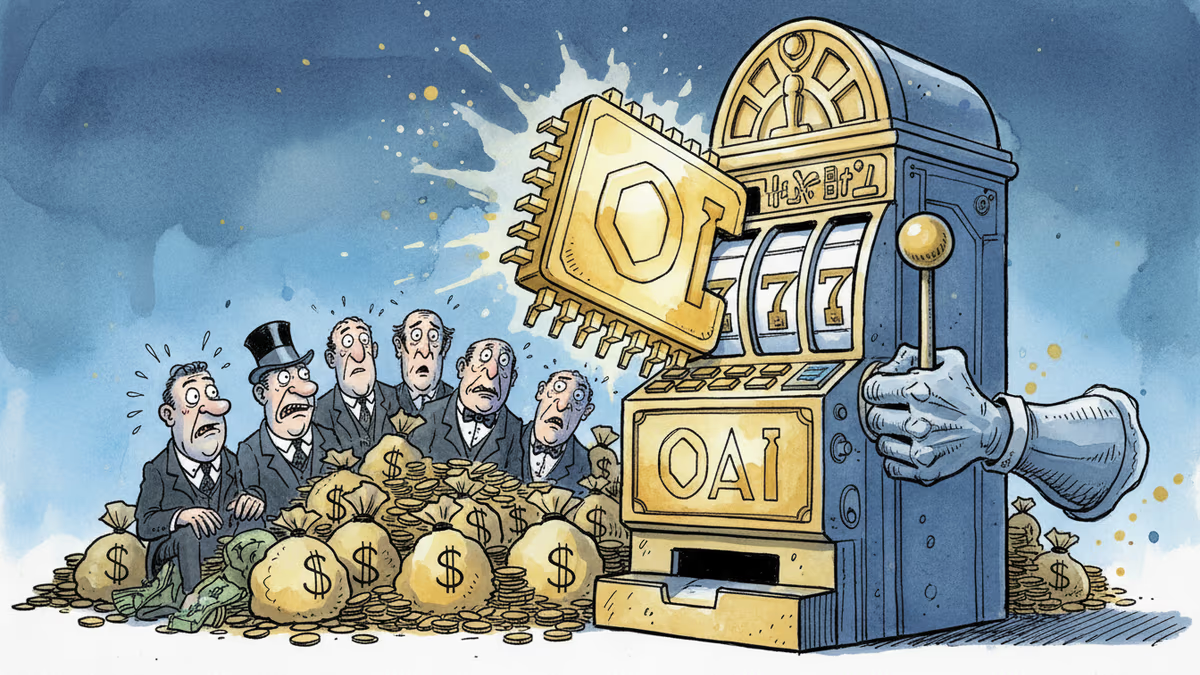
Nvidia invests $30B more in OpenAI but warns it might be the final round before IPO, as AI profitability concerns mount among tech giants.
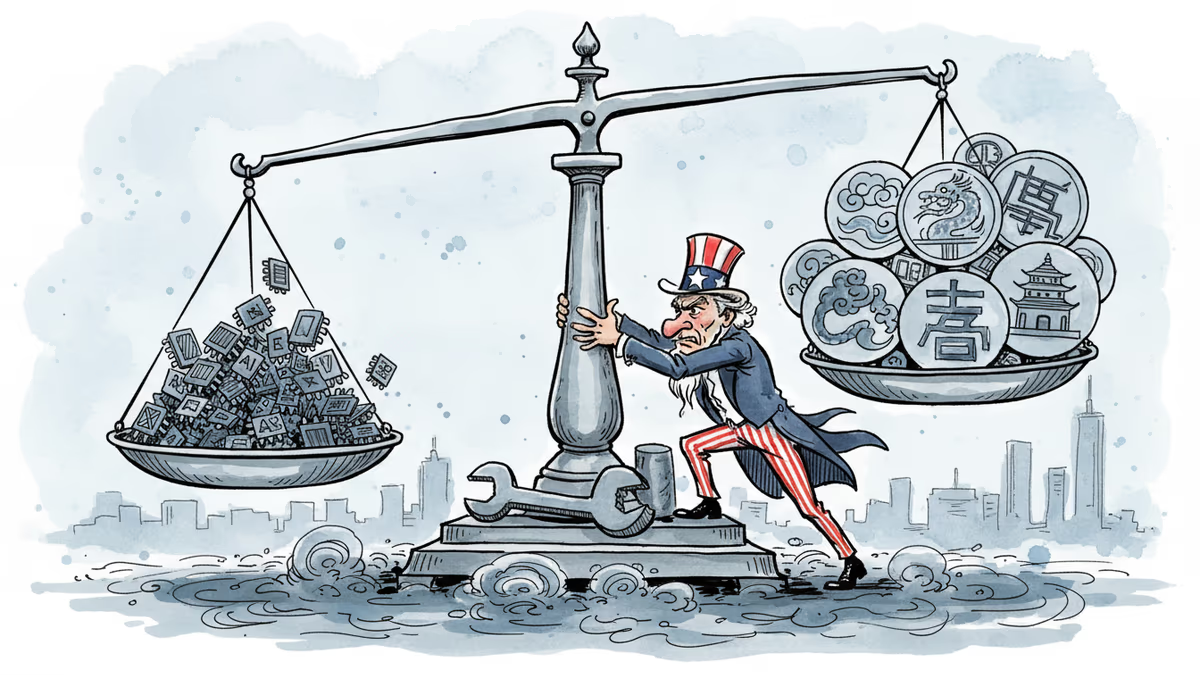
Trump administration considers limiting Chinese companies to 75,000 Nvidia H200 chips each, less than half what Alibaba and ByteDance want to buy. The move could reshape AI development globally while Nvidia shares slip on the news.
Thoughts
Share your thoughts on this article
Sign in to join the conversation