
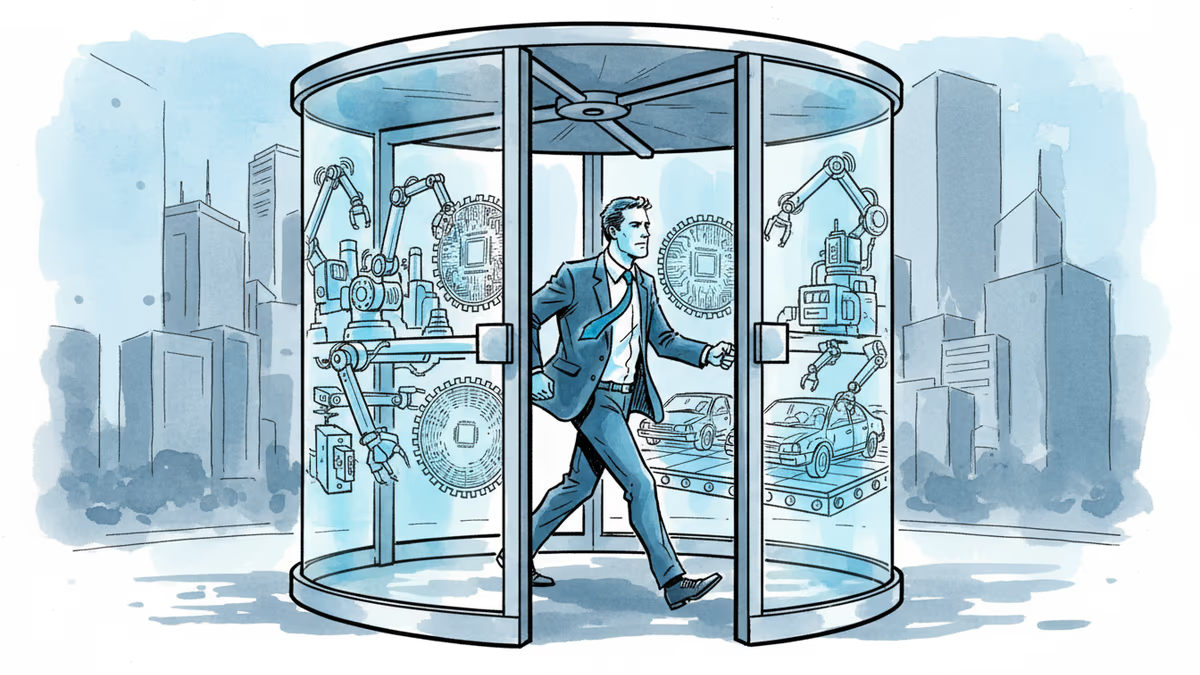
Nvidia's Seoul Blitz: Physical AI's New Frontier
Nvidia's physical AI director held back-to-back meetings with Samsung, SK hynix, Doosan Robotics, LG, and Hyundai in Seoul. Here's what the visit signals about where the AI race is heading.
Five companies. Two days. One Nvidia executive.
Madison Huang, Nvidia's senior director for physical AI platform product and technical marketing, wrapped up a packed Seoul schedule on April 29 — meetings with Samsung Electronics, SK hynix, and Doosan Robotics on Wednesday alone, following sessions with LG Electronics and Hyundai Motor the day before, plus a lecture at Seoul National University. The itinerary reads less like a courtesy tour and more like a supply chain audit.
The visit signals something worth paying attention to: Nvidia is no longer just selling GPUs. It's building a physical AI ecosystem — robots, factories, industrial platforms — and it's decided South Korea is a load-bearing pillar of that structure.
What Is Physical AI, and Why Does It Matter Now
Physical AI isn't the chatbot on your phone. It's the robotic arm that learns to grip irregular objects, the autonomous forklift navigating a warehouse at 3 a.m., the factory sensor that flags a machine failure before it happens. AI that operates in — and acts on — the physical world.
Nvidia's play here centers on two platforms Huang's team oversees: Omniverse, a simulation environment where companies can build and test AI-driven industrial scenarios before deploying them in the real world, and its broader robotics platform stack. Think of Omniverse as a digital rehearsal space for factories that haven't been built yet.
The timing isn't arbitrary. Global manufacturers are under simultaneous pressure from rising labor costs, supply chain fragility, and — for many — the geopolitical imperative to reduce exposure to any single country's production base. AI-driven automation has shifted from competitive advantage to operational necessity for a growing number of industrial players. The physical AI market is expanding fast, and Nvidia wants to own the platform layer before the architecture solidifies.
Why South Korea, Specifically

The Korean stop makes strategic sense on multiple levels. Samsung Electronics and SK hynix are the dominant suppliers of high-bandwidth memory (HBM) chips — the memory architecture that makes Nvidia's AI GPUs perform at scale. Without HBM, there's no H100. Without H100, there's no ChatGPT, no AI training at frontier scale. That's how foundational the Korean memory players are to Nvidia's core business.
But this visit goes beyond memory procurement. According to industry sources, Nvidia has been working with both Korean chipmakers to deploy large-scale GPU clusters aimed at strengthening South Korea's national AI infrastructure — and specifically to apply that infrastructure to robots, factories, and industrial platforms. That's a different kind of relationship: not just supplier-customer, but co-architects of a national AI stack.
The Doosan Robotics meeting adds another dimension. Doosan has been building out its collaborative robotics business with genuine global ambition. A technical integration between Doosan's hardware and Nvidia's robotics platform software would give both companies something the other lacks — Nvidia gets a credible hardware partner for its industrial AI push; Doosan gets access to the most powerful AI simulation and training infrastructure in the market.
The Hyundai meeting is worth noting separately. Hyundai owns Boston Dynamics, which makes it one of the few automakers that is simultaneously a serious robotics company. For Nvidia, that's not just a car customer — it's a potential showcase partner for what physical AI looks like when it's fully deployed at industrial scale.
The Friction Points Nobody's Talking About
Not everyone views this deepening integration as straightforwardly positive.
For Korean companies, the concern is dependency. Nvidia already commands extraordinary pricing power in the GPU market — a leverage that Samsung and SK hynix have felt acutely in HBM negotiations. If Korean manufacturers now build their physical AI infrastructure on Nvidia's Omniverse platform, they risk a second layer of lock-in. The history of platform economics is consistent: the entity that designs the ecosystem captures a disproportionate share of its long-term value.
For investors watching the semiconductor space, the visit raises a different question: does this deepen Nvidia's moat, or does it signal that the physical AI land grab is competitive enough to require this level of personal diplomacy? Both readings are plausible. Nvidia visiting customers is normal. Nvidia's physical AI director personally touring five major Korean industrial partners in 48 hours suggests urgency.
For workers in Korean manufacturing, the acceleration of physical AI deployment isn't an abstract technology story. Faster automation timelines mean the question of how productivity gains get distributed — between shareholders, management, and labor — becomes more pressing, sooner.
This content is AI-generated based on source articles. While we strive for accuracy, errors may occur. We recommend verifying with the original source.
Related Articles

Nvidia invests $30B more in OpenAI but warns it might be the final round before IPO, as AI profitability concerns mount among tech giants.
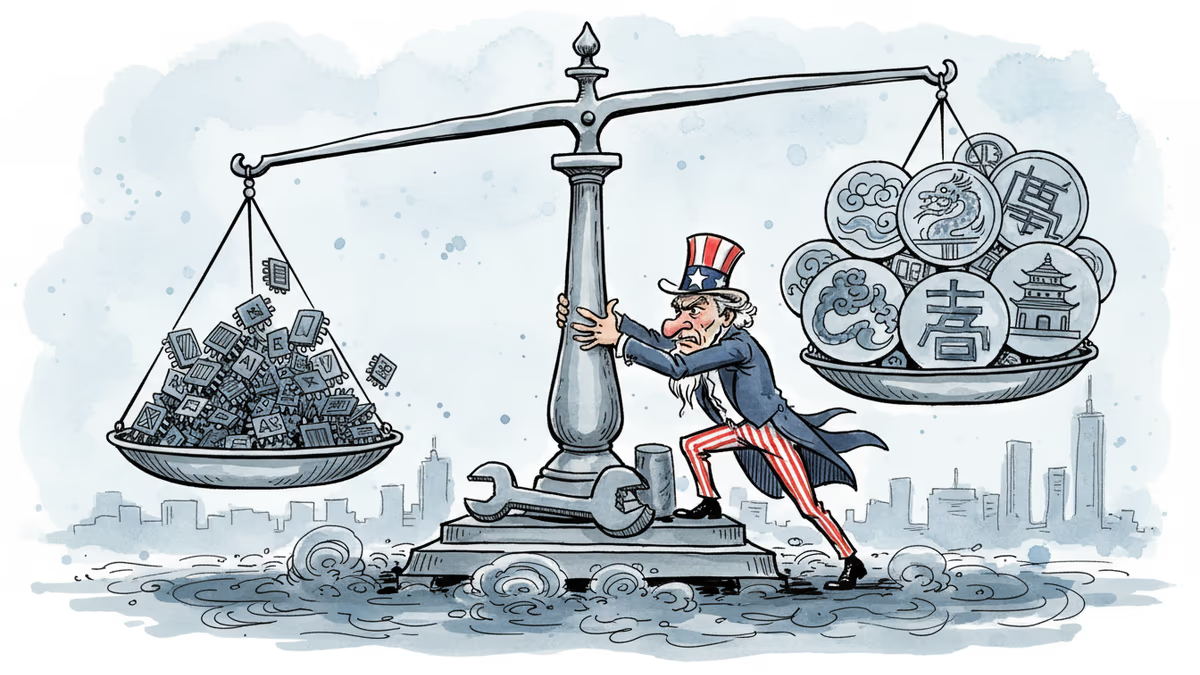
Trump administration considers limiting Chinese companies to 75,000 Nvidia H200 chips each, less than half what Alibaba and ByteDance want to buy. The move could reshape AI development globally while Nvidia shares slip on the news.
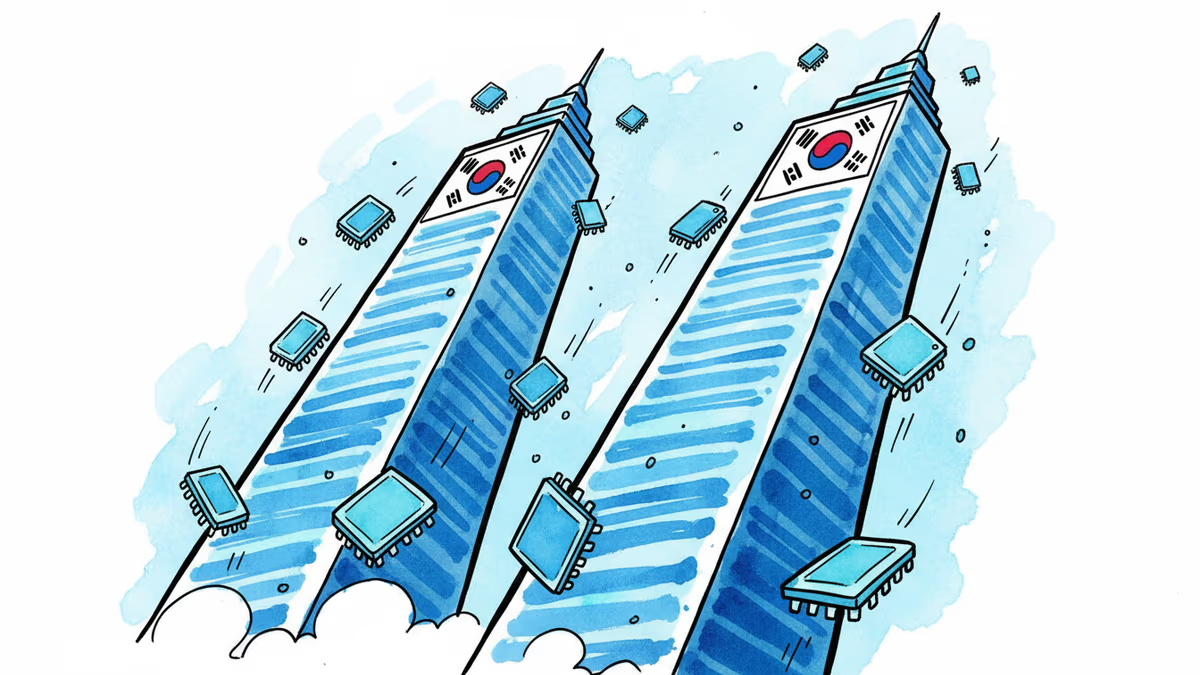
Samsung Electronics regained the top spot in global DRAM market in Q4, ending SK Hynix's brief reign. AI boom and HBM supply deals drove the dramatic reversal.
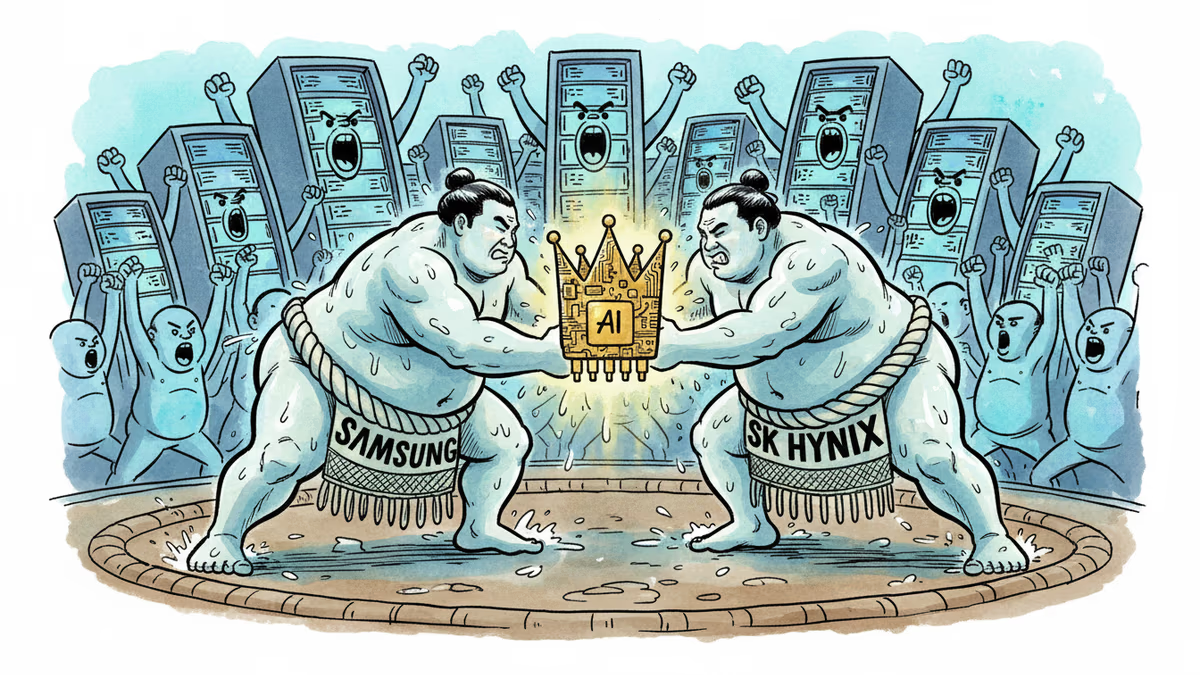
Samsung Electronics regained global DRAM leadership with $19.1B in Q4 sales, outpacing SK Hynix by just 3.7 percentage points in a fiercely competitive memory market.
Nvidia invests $30B more in OpenAI but warns it might be the final round before IPO, as AI profitability concerns mount among tech giants.
Trump administration considers limiting Chinese companies to 75,000 Nvidia H200 chips each, less than half what Alibaba and ByteDance want to buy. The move could reshape AI development globally while Nvidia shares slip on the news.
Samsung Electronics regained the top spot in global DRAM market in Q4, ending SK Hynix's brief reign. AI boom and HBM supply deals drove the dramatic reversal.
Samsung Electronics regained global DRAM leadership with $19.1B in Q4 sales, outpacing SK Hynix by just 3.7 percentage points in a fiercely competitive memory market.
Thoughts
Share your thoughts on this article
Sign in to join the conversation