
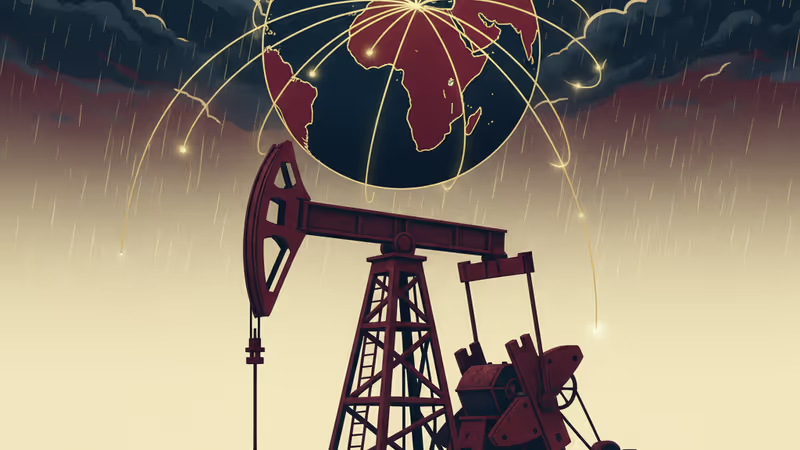
Venezuela Has the World's Largest Oil Reserves. Why Won't U.S. Companies Go Back?
Despite pressure from the Trump administration, U.S. oil giants are reluctant to return to Venezuela, home to the world's largest oil reserves. We analyze the reasons, from political risk to crumbling infrastructure.
Why would America's oil giants turn their backs on the world's largest crude reserves? Despite the Trump administration's intensifying pressure on Venezuela's President Nicolas Maduro and its calls for U.S. companies to return, the industry isn't interested. Currently, Chevron is the only major U.S. oil company still operating in the country.
According to Politico, some American oil companies have already told President Trump they have no plans to re-invest, even if a regime change occurs. This hesitation is rooted in a painful history where firms like ConocoPhillips and ExxonMobil saw their assets expropriated and were forced out.
A Mountain of Above-Ground Risk
The primary deterrent for these companies is profound unpredictability. Scott Modell, CEO of the energy consulting firm Rapidan, told NPR that stabilizing the 'above-ground political risk' in Venezuela will take years, and companies aren't going to rush back in. The analysis suggests that even if Maduro falls, the entire ecosystem—courts, regulators, and state-owned oil institutions—will need a lengthy overhaul to become reliable and predictable.
Crumbling Infrastructure and a Broken Economy
Beyond politics, the physical and economic barriers are immense. Venezuela's oil infrastructure is in a state of severe decay. Wells and pipelines are corroded, and blending facilities need urgent repairs. Frequent power grid failures regularly shut down oil operations. Modell notes that companies would have to worry about basics like reliable water and power.
The country's shattered economy further dampens any investment appeal. Hyperinflation, an exodus of the prime working-age population, and rampant government corruption make it nearly impossible for a company to rationally justify a multi-billion dollar investment in an environment where the basic rule of law is absent.
Better Bets, Like Guyana
Crucially, oil majors have safer, more attractive places to invest their capital. The massive offshore discoveries in neighboring Guyana present a prime example. No matter how much the Trump administration incentivizes a return, global energy giants are now pickier with their projects. By all current measures, Venezuela doesn't make the cut.
본 콘텐츠는 AI가 원문 기사를 기반으로 요약 및 분석한 것입니다. 정확성을 위해 노력하지만 오류가 있을 수 있으며, 원문 확인을 권장합니다.
관련 기사

나이지리아 보르노주 마이두구리 시내 모스크에서 저녁 기도 중 폭발이 발생해 다수의 사상자가 우려됩니다. 이 지역은 보코하람 등 이슬람 무장단체의 활동이 잦은 곳입니다.
미국 법무부가 제프리 엡스타인 관련 100만 건 이상의 문서를 추가로 발견했다고 발표했다. 피해자 보호를 위한 검토 및 편집 작업에 수 주가 소요될 전망이며, 이는 트럼프 대통령이 서명한 정보공개법에 따른 조치다.

2025년 파키스탄은 인도와의 군사 충돌 이후 국제 무대에 화려하게 복귀했지만, 고질적인 국내 정치·경제 불안은 여전하다. 기회와 위기 사이에서 파키스탄이 마주한 4가지 전환점을 분석한다.

중국의 '판다 외교'가 일본, 프랑스와의 관계 변화를 어떻게 반영하는지 분석한다. 단순한 동물 교류를 넘어, 시진핑 정부의 정교한 외교 전략의 일면을 보여준다.
나이지리아 보르노주 마이두구리 시내 모스크에서 저녁 기도 중 폭발이 발생해 다수의 사상자가 우려됩니다. 이 지역은 보코하람 등 이슬람 무장단체의 활동이 잦은 곳입니다.
미국 법무부가 제프리 엡스타인 관련 100만 건 이상의 문서를 추가로 발견했다고 발표했다. 피해자 보호를 위한 검토 및 편집 작업에 수 주가 소요될 전망이며, 이는 트럼프 대통령이 서명한 정보공개법에 따른 조치다.
2025년 파키스탄은 인도와의 군사 충돌 이후 국제 무대에 화려하게 복귀했지만, 고질적인 국내 정치·경제 불안은 여전하다. 기회와 위기 사이에서 파키스탄이 마주한 4가지 전환점을 분석한다.
중국의 '판다 외교'가 일본, 프랑스와의 관계 변화를 어떻게 반영하는지 분석한다. 단순한 동물 교류를 넘어, 시진핑 정부의 정교한 외교 전략의 일면을 보여준다.