
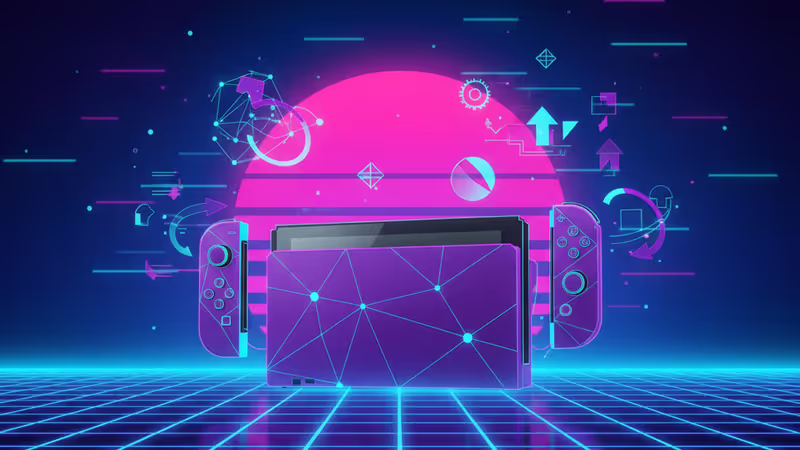
Nintendo Switch 2 Review: A Powerful, Pricey Successor That Plays It Safe
An in-depth review of the newly released Nintendo Switch 2. We analyze its powerful specs like 4K output and a 120Hz screen, alongside its drawbacks: a $449.99 price tag and limited 256GB storage.
PRISM Insight: Nintendo's 'Apple-ification'
The Switch 2's near-$450 price point and paid game upgrades signal a pivotal strategy shift for Nintendo. The company is moving away from the traditional console model of selling hardware at a low margin or loss to drive software sales. Instead, it's embracing a premium, 'Apple-like' strategy that prioritizes hardware profitability and maximizes recurring revenue from a loyal user base through subscriptions and add-ons. It's an ambitious pivot to build a more resilient, high-margin business in a competitive market, but it's also a gamble that risks alienating price-sensitive consumers.
After years of swirling rumors, the Nintendo Switch 2 is finally here. For gamers who watched blockbuster titles like *Elden Ring* skip the original console, the promise of a more powerful successor has been a long-held hope. Based on early hands-on accounts, the new console is exactly that: a better, stronger version of the original Switch. It delivers a welcome performance boost but comes with a steep price tag and some notable compromises.
A Sharper Screen and 4K Output
The Switch 2's core strength is its upgraded hardware. According to one reviewer's experience, the 7.9-inch 1080p LCD screen, which boasts a 120Hz refresh rate, looks sharp and feels responsive. While an OLED display would have been a preferred choice for many, the current screen is a clear improvement for handheld play. When docked, the console's ability to output games at up to 4K resolution—or up to 120Hz at lower resolutions—is a significant leap forward, making it a more viable living room console.
The Gaming Experience: New, Upgraded, and Classic
The console features backward compatibility with most original Nintendo Switch games. Better yet, some of those titles are receiving patches to run at higher frame rates and resolutions. One user reported that *The Legend of Zelda: Tears of the Kingdom* runs at a smooth 4K 60fps after purchasing a $10 upgrade for the Switch 2 edition (the download is free for active Nintendo Switch Online subscribers).
That subscription also unlocks a growing library of GameCube titles available as Nintendo Classics. For new native games, the launch bundle includes *Mario Kart World*, and third-party developers are offering free demos for major titles like *Final Fantasy VII Remake Intergrade*, allowing players to sample games before buying.
The Biggest Complaints: Storage and Price
A significant pain point for the Switch 2 is its 256GB of internal storage. For players with a large digital library, this is simply not enough. Expanding the storage requires a microSD Express card, which can cost twice as much as the standard microSD cards used by the original Switch, adding a hidden cost for serious gamers.
The console’s $449.99 starting price also came as a shock. Nintendo reportedly attributes the high cost to its tech specs and an escalating tariff situation that delayed preorders in North America. While perhaps justifiable from a business perspective, the price is a high barrier to entry and has led to calls for a future hardware revision with an OLED screen and at least 512GB of storage.
Nintendo's Next Chapter
Nintendo recently announced it “will shift our primary development focus to Nintendo Switch 2,” cementing the new console as the future of its business. The company is betting that exclusive titles and long-awaited ports of third-party games will be enough to convince its massive user base to invest in a pricier, more powerful platform. Whether that bet pays off will define Nintendo's next era.
관련 기사
Asus ROG Ally가 업데이트로 개선되고 있지만, 근본적인 윈도우 문제는 여전합니다. 스팀덱과의 경쟁 속에서 마이크로소프트의 진짜 속내와 휴대용 게임기 시장의 미래를 분석합니다.
샌프란시스코 대규모 정전 사태로 웨이모 로보택시 서비스가 전면 중단됐다. 일부 차량이 교차로를 막아 교통 체증을 유발했으며, 이는 최근 웨이모가 겪고 있는 일련의 문제들과 맥을 같이한다.
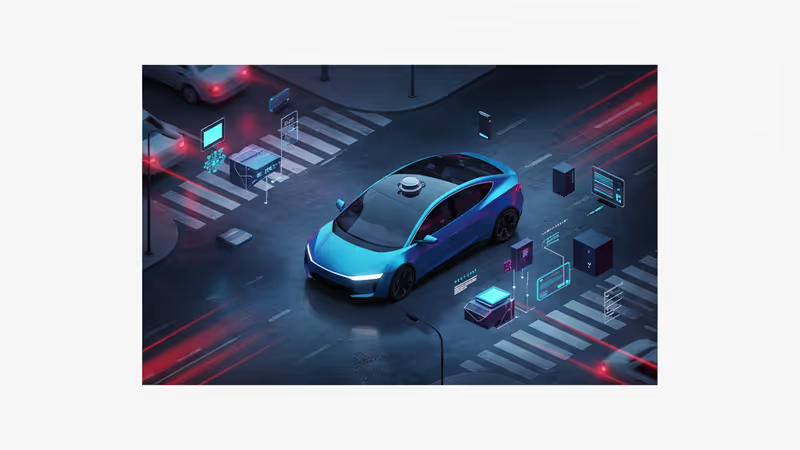
샌프란시스코 대규모 정전 사태로 구글 웨이모 로보택시 서비스가 전면 중단됐다. 도시 인프라의 취약성이 첨단 자율주행 기술의 한계를 드러낸 사건의 전말과 시사점을 분석한다.
샌프란시스코 대규모 정전으로 웨이모 로보택시가 도로에서 멈춰서는 사태가 발생했다. 인프라 의존적인 자율주행 기술의 취약성과 테슬라 FSD와의 비교점을 통해 미래 자율주행의 과제를 분석한다.