
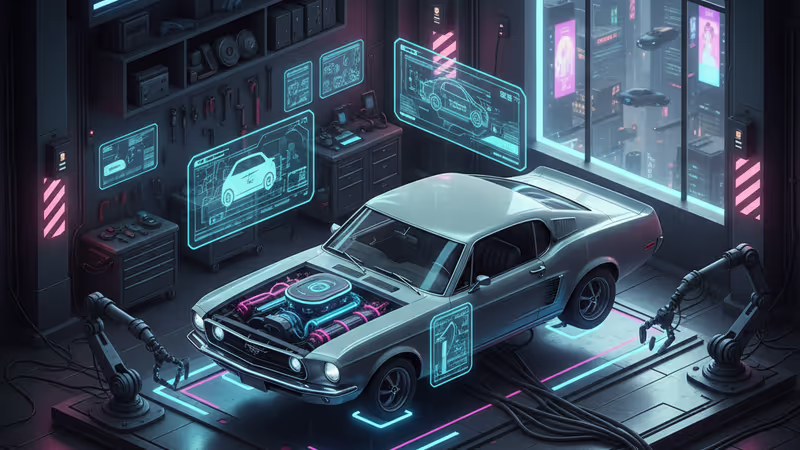
SEMA's Rebellion: Why the Auto Aftermarket Holds the True Key to the EV Future
The auto aftermarket's resistance to EV mandates signals the true future of electric vehicles. Discover why SEMA's stance is the key indicator for investors.
The Lede
While Washington and Detroit wage a high-stakes war over the future of the electric vehicle, the real verdict is being decided elsewhere: in the garages and workshops of the global auto aftermarket. A recent dispatch from the Specialty Equipment Market Association (SEMA) tradeshow reveals a critical sentiment simmering beneath the surface. The aftermarket's core message, as articulated by its leadership, is one of defiance against top-down mandates. This isn't just industry lobbying; it's the most reliable, unfiltered signal of whether EVs will become a lasting cultural platform or a politically-enforced appliance.
Why It Matters
For executives, investors, and technologists, the aftermarket's direction is a leading indicator of true consumer adoption, stripped of government subsidies and OEM marketing hype. How this multi-billion dollar ecosystem of customizers, tuners, and parts makers embraces (or rejects) electrification will determine the long-term viability of the EV transition. The second-order effects are massive:
- Investment Stickiness: Aftermarket support for a vehicle platform signals long-term consumer commitment, de-risking investments in charging infrastructure and battery technology.
- Vehicle Lifespan & Value: A robust aftermarket increases a vehicle's useful life and resale value, a critical factor for mainstream consumer buy-in.
- Innovation Frontier: The aftermarket often solves problems OEMs won't or can't, from battery cooling solutions to performance enhancements, pushing the entire technological envelope forward.
The Analysis
From Hot Rods to High Voltage: A Culture of Choice
SEMA's stance to "not be told what to do" is deeply rooted in the DNA of car culture. The aftermarket was born from a desire to personalize, modify, and improve upon what manufacturers delivered. This ethos of individual expression and performance optimization is now colliding with the world of EVs, which are often perceived as closed, software-driven ecosystems. This tension is the modern-day version of the classic battle between open platforms and walled gardens. The aftermarket's resistance to mandates isn't anti-EV; it's anti-monoculture. It champions a future where consumers can choose a V8, a hybrid, or a battery-electric powertrain and modify it to their liking.
The Post-Subsidy Litmus Test
The source correctly identifies the end of federal clean vehicle tax credits as a crossroads. Subsidies can create artificial demand, but the aftermarket thrives on genuine, organic passion. As government incentives wane, the aftermarket's investment in EV parts—from conversion kits for classic cars to performance software for Teslas—becomes the most accurate measure of real, sustainable demand. If tuners and builders are pouring their own capital into developing EV solutions, it's a clear sign they believe a passionate, paying customer base exists independent of political whims.
The Battle for the Car's Soul: Open vs. Closed Systems
The most significant long-term challenge highlighted by the aftermarket's position is the specter of the "un-modifiable" car. The inherent software complexity of EVs gives OEMs unprecedented ability to lock down vehicle systems, threatening the very existence of tuning and repair. This connects directly to the broader "Right to Repair" movement. The aftermarket's pushback is a critical defense for a future where vehicle owners, not just manufacturers, control their property. The success of EV platforms may ultimately depend on their openness to third-party innovation.
PRISM Insight: Where the Real Opportunity Lies
Beyond the political noise, the aftermarket reveals three key growth sectors for savvy investors and businesses in the EV space:
- The EV "Restomod" Boom: The high-end market for converting iconic classic cars into high-performance EVs is surging. This niche blends nostalgia with cutting-edge tech, creating high-margin products and proving the emotional appeal of electric power when decoupled from generic modern designs.
- Solving OEM Gaps: As the first generation of mass-market EVs ages, a massive market is emerging for out-of-warranty repairs and upgrades. This includes everything from more efficient battery cooling systems to third-party battery pack replacements, offering consumers an alternative to costly manufacturer solutions.
- Performance and Personalization: The desire to go faster and look unique is universal. For EVs, this means software unlocks for more power, aerodynamic body kits to increase range and visual appeal, and suspension upgrades to handle the instant torque and heavy weight of battery packs. This is the core business of the aftermarket, adapted for a new technology.
PRISM's Take
The automotive future will not be a monolithic, top-down mandate from either governments or legacy automakers. It will be a messy, vibrant, and decentralized ecosystem defined by consumer choice. The defiance of the SEMA community is the canary in the coal mine, signaling that for EVs to truly win the hearts and minds of the mainstream, they must evolve from sealed appliances into open, adaptable platforms. The companies and investors who understand this—who bet on the garage, not just the gigafactory—will own the next era of mobility.
관련 기사
미국 전기차 보조금 중단 후, 세계 최대 자동차 부품협회 SEMA가 정부 주도 정책에 반기를 들었습니다. 이는 기술 혁신과 소비자 선택권에 대한 중요한 질문을 던집니다.

소니와 텐센트의 '호라이즌 클론' 게임 소송이 초고속 합의로 종결되었습니다. 이는 글로벌 게임 업계의 IP 보호와 거대 기업 간의 역학 관계에 대한 중요한 신호입니다.

OpenAI가 ChatGPT 앱 디렉토리와 SDK를 공개했습니다. 이는 AI가 차세대 운영체제로 진화하는 변곡점으로, 새로운 플랫폼 전쟁과 기회의 시작을 의미합니다.
인스타카트의 AI 가격 책정 도구가 FTC 조사를 받습니다. 단순한 A/B 테스트일까, 아니면 알고리즘에 의한 가격 차별의 시작일까? AI 시대의 공정성에 대한 심층 분석.