
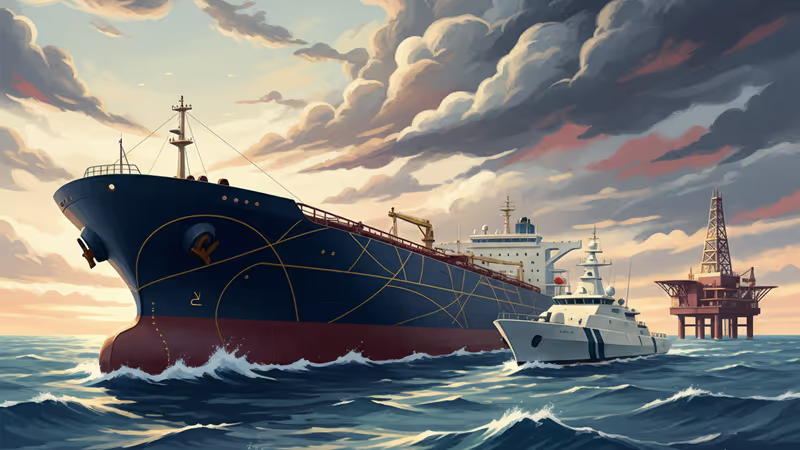
U.S. Seizures Choke Venezuelan Oil Flow, Rattling Global Energy Markets
U.S. seizure and interception of Venezuelan oil tankers have choked the nation's crude exports, causing a spike in global oil prices and escalating geopolitical tensions in the energy market.
Venezuela's oil tanker loadings dwindled on Monday after the U.S. seized one vessel and intercepted others, a move that is disrupting the nation's crude exports and sending jitters through global energy markets. According to tracking data and sources cited by Reuters, most ships in Venezuelan waters are now confined to domestic port-to-port movements, as the U.S. tightens its blockade and state-run oil company PDVSA grapples with a recent cyberattack. The disruption pushed global oil prices up more than 2%.
The escalation follows direct action by the U.S. Coast Guard, which seized a supertanker carrying Venezuelan oil earlier this month and attempted to intercept two more vessels over the weekend. U.S. authorities said one of the intercepted ships was an empty, sanctioned tanker, while the other was a fully loaded, unsanctioned vessel bound for China.
#### Timeline: U.S. Pressure Campaign Intensifies
- Early December 2025: The U.S. Coast Guard seizes the supertanker *Skipper* for carrying Venezuelan oil. - Dec. 20-21 Weekend: U.S. authorities attempt to intercept two more tankers, *Centuries* and *Bella 1*. - Dec. 22 (Monday): Tanker loadings in Venezuela stall, and oil prices surge on supply fears.
The actions are part of President Donald Trump's announced blockade of sanctioned tankers, which has put vessel owners on high alert. Highlighting the risks, Panama's Foreign Minister, Javier Martinez-Acha, said on Monday that the intercepted supertanker *Centuries* had violated maritime rules by altering its name and disabling its transponder while flying the Panamanian flag. He suggested the country could cancel the ship's registration.
Washington's pressure campaign under President Trump has included a ramped-up military presence in the region. According to Reuters, the U.S. has conducted more than two dozen military strikes on vessels it alleges were transporting drugs in the Pacific and Caribbean, resulting in at least 100 deaths.
#### Official Statements
> U.S. Secretary of State Marco Rubio: "Washington's goal was to secure regional stability and security, adding that 'The current status quo with the Venezuelan regime is intolerable for the United States.'" > Venezuelan Foreign Affairs Minister Yvan Gil: The U.S. seizures are against international law and constitute "acts of piracy." > China's Foreign Ministry: The recent U.S. interceptions were a "serious violation of international law."
The vessel interceptions represent the most significant blow to PDVSA since 2020, when the U.S. Treasury imposed sanctions on two trading units of Russia's Rosneft. Compounding the external pressure, PDVSA is also struggling internally. The company is still reeling from a cyberattack last week, which has hobbled its administrative systems and reportedly delayed salary payments.
The market impact was immediate. On Monday afternoon, Brent crude futures rose 2.4% to $61.94 a barrel, while U.S. WTI crude also climbed 2.4% to $57.89. Fears of supply disruptions from both the Venezuelan situation and Russia's ongoing war against Ukraine fueled the rally.
However, not all shipments have stopped. Chevron, operating under a specific U.S. authorization, exported a 500,000-barrel cargo of Venezuelan oil to the U.S. Gulf Coast on Sunday. According to LSEG ship data, it marks the seventh cargo the U.S. major has shipped this month. Venezuela's Oil Minister, Delcy Rodriguez, confirmed that deliveries to Chevron have not been interrupted.
# [callout-info] PDVSA's Dual Crisis While facing a U.S. blockade externally, PDVSA is battling an internal crisis. The recent cyberattack has left it unable to fully restore its centralized administrative system, forcing it to use written records. This operational chaos means customers are demanding deeper discounts and contract changes to undertake the increasingly risky voyages out of the country's waters, leaving millions of barrels of oil stuck on tankers.
---
#### PRISM Insight: The Weaponization of Energy Logistics
The U.S. Coast Guard's interceptions signal a new phase in sanctions enforcement, moving from financial restrictions to direct kinetic intervention in global energy flows. This weaponization of maritime logistics highlights the fragility of supply chains, forcing global businesses to re-evaluate geopolitical risk not as a background factor, but as a core operational threat.
본 콘텐츠는 AI가 원문 기사를 기반으로 요약 및 분석한 것입니다. 정확성을 위해 노력하지만 오류가 있을 수 있으며, 원문 확인을 권장합니다.
관련 기사
미국이 베네수엘라 유조선을 나포하고 해상 봉쇄를 강화하면서 베네수엘라 석유 수출이 급감하고 국제 유가가 급등했다. 지정학적 긴장이 고조되는 가운데 에너지 시장의 불확실성이 커지고 있다.
트럼프 전 대통령이 '역대 최강' 군함 건조 계획을 밝혔으나, 미 해군은 한 달 전 비용 문제로 소형 군함 계획을 폐기한 바 있어 현실성 논란이 예상됩니다.
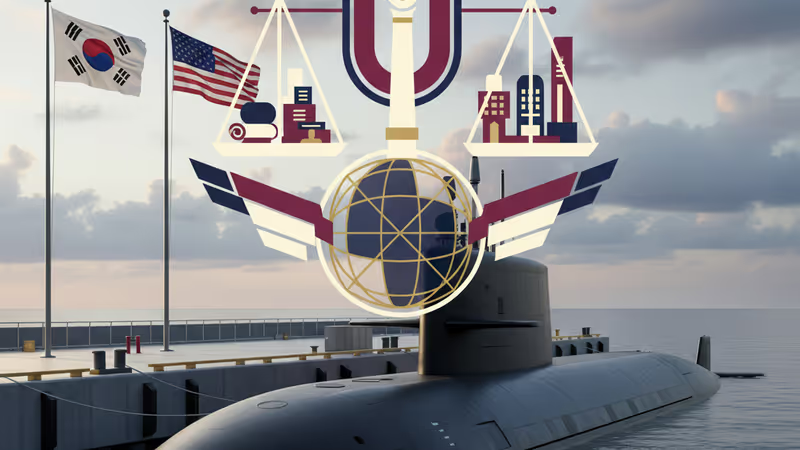
미 해군의 로스앤젤레스급 핵추진 잠수함 USS 그린빌이 12월 23일 부산항에 입항했다. 대한민국 해군은 이번 방문이 한미 연합 방위태세 강화의 계기가 될 것이라고 밝혔다.
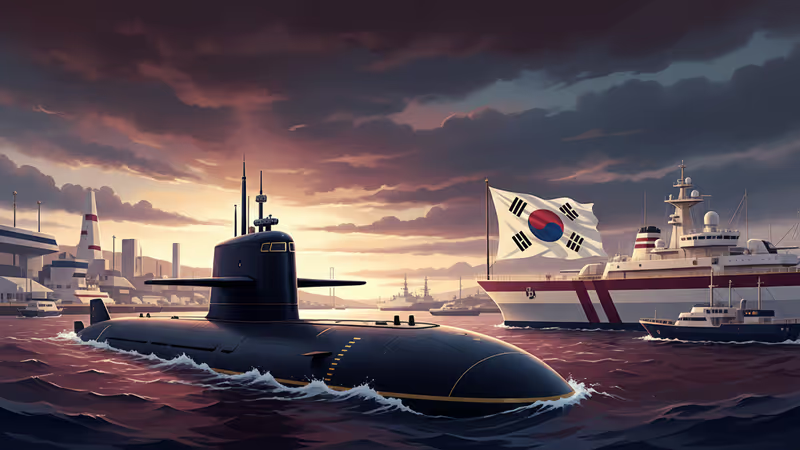
미 해군의 핵추진 공격 잠수함 USS 그린빌호가 12월 23일 부산항에 입항했다. 이재명 정부 출범 후 첫 방문으로, 한미 연합 방위태세 강화와 북한에 대한 전략적 메시지 발신이라는 의미를 갖는다.