
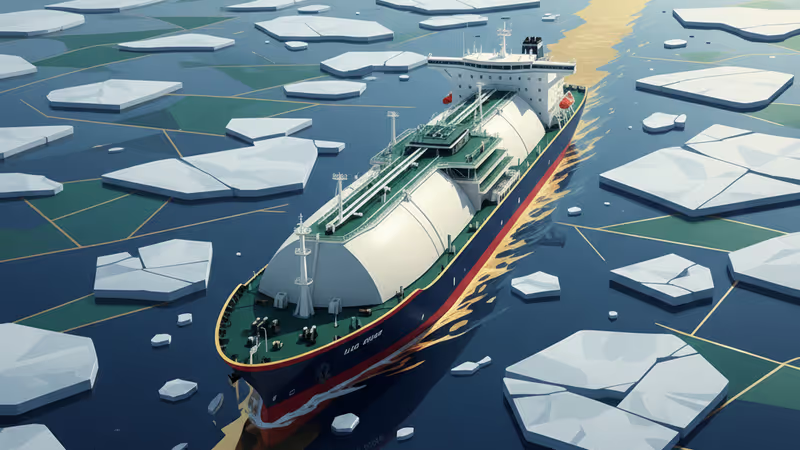
Sanctioned Russian LNG Plant Makes First Shipment, Testing U.S. Resolve
A Chinese-owned tanker, the Kunpeng, has loaded the first LNG cargo from Russia's sanctioned Arctic LNG 2 plant, testing the effectiveness of U.S. sanctions and potentially impacting global energy markets.
A Chinese-owned tanker has loaded the first-ever cargo from Russia's sanctioned Arctic LNG 2 project, a direct challenge to U.S. restrictions designed to halt the massive facility. According to a Reuters report citing LSEG shipping data, the ice-class tanker Kunpeng began loading at the Siberian terminal on December 22nd, signaling that Moscow may have found a workaround to get its gas to market.
Why this matters: The Arctic LNG 2 project, led by Russian energy giant Novatek, is a beast. With a potential output of <mark>19.8 million metric tons per year</mark>, its full-scale operation could significantly weigh on global LNG prices. The U.S. sanctioned the project and specific vessels to choke off Russia's energy revenue following the invasion of Ukraine. This shipment is the first major test of whether those sanctions have teeth.
This isn't just a gas deal; it's a geopolitical probe. The shipment represents a concerted effort by Russia and China to build a parallel logistics and insurance ecosystem, operating outside the sphere of Western financial influence.
Still, it's far from a clear victory for the Kremlin. A single tanker can't handle the project's massive planned output. Novatek's original plan to build its own fleet of specialized ice-breaking LNG carriers has been severely hampered by sanctions blocking access to key technology. To succeed, Russia will need a steady stream of non-Western ships, financing, and insurance—and the Kunpeng's voyage is a critical proof of concept.
For investors, this muddies the waters. If Russia successfully establishes a sanctions-proof shipping route, the resulting increase in global supply could pressure long-term LNG prices, affecting the profitability of U.S. and Qatari producers. However, the risk for any entity involved in this trade is immense. The U.S. could impose secondary sanctions on shippers, insurers, or buyers, creating extreme volatility. The key variable for the energy market moving forward will be this high-stakes cat-and-mouse game between U.S. sanctions and Russian circumvention.
본 콘텐츠는 AI가 원문 기사를 기반으로 요약 및 분석한 것입니다. 정확성을 위해 노력하지만 오류가 있을 수 있으며, 원문 확인을 권장합니다.
관련 기사

유럽 천연가스 가격이 따뜻한 겨울과 높은 재고율 덕분에 18개월 만에 최저치로 하락했습니다. 인플레이션 둔화 기대감이 커지는 가운데, 향후 가격에 영향을 미칠 리스크 요인을 분석합니다.
미국 제재를 받는 러시아 북극 LNG-2 프로젝트에서 중국 유조선 쿤펑호가 첫 LNG를 선적했습니다. 이는 서방 제재망의 실효성을 시험하는 사건으로, 글로벌 에너지 가격에 미칠 영향에 주목됩니다.
미즈호 산하 자산운용 원이 2026년 1월, 일본 최초의 액티브 운용 국채(JGB) ETF 5종을 출시합니다. 이는 금리 상승기, 증가하는 국채 발행 물량과 개인 투자자 수요에 대응하기 위한 전략입니다.
S&P 500 지수가 2025년 12월 24일, 연준의 금리 인하 기대감에 힘입어 장중 사상 최고치를 경신했다. 시장의 낙관론과 잠재적 위험 요인을 분석한다.
유럽 천연가스 가격이 따뜻한 겨울과 높은 재고율 덕분에 18개월 만에 최저치로 하락했습니다. 인플레이션 둔화 기대감이 커지는 가운데, 향후 가격에 영향을 미칠 리스크 요인을 분석합니다.
미국 제재를 받는 러시아 북극 LNG-2 프로젝트에서 중국 유조선 쿤펑호가 첫 LNG를 선적했습니다. 이는 서방 제재망의 실효성을 시험하는 사건으로, 글로벌 에너지 가격에 미칠 영향에 주목됩니다.
미즈호 산하 자산운용 원이 2026년 1월, 일본 최초의 액티브 운용 국채(JGB) ETF 5종을 출시합니다. 이는 금리 상승기, 증가하는 국채 발행 물량과 개인 투자자 수요에 대응하기 위한 전략입니다.
S&P 500 지수가 2025년 12월 24일, 연준의 금리 인하 기대감에 힘입어 장중 사상 최고치를 경신했다. 시장의 낙관론과 잠재적 위험 요인을 분석한다.