
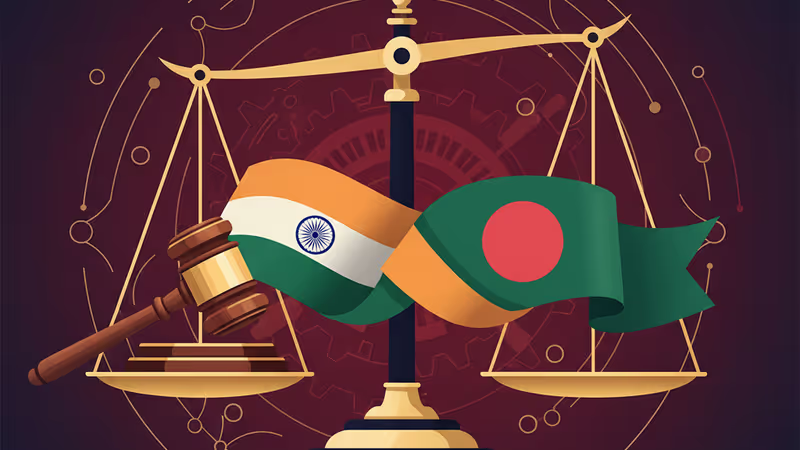
India's Hasina Headache: Why Extraditing a Former Ally is a Diplomatic Minefield
India faces a diplomatic and legal test after Bangladesh requests the extradition of former PM Sheikh Hasina, who was sentenced to death. This article analyzes the serious legal hurdles and geopolitical stakes.
New Delhi is navigating a complex legal and geopolitical dilemma after Bangladesh's interim government formally requested the extradition of former Prime Minister Sheikh Hasina, who was sentenced to death in November. India's decision on the fate of its erstwhile ally will test its strategic interests, legal obligations, and humanitarian principles, with significant consequences for the South Asian landscape.
The request, filed by the Muhammad Yunus-led interim government, invokes a 2013 extradition treaty between the two nations. Dhaka insists the treaty obligates India to return any person convicted of serious crimes. India's response has been cautious, with its External Affairs Ministry stating only that the request is "under examination."
The path to extradition, however, is fraught with legal hurdles. Under India's 1962 Extradition Act, a magistrate must first determine if a 'prima facie' case exists. But two major obstacles loom larger: the nature of the charges and the penalty.
A key provision in extradition law allows a state to refuse a request if it determines the offense is 'of a political character.' Given the swift judicial process following a change in government, India could argue the charges against Hasina are politically motivated, providing a legal basis for refusal.
The most significant barrier is the death sentence. Both Indian law and international human rights norms strongly discourage extraditing individuals to countries where they face capital punishment, unless ironclad assurances are given that the sentence won't be carried out. India has a history of denying extradition on these humanitarian grounds.
본 콘텐츠는 AI가 원문 기사를 기반으로 요약 및 분석한 것입니다. 정확성을 위해 노력하지만 오류가 있을 수 있으며, 원문 확인을 권장합니다.
관련 기사

미국의 대표적 보수 싱크탱크 헤리티지 재단에서 12명 이상의 직원이 집단 이탈했다. 이는 극우 인플루언서 문제를 둘러싼 내부 갈등이 격화되며 미국 보수 운동의 심각한 분열상을 드러내고 있다.
더불어민주당이 입장을 선회하며 통일교 특검 도입에 전격 합의했다. 높은 국민 여론과 기존 수사의 한계가 배경으로 작용한 가운데, 여야 모두가 연루된 의혹의 진실 규명을 위한 '특검 정국'이 본격화된다.

가자지구의 가장 오래된 유산인 대 오마리 모스크가 분쟁으로 파괴되었습니다. 2,000년 역사를 지닌 이 문화유산의 파괴가 갖는 의미와 분쟁 지역에서의 문화적 파괴의 심각성을 분석합니다.
2025년 미국 의회가 입법 성과 부재와 의원들의 연쇄 이탈로 위기를 맞고 있다. 전직 의원들은 현재 상황을 '혼수상태'로 진단하며 수년간 누적된 구조적 문제라고 경고했다.