
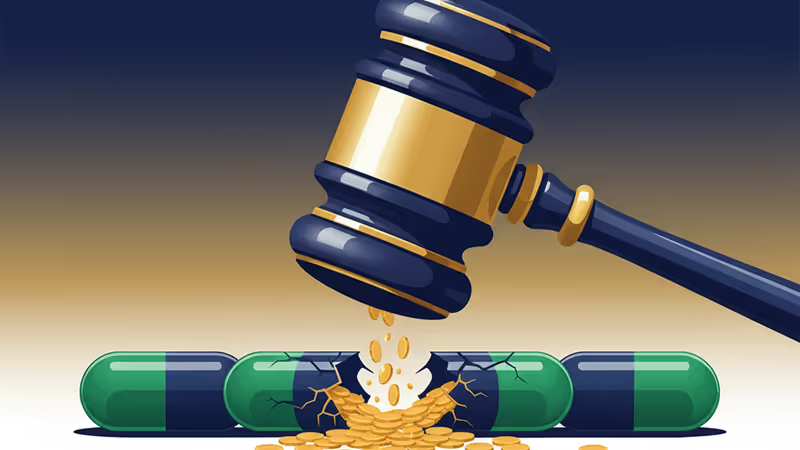
White House Quadruples Down on Drug Price Negotiations, Wiping Billions From Pharma Stocks
The Biden administration announced a massive expansion of the Medicare drug price negotiation program from 10 to 50 drugs, sparking a sell-off in pharma stocks and a legal threat from the industry.
The Biden administration is dramatically accelerating its plan to negotiate Medicare drug prices, a move that sent pharmaceutical stocks reeling Monday and sets the stage for a major legal battle with the industry.
The White House announced it will expand the list of drugs subject to negotiation from 10 to 50, a fivefold increase from the initial slate set by the Inflation Reduction Act (IRA). The move, enacted via executive action on December 22, 2025, aims to lower healthcare costs faster than originally planned. The new list will be finalized by September 1, 2026, with lower prices taking effect in 2028.
Officials estimate the accelerated timeline will save the U.S. government an additional $100 billion over the next decade. For millions of seniors, it's expected to translate into significantly lower out-of-pocket costs for high-priced medications treating chronic conditions like cancer, heart disease, and autoimmune disorders.
Industry Vows Legal War, Citing “Stifled Innovation”
The pharmaceutical industry's reaction was swift and furious. The Pharmaceutical Research and Manufacturers of America (PhRMA), the sector's most powerful lobby group, condemned the decision as a massive overreach.
"This is an unprecedented government overreach that will stifle innovation and harm patients by limiting access to future cures," PhRMA CEO Stephen J. Ubl said in a statement. The group announced it will pursue legal action to block the expansion.
The industry's core argument is that forced price cuts will slash the R&D budgets necessary to develop the next generation of life-saving drugs.
Market ReactionInvestors didn't wait for the legal fight to play out. The iShares U.S. Pharmaceuticals ETF (IHE) dropped 4% in pre-market trading. Industry giants felt the pain directly:• Pfizer (PFE): -5%• Merck (MRK): -4.5%
PRISM Insight: A New Normal for Pharma Investors?
For investors, this isn't just a one-day headline; it's a potential paradigm shift. The U.S. government, the largest single buyer of prescription drugs in the world, is flexing its muscle more aggressively than ever.
The central conflict is now crystal clear: public pressure for affordable healthcare versus the pharma industry's high-margin business model that funds future innovation. While the administration scores political points by tackling drug costs, the move introduces a significant layer of regulatory risk for the entire sector.
Investors must now re-evaluate the long-term earnings potential for companies heavily reliant on a handful of blockbuster drugs sold to Medicare. The key question is whether the market has fully priced in this new era of government price-setting. The legal battles ahead will be critical, but the political direction of travel seems set.
관련 기사

홍콩 도심에서 약 10억 엔(88억 원)이 든 여행 가방이 통째로 사라졌다. 대담한 강도 사건의 전말과 아시아 금융 허브의 안전성에 대한 우려를 짚어본다.

도쿄 23구 아파트 평균 가격이 1억엔을 돌파한 가운데, 일본은행이 금리 인상을 단행했습니다. 엔저와 외국인 투자, 엇갈리는 정부 정책이 일본 부동산 시장에 미칠 영향을 분석합니다.

일본은행(BOJ)의 금리 인상에도 엔화 가치가 급락하자, 일본 정부 고위 관료들이 '과도한 움직임'에 대응하겠다며 강력한 구두 개입에 나섰다. 배경과 시장 영향 분석.

일본 정부가 1경 원에 달하는 가계 예금을 국채 시장으로 유도하는 방안을 검토 중이다. 일본은행의 정책 전환에 따른 시장 충격을 완화하고 새로운 수요처를 확보하려는 전략의 성공 가능성과 시장에 미칠 영향을 분석한다.