
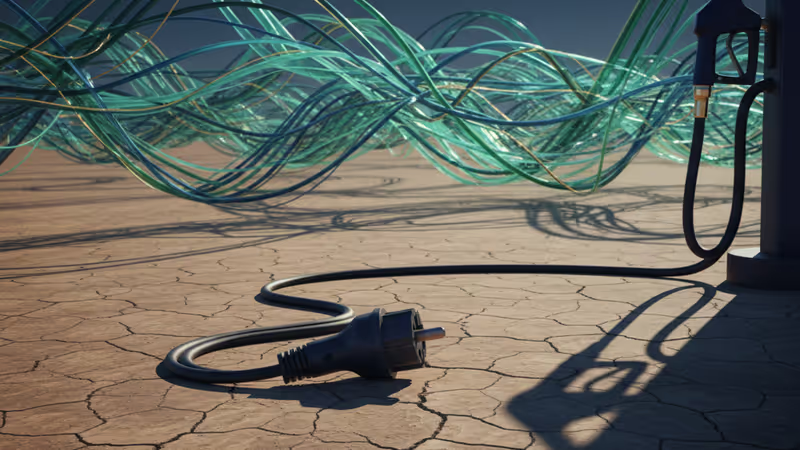
EV Gold Rush Is Over: Automakers Pivot Back to Gas Guzzlers After Billions Burned
The EV euphoria in the U.S. auto industry is over. Automakers like GM and Ford are pulling back on EV investments after billions in losses, pivoting back to profitable gas trucks and hybrids as consumer demand stalls.
The U.S. auto industry’s electric vehicle euphoria has slammed into a wall of realism. After wasting billions on an all-electric future that consumers didn't fully embrace, giants like and are hitting the brakes. They're now scaling back ambitious EV plans and refocusing on what sells: large, profitable gas-guzzling trucks and SUVs, with many executives admitting that government policies, not customers, were driving the charge.
A Costly Miscalculation
The financial fallout from this pivot is staggering. announced last week it expects to record about in special charges related to its restructuring and EV pullback. Meanwhile, has already disclosed a impact from its own scale-back, with more write-downs expected.
"We're following customers to where the market is, not where people thought it was going to be," CEO told CNBC. His counterpart at , CEO , noted it’s “too early to tell” what true EV demand is, suggesting the next six months will reveal the market’s natural level without heavy-handed incentives.
The Data Tells the Story
The numbers confirm the downturn. According to , U.S. EV sales peaked in September at of the new vehicle market, just before the administration killed federal incentives of up to . In the fourth quarter, that demand plummeted to a preliminary . Experts now believe the EV timeline is being “recalibrated.” forecasts EVs will make up of the U.S. market by 2030—a respectable figure, but one that doesn't justify the colossal upfront investments.
The 'Tesla Delusion' and the Rise of Hybrids
A core strategic error, analysts say, was misinterpreting ’s success. "Tesla wasn't creating a battery-electric vehicle market. They created a market for the Tesla brand," said Stephanie Brinley of . Consumers were making a "tech-buy," not simply choosing an EV. When legacy automakers tried to replicate this, they found customers weren't interested. Now, the industry is embracing what calls the "mosaic of powertrains." is refocusing on hybrids, plans to offer plug-in hybrids, and even is allocating production for hybrids at its new Georgia plant.
The era of rewarding 'all-in' EV strategies is over. For investors, the focus is shifting from pure-play EV growth stories to automakers with flexible production capabilities. Companies that can pivot between EVs, hybrids, and traditional ICE vehicles based on real-time market demand are now positioned as the more resilient, and potentially more profitable, long-term investments.
본 콘텐츠는 AI가 원문 기사를 기반으로 요약 및 분석한 것입니다. 정확성을 위해 노력하지만 오류가 있을 수 있으며, 원문 확인을 권장합니다.
관련 기사

AI라는 이름만으로 오르던 시대는 끝났다. 브로드컴, 오라클의 급락이 보여주듯 시장은 이제 실적을 넘어 구체적인 실행 능력을 요구한다. 새로운 AI 투자 전략을 확인하라.

파일코인(FIL)이 24시간 만에 2.2% 하락하며 $1.28 지지선을 테스트하고 있다. $1.33 저항선에서는 기관 매도, $1.28 지지선에서는 기관 매수가 충돌하며 향후 방향성에 대한 관심이 집중된다.

20년간 실적 부진을 겪은 일본판유리(NSG)가 영국 자회사 필킹턴의 기술을 활용해 차세대 페로브스카이트 태양광 패널 소재 사업에 올인한다. 고부가가치 사업으로의 전환이 성공할까?
23일 암호화폐 시장이 전반적인 약세를 보이며 코인데스크 20 지수가 0.8% 하락했습니다. 특히 주말에 급등했던 유니스왑(UNI)이 3.7% 하락하며 하락을 주도했습니다. 시장 현황과 배경을 분석합니다.