
Copilot's Forced Landing on LG TVs Signals the Next Intrusive Era of AI
An LG TV update forcibly installs Microsoft Copilot, revealing a new tech battleground: your living room. Is this the future of AI bloatware?
The Lede: Your Living Room is the New Battleground
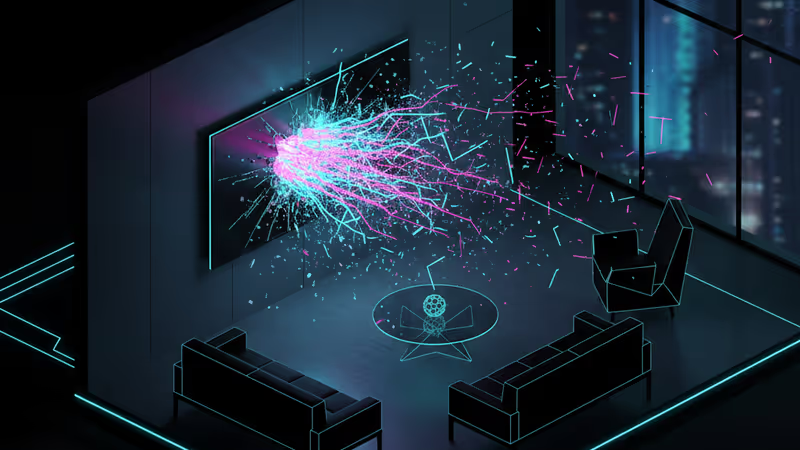
The furor over a forced, unremovable Microsoft Copilot installation on LG smart TVs is more than just another case of unwanted software. For executives and strategists, this is a critical signal: the war for AI dominance has officially invaded the living room. Microsoft's aggressive push of its AI assistant onto third-party hardware marks a strategic pivot, turning consumer devices into distribution channels and testing the limits of user tolerance. This isn't a bug; it's a feature of a new, more invasive phase of ambient computing, and the backlash is a vital data point on the future of consumer AI adoption.
Why It Matters: The Second-Order Effects
This incident sets a dangerous precedent with significant ripple effects across the tech landscape:
- The Normalization of "AI Bloatware": Just as PCs and smartphones became cluttered with pre-installed, non-removable apps, we are now entering the era of AI bloatware. This erodes user trust and devalues the hardware, turning a premium purchase into a billboard for a software partner's ambitions.
- Erosion of Hardware Brand Equity: LG, in exchange for a potential partnership fee or strategic alignment with Microsoft, has damaged its own brand. Consumers buy an LG TV for its display technology and webOS experience, not to be force-fed a third-party AI assistant. This undermines the core value proposition of the hardware manufacturer.
- The Data Frontline: An always-on AI assistant in the central hub of a home is a massive data collection opportunity. Forcing its installation bypasses user consent, raising significant privacy concerns and making devices a target for exploitation.
The Analysis: History Rhymes in the Platform Wars
This is not a new playbook; it's a digital echo of Microsoft's strategy from the 1990s. The forced bundling of Internet Explorer with Windows to crush Netscape set the stage for decades of antitrust scrutiny. Today, Microsoft is applying the same logic to the AI race. Lacking a dominant consumer OS in the mobile or TV space, it is leveraging its enterprise power and B2B relationships to insert Copilot as an unavoidable layer on other companies' platforms.
The competitive dynamics are clear. Google has Android TV and Google Assistant. Amazon has Fire TV and Alexa. Apple has tvOS and Siri. These are vertically integrated ecosystems. Microsoft's Copilot is the outsider attempting to Trojan Horse its way into homes via hardware partners like LG. This move is a direct assault on the established smart home ecosystems, using the TV—the largest and most communal screen in the house—as the beachhead.
PRISM Insight: The "Embedded AI" Strategy is High-Risk, High-Reward
The core trend to watch here is "Embedded AI as a Service". For Microsoft, the strategy is to make Copilot ubiquitous, an ambient utility like electricity. The goal is to monetize through data and future premium services, not the initial installation. For hardware makers like LG, it offers a potential new revenue stream in a market with razor-thin margins, turning a one-time product sale into a recurring partnership fee.
However, the investment implication is a volatile one. While these partnerships may look good on a balance sheet in the short term, the long-term cost of brand damage and user alienation can be catastrophic. The market will eventually reward platforms that prioritize user choice and control, creating an opening for manufacturers who resist the bloatware temptation and champion a cleaner, more respectful user experience.
PRISM's Take: A Colossal Strategic Miscalculation
In the frantic race to deploy AI everywhere, both LG and Microsoft have made a critical error: they mistook user inertia for user consent. Pushing an unremovable piece of software onto a device someone has paid for is not innovation; it is an act of digital trespass. It demonstrates a profound misunderstanding of the personal relationship consumers have with the technology in their homes.
The lesson is simple but consistently ignored by Big Tech: the fastest way to make a user hate your product is to force it upon them. This heavy-handed approach will not win the AI war. It will only fuel a demand for more open, user-controlled platforms and alienate the very consumers whose trust they need to succeed.
관련 기사
LG TV의 코파일럿 강제 업데이트 논란 심층 분석. 이 사건이 스마트홈 AI 주도권 전쟁과 사용자 경험에 미치는 영향을 파헤칩니다.

OLED의 왕자 LG가 2026년 최상위 LCD TV '마이크로 RGB' 출시를 확정했습니다. 이것이 삼성 Neo QLED와의 경쟁 및 프리미엄 TV 시장에 미칠 영향을 심층 분석합니다.
LG가 2026년 플래그십 마이크로 RGB TV 출시를 확정했습니다. 단순한 신제품을 넘어, 삼성과의 프리미엄 TV 전쟁 구도를 바꿀 LG의 전략적 승부수를 심층 분석합니다.
OLED의 왕 LG가 2026년 플래그십 LCD TV를 출시합니다. 이것이 단순한 신제품이 아닌 TV 시장의 판도를 바꿀 전략적 움직임인 이유를 심층 분석합니다.