
Domino Effect: Why iRobot, Luminar, and Rad Power All Tumbled into Bankruptcy
iRobot, Luminar, and Rad Power Bikes all filed for bankruptcy recently. This analysis explores the common threads that led to their downfall, from failed M&A and tariff pressures to the one-product trap.
Key Takeaways
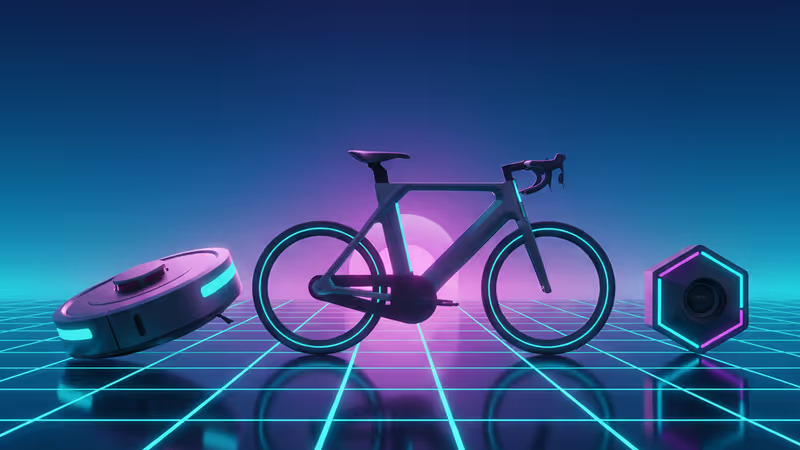
In the span of about a week, three once-promising hardware companies—iRobot of Roomba fame, lidar-maker Luminar, and e-bike leader Rad Power Bikes—all filed for bankruptcy. While they operated in vastly different markets, they fell prey to a strikingly similar cocktail of challenges: major deals that fell through, crippling tariff pressures, and a failure to establish themselves beyond the one hit product that made them famous.
According to a discussion on TechCrunch's Equity podcast, these companies were very different but ran into a similar wall. Each was once thought of as an industry leader, but their foundations proved to be fragile.
A central theme is the one-product trap. iRobot became synonymous with robotic vacuums, but as the technology advanced, a flood of competitors—many leveraging the same Chinese supply chains—eroded its dominance. The company never successfully diversified beyond the Roomba.
Rad Power Bikes rode the pandemic's micromobility wave to great heights. Bankruptcy filings show a steep decline in revenue, from $123 million in 2023 to about $100 million last year, and only $63 million so far in 2025. Despite a diverse product lineup, it couldn't maintain its foothold as the market shifted. A costly battery recall, according to the podcast, was a "bigger dagger at the end."
Luminar, a company founded in the early 2010s, bet its future on making lidar sensors affordable for the autonomous vehicle market. It secured high-profile deals with Volvo and Mercedes-Benz, but the self-driving revolution has been much slower to arrive than anticipated, leaving Luminar heavily over-invested in a market that hasn't fully materialized.
Macroeconomic factors also played a significant role. Heavy reliance on Chinese manufacturing made all three companies vulnerable to tariff pressures. "Could you have ever built this company here in the United States with a localized supply chain over the last 15 years? Probably not," one of the podcast speakers noted, highlighting the double-edged sword of globalized supply chains.
For iRobot, the final blow was the collapse of its acquisition by Amazon, blocked by the FTC and EU regulators. There's a popular narrative that regulators killed the company. However, the podcast discussion pushes back, suggesting this view ignores the "larger structural issues" that made iRobot seek a buyer in the first place. The debate centers on whether regulatory action was the cause of death or simply the final event in a long decline.
PRISM Insight: The fall of these three companies is a stark reminder that in the world of hardware, a brilliant first act doesn't guarantee a second. It shows that without a diversified product pipeline, a resilient supply chain, and a strategy for navigating geopolitical and regulatory headwinds, even category-defining brands are incredibly fragile.
관련 기사

로봇 청소기 iRobot의 파산은 아마존 인수 무산의 직접적 결과입니다. 규제 당국의 결정이 혁신 생태계에 미치는 파급력과 M&A 규제의 딜레마를 분석합니다.
논란의 익명 앱 NGL이 광고 플랫폼에 매각되었습니다. 이는 비윤리적 성장 해킹의 종말과 '좀비 앱 경제'의 부상을 보여주는 상징적 사건입니다.
인스타카트의 AI 가격 책정 도구가 FTC 조사를 받습니다. 단순한 A/B 테스트일까, 아니면 알고리즘에 의한 가격 차별의 시작일까? AI 시대의 공정성에 대한 심층 분석.
미 FTC가 인스타카트의 AI 기반 가격 책정을 조사합니다. 단순한 기업 조사를 넘어 알고리즘 경제의 투명성과 공정성에 대한 중대한 질문을 던집니다.