
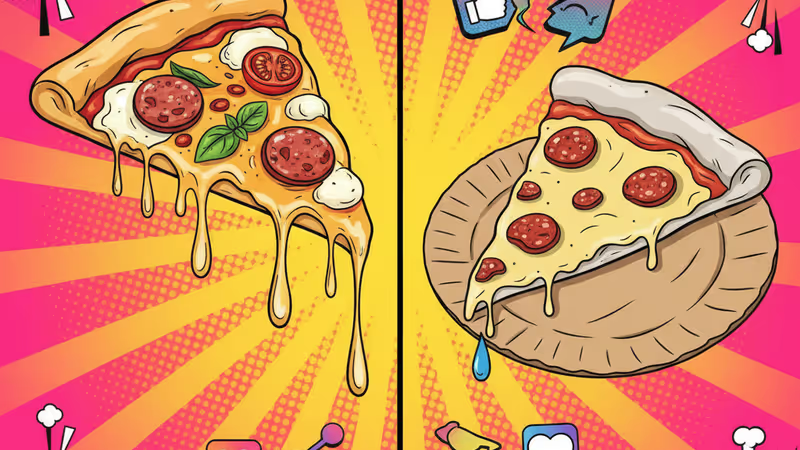
‘Wings for Ants?’: Diners Expose Outrageous Restaurant Meals as Prices Soar
As restaurant prices rise, consumers are sharing photos of shockingly poor-quality meals. We explore the trend, backed by Business Insider data on inflation's impact on dining out.
It's a demoralizing experience: you're famished, you order a meal, and what arrives is a plate of utter slop that costs far more than it's worth. Across the internet, consumers are sharing photos of these 'offensively bad' dishes, sparking a conversation about the growing disconnect between the price of dining out and the quality being served.
This frustration is compounded by widespread financial pressure. According to a recent Business Insider survey, a vast majority of U.S. consumers have seen prices go up, particularly for groceries (90% of respondents) and dining out (87%). One person quoted in the report called dining out a "luxury," while another said it's become "nearly impossible to do so."
Against this backdrop, the visual evidence of declining quality is stark. One viral photo shows an order of Papa John's boneless "wings" for $6.99, which the customer mockingly asked, "what are these, wings for ants?!" Other egregious examples include a €15 spaghetti carbonara in Paris with barely any pasta, a Taco Bell quesadilla delivered uncut and empty, and a $40 DoorDashed BBQ order that showed up with no meat at all.
It's so frustrating that people like us who are financially responsible, who are doing everything right, are still just feeling like we're stretched every step of the way.
When businesses prioritize short-term gains by cutting corners, they risk long-term reputational damage. In an age of social media, a single photo of a sad-looking meal can reach thousands, serving as a powerful warning to potential customers. The ultimate consumer response is simple: voting with their wallets. If a restaurant consistently fails to deliver on quality, customers will stop showing up.
PRISM Insight: This trend is a clear manifestation of 'skimpflation'—where companies reduce the quality or quantity of a product while keeping the price the same or even increasing it. As consumers become more price-sensitive, their tolerance for poor value diminishes sharply. The viral nature of these 'restaurant fails' demonstrates a shift in consumer power, where social media acts as a decentralized quality control mechanism, holding businesses accountable in real-time.
본 콘텐츠는 AI가 원문 기사를 기반으로 요약 및 분석한 것입니다. 정확성을 위해 노력하지만 오류가 있을 수 있으며, 원문 확인을 권장합니다.
관련 기사

흰긴수염고래의 실제 크기부터 자동차가 차지하는 공간까지, 사진 한 장으로 세상의 스케일을 재정의하는 놀라운 비교 이미지들을 만나보세요. 당신의 관점이 완전히 바뀔 것입니다.
겨울이 지나고 날이 따뜻해져도 주차장 구석의 거대한 눈더미가 녹지 않는 이유를 과학적으로 알아봅니다. 융해 잠열과 단열 효과의 비밀을 확인하세요.

7살 골든 리트리버 켄싱턴이 동료 강아지들을 위한 가상 법률 사무소를 열었다. 11만 팔로워를 사로잡은 유머러스한 '견권' 수호 캠페인의 비하인드 스토리를 확인해보세요.

감기, 기침, 두통… 이 모든 증상에 고유한 이름이 있었다는 사실을 아시나요? 코끝의 콧방울 '멜드롭'부터 아픈데 출근하는 '프레젠티즘'까지, 겨울을 더 다채롭게 표현해 줄 잊힌 단어 10가지를 만나보세요.