
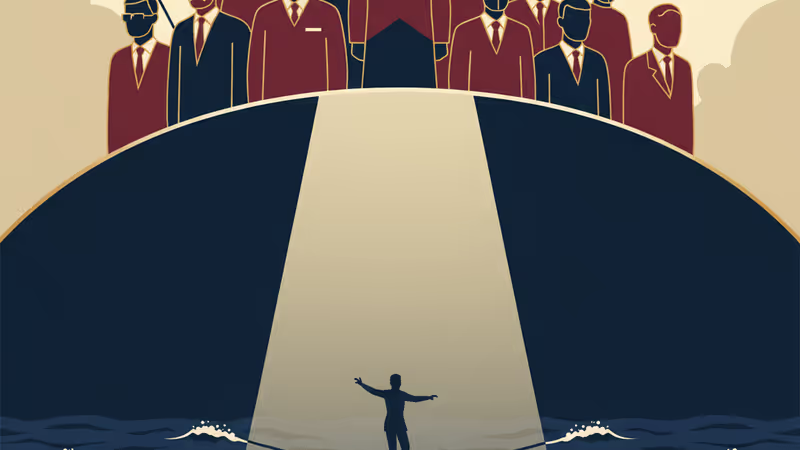
Pakistan's Paradox: A 2025 Comeback on the World Stage Masks Deep Cracks at Home
In 2025, Pakistan made a dramatic return to the world stage after military clashes with India, yet it remains plagued by deep-seated domestic political and economic turmoil. An analysis of the four turning points.
It’s back on the world stage, but its foundation at home is cracking. For Pakistan, 2025 proved to be a turning point. After years of relative obscurity, the country suddenly found itself mattering again in international affairs, even as persistent political and economic instability festered domestically. Four major developments defined this complex picture, highlighting both the opportunities and obstacles Pakistan faced during a turbulent year.
A New Strategic Credibility
Pakistan's return to prominence was sparked by intense, four-day military clashes with India in May. Its air force showcased formidable capabilities, reportedly downing several Indian jets and demonstrating it had effectively countered New Delhi's military modernization despite domestic economic woes. This performance significantly restored Pakistan's strategic credibility. Consequently, relations with the United States warmed, while it also formalized a major mutual defense pact with Saudi Arabia and secured a $4 billion arms deal with Libya.
A Harder Line on Afghanistan
Islamabad also adopted a tougher stance toward Afghanistan, shifting from accommodation to sustained pressure on the Afghan Taliban. The goal: dismantle the Tehreek-e-Taliban Pakistan (TTP) and force Kabul to sever ties with the group. Pakistan's willingness to use hard power, including military strikes on Afghan soil, shocked the Taliban regime. The pressure campaign worked, leading over 1,000 Afghan clerics to issue a decree prohibiting attacks on neighboring countries. It was a clear signal that continued support for the TTP would carry severe diplomatic costs.
Economic Woes and a Privatization Win
Despite diplomatic wins, the economy remained in dire straits. Foreign direct investment declined, and persistent issues like high energy costs and a difficult tax environment hampered industry, contributing to rising poverty. Amid the gloom, there was one bright spot: the successful privatization of Pakistan International Airlines (PIA). The sale of the chronically loss-making, state-run enterprise was the first major privatization in around 20 years. The landmark deal could mark a turning point, encouraging greater private sector activity and injecting momentum into the economy.
An Unresolved Political Standoff
Domestically, political tensions persisted. The Pakistan Tehreek-e-Insaf (PTI) party, led by the jailed Imran Khan, continued its opposition to the military and federal authorities, raising questions about political stability. Khan’s repeated calls for protests from prison only intensified the standoff. On a more positive note, the state took strong measures against the extremist Tehreek-e-Labbaik Pakistan (TLP), demonstrating a growing intolerance for violent radicalism. Still, broader strains on the social contract, fueled by inflation and inequality, remain a challenge to national cohesion.
본 콘텐츠는 AI가 원문 기사를 기반으로 요약 및 분석한 것입니다. 정확성을 위해 노력하지만 오류가 있을 수 있으며, 원문 확인을 권장합니다.
관련 기사
16일간의 치열한 국경 교전으로 최소 86명의 사망자가 발생한 가운데, 태국과 캄보디아가 휴전 재개를 위한 공식 협상을 시작했다. 국제 사회는 즉각적인 적대 행위 중단을 촉구하고 있다.
미국 케네디 센터가 '트럼프-케네디 센터'로 명칭을 변경하자, 민주당 소속 이사가 불법이라며 소송을 제기했다. 백악관과 케네디 가문의 입장이 엇갈리며 법적 공방이 시작됐다.

시리아 내무부가 수도 다마스쿠스 지역 ISIS 총책 타하 알-주비를 검거했다고 발표했다. 시리아는 미군 주도 연합군과의 공조를 주장했지만, 미 중부사령부는 확인을 거부해 그 배경에 관심이 쏠린다.
미국 법무부가 제프리 엡스타인 관련 문서 100만 건 이상을 추가 발견했다고 발표하며 정보 공개 지연을 예고했다. 이에 의회는 법정 시한 위반이라며 강하게 반발, 양측의 갈등이 고조되고 있다.
16일간의 치열한 국경 교전으로 최소 86명의 사망자가 발생한 가운데, 태국과 캄보디아가 휴전 재개를 위한 공식 협상을 시작했다. 국제 사회는 즉각적인 적대 행위 중단을 촉구하고 있다.
미국 케네디 센터가 '트럼프-케네디 센터'로 명칭을 변경하자, 민주당 소속 이사가 불법이라며 소송을 제기했다. 백악관과 케네디 가문의 입장이 엇갈리며 법적 공방이 시작됐다.
시리아 내무부가 수도 다마스쿠스 지역 ISIS 총책 타하 알-주비를 검거했다고 발표했다. 시리아는 미군 주도 연합군과의 공조를 주장했지만, 미 중부사령부는 확인을 거부해 그 배경에 관심이 쏠린다.
미국 법무부가 제프리 엡스타인 관련 문서 100만 건 이상을 추가 발견했다고 발표하며 정보 공개 지연을 예고했다. 이에 의회는 법정 시한 위반이라며 강하게 반발, 양측의 갈등이 고조되고 있다.