
US Seizure of 2 Venezuelan Oil Tankers Sparks 'Extortion' Accusations at UN
Venezuela has accused the U.S. of 'extortion' at the UN Security Council after the seizure of two oil tankers. With a U.S. naval blockade in place, tensions in the Caribbean are reaching a boiling point.
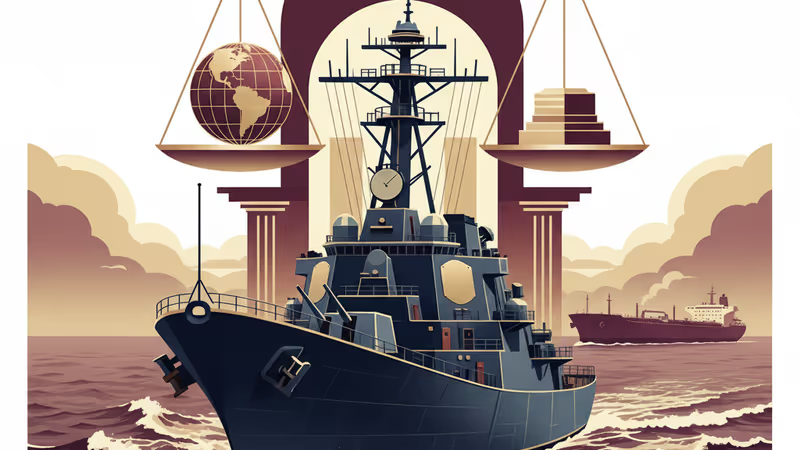
Piracy or policy? The seizure of two Venezuelan oil tankers by the United States has triggered a firestorm at the UN Security Council and escalated a tense standoff in the Caribbean. Venezuela has accused Washington of 'extortion,' transforming the international body into a battleground for a deepening geopolitical conflict involving Russia and China.
A Diplomatic Firestorm at the UN
During an emergency session of the UN Security Council on Tuesday, Venezuela’s envoy, Samuel Moncada, claimed his country was being subjected to the 'greatest extortion' in its history. He described the seizure of the tankers off the Venezuelan coast earlier this month as 'worse than piracy.' Moncada stated, 'we are in the presence of a power that acts outside of international law,' accusing the U.S. of 'pillaging, looting and recolonisation.'
In response, the U.S. Ambassador to the UN, Michael Waltz, countered that the U.S. doesn't recognize Nicolas Maduro as the legitimate leader of Venezuela. 'Maduro's ability to sell Venezuela's oil enables his fraudulent claims to power and his narco-terrorist activities,' Waltz said, justifying the American actions.
A Naval Blockade in the Caribbean
The confrontation follows an order by President Trump on December 16 to establish a naval blockade of all sanctioned oil tankers entering or leaving Venezuela. The U.S. has declared it will keep or sell the crude oil and the vessels it has seized, and is reportedly pursuing a third tanker.
To enforce this, the U.S. has deployed 15,000 troops and a fleet including aircraft carriers and guided-missile destroyers to the region—its largest deployment there since the 1989 invasion of Panama. While the stated goal is to stop the flow of fentanyl and cocaine to the U.S., some experts say the strikes could violate laws governing armed conflict.
Russia and China Condemn US "Bullying"
Russia and China sided with Venezuela, accusing the U.S. of bullying and aggression. Russia's UN ambassador, Vassily Nebenzia, said the U.S. was 'illegally destroying' civilian vessels and warned that its actions were 'a template for future acts of force against Latin American states.' China's envoy, Sun Lei, called on the U.S. to 'immediately halt relevant actions and avoid further escalation.'
本コンテンツはAIが原文記事を基に要約・分析したものです。正確性に努めていますが、誤りがある可能性があります。原文の確認をお勧めします。
関連記事
専門家の分析によると、ウクライナ戦争はさらに12~18ヶ月続く可能性があります。戦線の膠着状態と政治的解決の難航が背景にあり、国際社会は長期的な消耗戦への備えを迫られています。
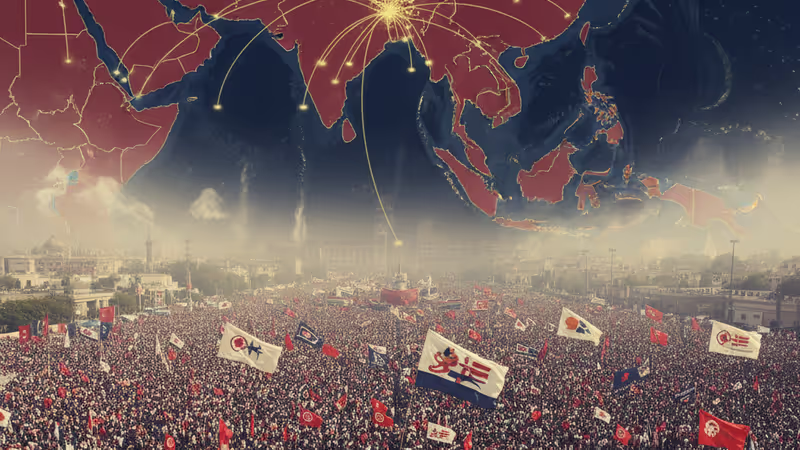
バングラデシュの最大野党BNPの指導者、タリケ・ラーマン氏が17年の亡命生活を終え帰国する。首都には500万人の支持者が集結する見込みで、来年2月の総選挙を前に緊張が高まっている。

ネパールで物議を醸すK.P.シャルマ・オリ前首相が、CPN-UML党首に3選されました。Z世代の抗議デモ弾圧で調査中の人物の再選は、ネパール政治の未来に何を意味するのでしょうか。
マレーシア政府がタイでオーストラリア人ジャーナリストを名誉毀損で提訴。国境を越えた「スラップ訴訟」が、東南アジアの言論の自由に与える影響と、タイの司法の対応を解説します。
専門家の分析によると、ウクライナ戦争はさらに12~18ヶ月続く可能性があります。戦線の膠着状態と政治的解決の難航が背景にあり、国際社会は長期的な消耗戦への備えを迫られています。
バングラデシュの最大野党BNPの指導者、タリケ・ラーマン氏が17年の亡命生活を終え帰国する。首都には500万人の支持者が集結する見込みで、来年2月の総選挙を前に緊張が高まっている。
ネパールで物議を醸すK.P.シャルマ・オリ前首相が、CPN-UML党首に3選されました。Z世代の抗議デモ弾圧で調査中の人物の再選は、ネパール政治の未来に何を意味するのでしょうか。
マレーシア政府がタイでオーストラリア人ジャーナリストを名誉毀損で提訴。国境を越えた「スラップ訴訟」が、東南アジアの言論の自由に与える影響と、タイの司法の対応を解説します。