
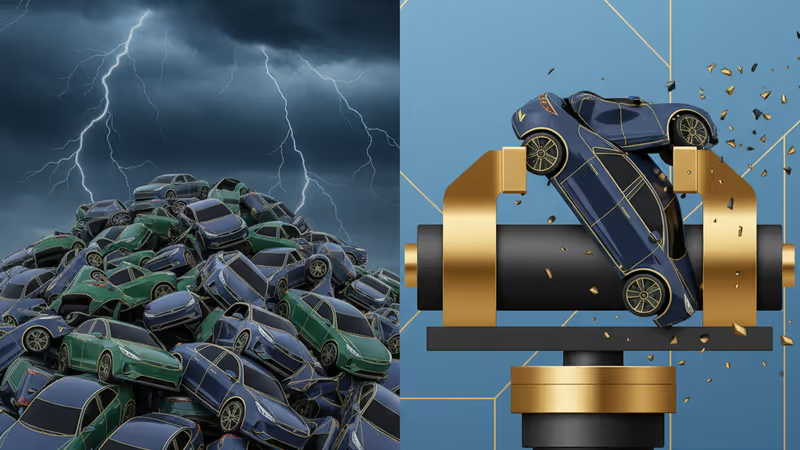
China's EV Price War Goes Global, Squeezing Tesla and Legacy Automakers
An intense EV price war, fueled by massive overcapacity in China, is now hitting global automakers like Tesla and Ford, squeezing profits and forcing strategic retreats. Here's what it means for your portfolio.
An Oversupply Problem Becomes a Global Threat
A brutal price war in China's electric vehicle market is no longer a domestic affair. It's now spilling onto the global stage, creating a severe margin crisis for industry leaders like Tesla, Ford, and Hyundai. With Chinese automakers like BYD launching models for under $10,000, a massive oversupply problem is forcing a painful reckoning across the entire automotive sector, reshaping the competitive landscape from Europe to Southeast Asia.
The Math Behind the Mayhem
The conflict's origin is simple: China can produce nearly twice as many EVs as it can sell domestically. Years of government subsidies fueled a boom that created over 100 different brands, all now fighting for survival as domestic growth slows. This has led to aggressive discounting, with the average vehicle in China selling for 15% below its sticker price in `2023`, according to Reuters. This excess inventory has to go somewhere, and the target is international markets.
Global Contagion: From Margin Pressure to Pulled Investments
The fallout for global automakers is stark. Tesla has been forced into repeated price cuts to defend its market share in China, eating into its once-enviable profit margins. Legacy automakers are feeling the chill, too. Ford and General Motors are scaling back or delaying their ambitious EV investment plans, a direct response to the deteriorating profitability of the sector. Meanwhile, Hyundai and Kia face intense pressure in key Asian growth markets from lower-priced, feature-packed Chinese rivals.
Western governments are starting to build a political moat. The European Union is investigating Chinese state subsidies, which could result in significant import tariffs. In the U.S., the Inflation Reduction Act (IRA) already serves as a major barrier, effectively locking out most Chinese-made EVs and batteries from its lucrative tax credits.
This war of attrition isn't creating clear winners, even in China. Tech-heavy but loss-making players like 'Nio' and 'Xpeng' are burning through cash at an alarming rate. The endgame isn't dominance; it's survival. The most likely outcome is a painful industry consolidation. For investors, this means balance sheets and cash flow statements have become far more important indicators of long-term viability than quarterly sales figures.
本コンテンツはAIが原文記事を基に要約・分析したものです。正確性に努めていますが、誤りがある可能性があります。原文の確認をお勧めします。
関連記事
テスラが中国で主力EVを最大13.5%値下げし、BYDなど現地メーカーも追随。成長が鈍化する世界最大のEV市場で、収益性をかけた全面的な価格競争が始まります。

テスラ株が過去最高値を更新。ロボタクシーへの期待が株価を押し上げる一方、販売不振や『マスク・リスク』も顕在化。投資家が知るべき光と影を専門家が徹底分析します。
日本の7-9月期GDPが年率-2.3%に下方修正され景気後退懸念が強まる中、政府は122兆円規模の過去最大予算案で対抗。経済の現状と財政政策が市場に与える影響を分析します。
三井住友フィナンシャルグループ(SMFG)が、米PE大手のベイン・キャピタル、ムジニッチと提携。約35億ドル規模の共同ファンドを設立し、来年から欧州企業のM&Aファイナンス事業に本格参入する。