
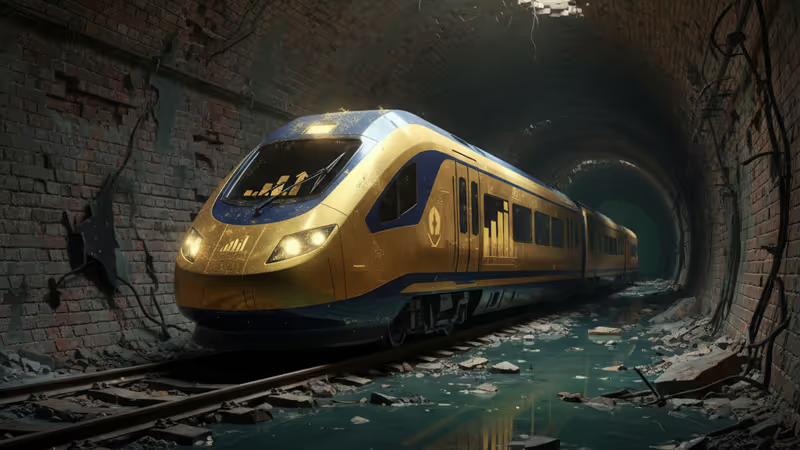
Amtrak's High-Speed Rail Dream Derailed by Flawed Trains and Aging Tracks, Watchdog Says
Amtrak's new Acela high-speed trains are years behind schedule due to flawed train models from Alstom and unprepared, aging tracks, according to a report from Amtrak's Inspector General.
A Multi-Billion Dollar Project Years Behind Schedule
Amtrak's multi-billion dollar bet on next-generation Acela trains for its profitable Northeast Corridor is years behind schedule, plagued by a toxic mix of flawed train models and track defects. A new report from the railroad’s Office of Inspector General (OIG), cited by Reuters, reveals that the long-awaited upgrade, initially promised for , now faces an uncertain future, threatening a key revenue stream and setting back U.S. high-speed rail ambitions.
The project was supposed to be a showcase for modern American infrastructure, promising faster journeys between Washington D.C., New York, and Boston. Instead, it has become a case study in project mismanagement, highlighting the immense difficulty of bolting new technology onto century-old infrastructure.
Who's to Blame? A Failure of Planning and Execution
The OIG report doesn't point to a single culprit, but rather a cascade of failures from both the train manufacturer and itself.
Alstom's Faulty Models
The French manufacturer, , is faulted for providing computer models of the trains that didn't match their real-world performance. According to the report, these modeling failures led to compatibility issues when the actual trains were tested on 's tracks. In short, the trains that worked on paper couldn't handle the physical realities of the old rail lines.
Amtrak's Lack of Preparation
At the same time, the OIG report criticizes for its own poor planning and failure to adequately prepare the Northeast Corridor's tracks for the new, higher-speed fleet. The agency knew about long-standing defects in its legacy infrastructure but failed to address them as a prerequisite for the new train rollout. This suggests a systemic failure in project management from the very beginning.
This isn't just about a delayed train; it's a classic case of new technology colliding with legacy systems. The Amtrak Acela fiasco underscores a critical challenge for any large-scale modernization: the shiniest new hardware is useless if the foundational infrastructure—in this case, century-old tracks and tunnels—can't support it.
本コンテンツはAIが原文記事を基に要約・分析したものです。正確性に努めていますが、誤りがある可能性があります。原文の確認をお勧めします。
関連記事

韓国銀行の報告書で、60歳以上の自営業者の不動産ローンが急増していることが判明。不動産市場の変動が金融システム全体に与える潜在的リスクについて詳しく解説します。

11月の売り越しから一転、外国人投資家が12月に韓国株を1.9兆ウォン買い越し。AIブームを背景にSKハイニックスなど半導体株と自動車株に資金が集中。年末ラリーへの期待も高まっています。

フランスのマクドナルド従業員が、給与計算ミスにより通常の4倍近い約118万円(6,888.88ユーロ)を受け取りました。この出来事の経緯と、「不当利得」として法的な返還義務が生じる理由を分かりやすく解説します。

中国政府の渡航警告を受け、日本の中国人向け観光ビジネス「一条龍」が深刻な打撃。フライト削減やホテル予約半減など、日中関係悪化が経済に与える影響を解説。