
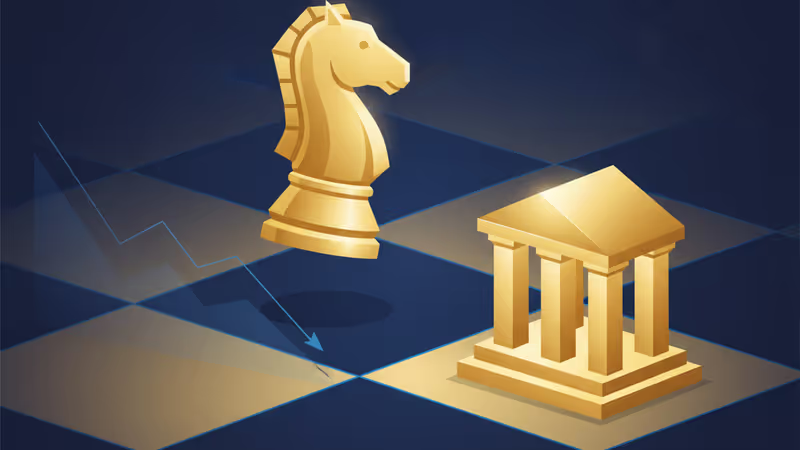
PayPal's Bank Charter Gambit: A High-Stakes Bet to End Its 29% Stock Slump
PayPal is applying for a bank charter. Our expert analysis breaks down what this high-stakes move means for PYPL investors, competitors, and SMB lending.
The Lede: A Bold Move in a Bear Market
PayPal (PYPL) has officially thrown down the gauntlet, confirming its application to form PayPal Bank. The move, aimed at securing a U.S. bank charter to lend directly to small businesses, represents new CEO Alex Chriss’s most aggressive strategy yet to reverse the company's fortunes. While the market offered a tepid initial applause with a 1.5% bump in after-hours trading, this application is far more than a simple product expansion; it's a fundamental attempt to rewire PayPal's economic engine and escape its persistent stock slide.
Key Numbers
- YTD Stock Performance: PayPal shares have slumped approximately 29% in 2025.
- Market Benchmark: The S&P 500 has gained nearly 16% over the same period.
- Q3 Revenue Growth: A respectable 7% year-over-year increase to $8.42 billion, which failed to impress investors focused on margins and long-term strategy.
The Analysis: More Than Just Another Fintech Feature
The Utah ILC: Fintech's Backdoor into Banking
PayPal's application with Utah regulators and the FDIC points directly to the pursuit of an Industrial Loan Company (ILC) charter. This is a well-trodden, albeit politically contentious, path for non-financial companies to enter banking. An ILC charter allows a parent company to own a bank without being subject to the full, stringent regulations of the Bank Holding Company Act. Block (formerly Square) successfully navigated this exact path to launch Square Financial Services. By following this blueprint, PayPal is signaling it wants the core advantages of being a bank—primarily, access to low-cost capital via customer deposits—without the full regulatory burden of a traditional bank holding company.
A Direct Challenge to Banks and Fintech Rivals
This move positions PayPal as a direct threat on multiple fronts. For traditional banks, PayPal's massive trove of real-time merchant transaction data presents a formidable underwriting advantage. It can assess the creditworthiness of a small business based on daily cash flow, not outdated financial statements, potentially offering faster and better-priced loans. For fintech competitors like Block and SoFi, who already possess bank charters, this levels the playing field. PayPal is signaling it will no longer cede the high-margin lending business and is prepared to compete on the same regulatory footing, leveraging its far larger user base.
Why Now? The Hunt for Profitable Growth
The timing is critical. PayPal's stock performance reflects a market that has lost faith in its growth story as a pure-play payments processor. Competition is fierce, and transaction margins are under constant pressure. A bank charter is the key to unlocking a more profitable business model. Instead of relying on third-party banks for funding its existing credit products and paying them for the privilege, PayPal could use its own customer deposits. This dramatically lowers its cost of funds, directly boosting its Net Interest Margin (NIM) and creating a durable, high-margin revenue stream that Wall Street craves.
PRISM Insight: The Investment Thesis Reimagined
Portfolio Implications: A High-Risk, High-Reward Turnaround Play
For investors, PayPal's bank charter application transforms the company's risk profile. This is no longer a story about incremental user growth; it's a bet on a complete business model overhaul.
- The Bull Case: If approved, the charter is a game-changer. It unlocks the full potential of PayPal's vast data ecosystem, enabling it to build a highly profitable SMB lending and deposit-taking institution. This could lead to a significant re-rating of the stock as the market begins to value it more like a tech-forward bank than a low-margin processor. The current depressed valuation could represent a compelling entry point for long-term investors willing to wait out the regulatory process.
- The Bear Case: The path to approval is long (potentially 1-2 years) and fraught with political and regulatory risk. The FDIC has become increasingly cautious about granting charters to large tech firms. A rejection would be a major blow to Chriss's credibility and leave PayPal back at square one, searching for a viable strategy to revive growth and profitability. The market's skeptical initial reaction suggests this risk is being heavily priced in.
Analysis: The move is a necessary gamble. The status quo is untenable. While regulatory failure is a significant risk, the potential reward of creating a capital-efficient, data-driven lender is the most credible path for PayPal to reclaim its status as a market leader. This is a classic 'show-me' story where execution and regulatory navigation are everything.
The Bottom Line
PayPal's application to become a bank is the boldest strategic pivot in its recent history. It's an admission that its old model is insufficient to drive future growth. For investors, this creates a clear, albeit long-term, catalyst. The focus now shifts from user numbers to the corridors of Washington D.C. and Salt Lake City. Success would fundamentally alter PayPal’s P&L and competitive position for the next decade. Failure would cement its status as a fallen giant. Watch the regulatory filings, not just the quarterly earnings, as the real story of PayPal's future is just beginning to unfold.
関連記事
シェブロンがヘスを約8兆円で買収。この巨大M&Aがエネルギー業界と投資戦略に与える真の影響とは?専門家が地殻変動の次の一手を徹底解説します。
FRBが政策金利を5.25-5.50%で据え置き。市場の反応とパウエル議長の発言を分析し、今後の投資戦略への影響を専門家が解説します。

XRPが重要支持線1.93ドルを出来高急増とともに下抜け。大口投資家の売り圧力か?専門家が次の下値目処と投資家が取るべき戦略を徹底分析します。

ドージコイン(DOGE)が5.5%急落し重要な支持線を下抜け。出来高急増の裏にある機関投資家の動きとは?短期・長期投資家が今取るべき戦略を専門家が解説します。