
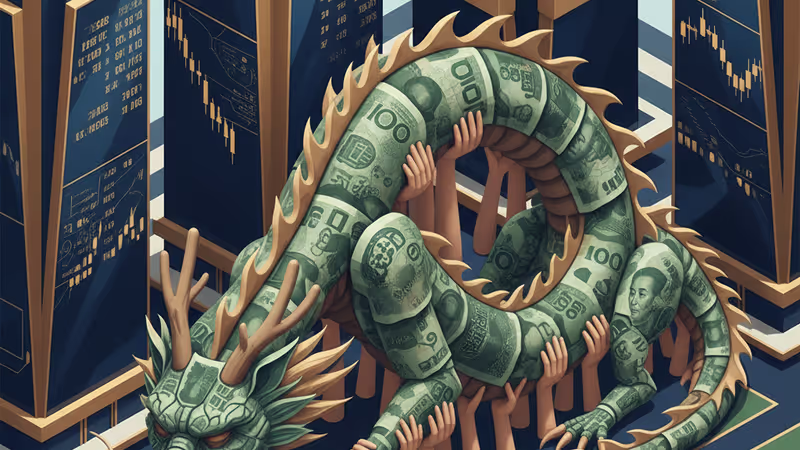
China Enters 'Japan-Style' Era of Frequent, Small-Scale Stimulus, ANZ Warns
China has entered a 'Japan-style' phase of frequent, smaller stimulus packages instead of large-scale bailouts, warns ANZ's Chief Economist. This changes the investment calculus for Chinese assets.
China's economic playbook has fundamentally shifted, moving away from massive 'bazooka' stimulus to a new phase of frequent, smaller interventions—a strategy that mirrors Japan's prolonged battle with stagnation, according to a new analysis from ANZ Banking Group.
Richard Yetsenga, Chief Economist at ANZ, argued in a December 23rd note that China's future growth now depends less on fundamentals and more on the "frequency and vigor" of government stimulus. The shift comes as Beijing grapples with faltering domestic demand and severe overproduction in key industries. As evidence, Yetsenga points to the solar sector: `Only two of the country's 10 largest solar panel manufacturers reported a profit in the first half of 2025.`
This new approach signals that the days of expecting a single, powerful policy move to reignite broad-based growth are over. Instead, Beijing appears to be entering a "Japan-style frequent-stimulus phase," applying targeted support whenever the economy shows signs of faltering. This 'Japanification' suggests a potential future of slower growth and a persistent reliance on state intervention to avoid a hard landing.
For investors, the game has changed. A strategy based on waiting for a single, massive stimulus to fuel a market-wide rally is likely to fail. Success in this new era will depend on tactically positioning ahead of smaller, targeted policy announcements. The key metric to watch is no longer just GDP, but the *rhythm* of Beijing's support. The winners will be those who can anticipate which sectors will receive a targeted injection of capital, turning Chinese market investing into a game of reading policy tea leaves rather than betting on a macro recovery.
本コンテンツはAIが原文記事を基に要約・分析したものです。正確性に努めていますが、誤りがある可能性があります。原文の確認をお勧めします。
関連記事
ANZ銀行の専門家は、中国経済が日本のような頻繁な景気刺激策に依存する時代に入ったと分析。今後の成長は政府の介入次第となり、投資家は政策リスクへの注意が必要です。

豪州の大手年金基金アウェア・スーパーが、シドニー中心部の高級モール「ウェストフィールド・シドニー」の権益を8.75億豪ドルで取得。優良不動産への機関投資家の強い需要が明らかに。

世界最大のビットコイン保有企業マイクロストラテジーが、現金準備高を22億ドルに増強。2年半超の配当支払いをカバーし、2027年の転換社債リスクにも備えることで、「ビットコインの冬」への財務的耐性を強化しました。

2025年、金価格はなぜ上昇しているのか?地政学リスク、インフレ、中央銀行の動向という3つの要因を分析。個人投資家向けの金ETF、現物、金鉱株といった投資方法のメリット・デメリットも分かりやすく解説します。