
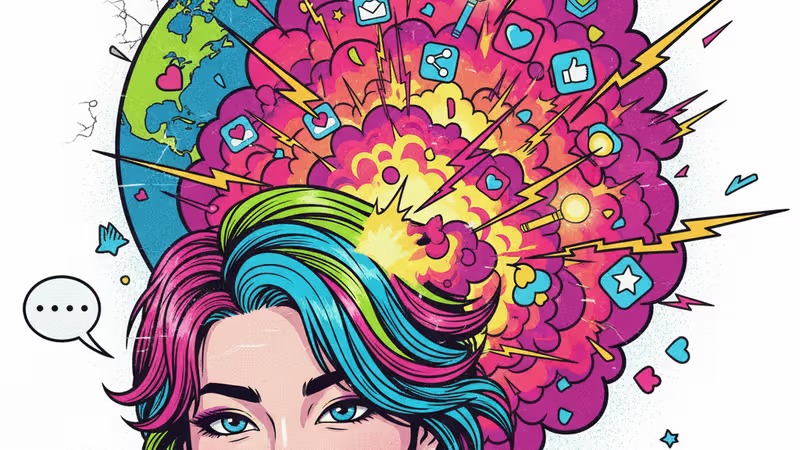
One Vague Comment, a Global Fandom Firestorm: Why a K-Pop Idol's Name Drop Broke the Internet
A K-pop artist mentioned superstar group NewJeans, and the internet exploded. We break down why this went viral and what it says about modern fandom culture.
TL;DR: Why This Is Everywhere
A controversial artist named Tarzzan mentioned superstar girl group NewJeans on a major TV show. The internet immediately erupted, not because of what was said, but because of who said it. This viral moment is a masterclass in modern fandom, digital reputation, and the unspoken rules of celebrity association in 2025.
The Story: How a Spark Became an Inferno
It started simply. Tarzzan, a member of the group ALLDAY PROJECT and a figure with a notoriously controversial reputation, appeared as a guest on the popular variety show 'Radio Star'. During a segment, he was asked about idols he admired and made a reference to NewJeans. That's it. No overt criticism, no dramatic revelation.
But in the hyper-connected world of K-pop, context is everything. NewJeans currently sits at the apex of the industry, defined by a meticulously crafted image of youthful authenticity and creative cool. Tarzzan, on the other hand, is known for past issues that have made him a polarizing figure. The collision of these two names—the industry's clean-cut darlings and a controversial peer—created an instant firestorm. Fans, known as 'Bunnies', immediately mobilized, flooding social media with reactions that ranged from protective anger to sheer confusion.
The Best Reactions: A Snapshot of the Chaos
The internet did what it does best: react, analyze, and meme-ify. We've curated the most telling responses that capture the global sentiment.
The Brand Protectors
This was the dominant sentiment. Fans immediately went into defense mode, viewing the mention as a contamination of NewJeans' pristine brand.
- From user @BunnyGuardians on X: "I don't even care if his comments were positive. The association is the problem. KEEP NEWJEANS' NAME OUT OF YOUR MOUTH."
- An Instagram comment that racked up thousands of likes: "Their company needs to understand that not all publicity is good publicity. This is the kind you avoid at all costs."
The Confused Onlookers
For many international fans, the explosion of anger required a quick history lesson.
- A viral Reddit thread began with a simple plea: "Can someone please provide the lore on Tarzzan? Woke up and my entire timeline is on fire and I have no idea why."
- From a user in the UK: "Is he their fan? Is he shading them? The ambiguity is making this 10x more dramatic than it needs to be."
The Meme-Makers & Satirists
Of course, the humor wasn't far behind, pointing out the speed and ferocity of the fan reaction.
- A popular tweet: "Bunnies deploying the digital defense force in 0.2 seconds after the 'NewJeans' syllable was detected from an unapproved source."
- Another user joked: "My stock portfolio doesn't have the risk management and immediate response team that NewJeans' fandom has."
Cultural Context: The Unwritten Rules of Fandom
Why did this resonate so deeply and globally? It taps into the core of modern K-pop fandom, which operates on the principle of 'brand purity'. Idols, especially top-tier groups like NewJeans, are more than just artists; they are meticulously curated brands. Their success depends on maintaining a specific, often 'unproblematic', image.
When an individual with a negative public perception mentions them, fans perceive it as a threat. It's not about gatekeeping; it's about risk management. In the West, a controversial celebrity mentioning another might be a minor news cycle. In the globally connected K-pop ecosystem, it's a potential crisis that fans feel a duty to contain. This incident reveals a cultural difference in how celebrity interactions are policed by their respective audiences.
PRISM Insight: Fandoms as Decentralized Brand Guardians
This viral event isn't just online drama; it's a powerful case study in decentralized brand management. The key takeaway here is that a celebrity's public image is no longer solely in the hands of their company's PR department. It is co-owned and fiercely guarded by their global, digital-native fanbase.
The immediate, organized backlash from NewJeans' fans wasn't just an emotional outburst. It was a strategic, if subconscious, act of brand protection. They were sending a clear signal to the media, the public, and other celebrities: associating with our artists comes with a background check, and we, the fans, are the ones conducting it. This dynamic represents a fundamental power shift. Fandoms now operate as a global, always-on immune system, identifying potential threats to their idol's 'brand health' and working to neutralize them in real-time. For any brand or celebrity, understanding this new reality is no longer optional—it's critical for survival in the modern media landscape.
関連記事
ラッパー・タルザンのNewJeansへの言及が世界で物議。単なるファン発言が炎上した背景にある、K-POP業界の緊張とファンダム文化の力学を専門家が徹底分析。
あるアーティストの些細な発言が、なぜNewJeansを巻き込む国際的な論争に発展したのか。海外の反応と文化的背景を専門家が徹底分析します。
あるアーティストの些細な発言が、なぜNewJeansを巻き込む国際的な論争に発展したのか。海外の反応と文化的背景を専門家が徹底分析します。
NewJeansファンによるトラックデモが韓国内で激しい批判に晒されている。なぜ善意の抗議が「恥知らず」とまで言われるのか?その背景にある世論との乖離と文化的文脈を分析する。