
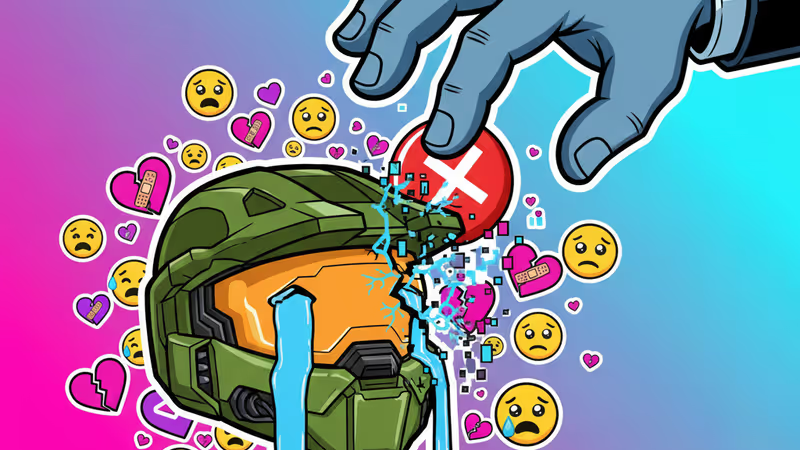
Microsoft Just Killed the Halo Mod Everyone Was Talking About—Here’s the Real Story
Microsoft's DMCA takedown of the viral Halo mod for CS2 has gamers divided. We break down why this happened, the best reactions, and what it means for the future of modding.
TL;DR: Why This Is More Than Just a Mod Takedown
A wildly popular Halo 3 mod for Counter-Strike 2, "Project Misriah," was shut down by a Microsoft copyright claim, sparking a massive debate online. This isn't just about a fan project getting removed; it's a collision between passionate fan creativity, the rigid reality of corporate IP law, and the future of gaming itself.
The Dream Mod That Flew Too Close to the Sun
For a few glorious weeks, the gaming world had a beautiful, impossible crossover. Project Misriah, created by modder Froddoyo, wasn't just 'inspired' by Halo 3—it was a near-perfect recreation inside Counter-Strike 2. Imagine dropping into the iconic map 'Guardian' or 'Lockout', but with the crisp mechanics of Valve's Source 2 engine. The mod ported everything: character models, sound effects, maps, and even Halo's signature floaty movement. It was a technical marvel and a shot of pure nostalgia that had both Halo and CS communities buzzing.
But the party came to an abrupt end. Microsoft, Halo's owner, issued a Digital Millennium Copyright Act (DMCA) takedown notice. The reason was blunt and legally airtight: "unauthorized use of Halo game content." The project was pulled from the Steam Workshop, and the dream was over.
The Best Reactions: Disappointment, Realism, and Memes
The internet's reaction was swift and emotional, a perfect blend of heartbreak, legal debate, and dark humor. We curated the takes that capture the mood best:
The Heartbroken Fan
Countless players felt like they'd had a favorite new toy taken away. The sentiment was best summed up by users like this:
"My disappointment is immeasurable and my day is ruined. All I wanted was to 360 no-scope on Dust II with a battle rifle. Was that too much to ask? Microsoft, you've become the Flood." - Comment on a gaming subreddit
The Legal Realist
Amid the outrage, many developers and industry veterans pointed out the inevitable. You can't just rip assets from one of the world's biggest IPs and put them in a competitor's game.
"Unpopular take: Microsoft had no choice. You can't let your flagship IP's assets be ported 1:1 into a competitor's ecosystem. It's a legal precedent nightmare. Sad for the modder, but 100% predictable." - A take from a game developer on X (formerly Twitter)
The Silver Lining Seeker
Some saw past the takedown to the technical achievement it represented, seeing it as a showcase for the modding engine itself.
"Forget the DMCA for a second. The fact that ONE person could port Halo 3 this cleanly into CS2 is insane. This is the best advertisement for the Source 2 engine I've ever seen. Valve should be sending the modder a gift basket." - A popular comment on the Steam Community forums
The 'No Fun Allowed' Cynic
And of course, there was the classic gamer cynicism about large corporations.
"Ah yes, the 'Cease and Desist' medal. A classic Halo achievement unlocked by the most dedicated fans. It's a tradition at this point." - Viral meme circulating online
Cultural Context: A Clash of Titans
This resonates so deeply because it's a crossover between two pillars of gaming culture. Halo defined console shooters and LAN parties for a generation. Counter-Strike is the undisputed king of competitive PC FPS. For years, they existed in parallel universes. Project Misriah bridged that gap.
This event taps into the modern internet's 'remix culture.' In 2025, fans don't just consume media; they expect to deconstruct and rebuild it. The takedown, while legally justified, feels emotionally tone-deaf to a generation raised on user-generated content platforms like TikTok, Roblox, and Fortnite Creative, where borrowing and remixing are the entire point.
PRISM Insight: The Corporate Dilemma in the Age of UGC
The Project Misriah DMCA is a 20th-century solution to a 21st-century reality. Legally, Microsoft is in the right. They must protect their multi-billion dollar intellectual property. Allowing Master Chief to run wild in a Valve-owned ecosystem sets a dangerous precedent. But from a brand and community perspective, it's a loss.
This isn't just about stopping piracy; it's a symptom of a larger strategic challenge for legacy game publishers. The future of player engagement isn't just selling a polished game; it's building a platform. The runaway success of games like Fortnite and Roblox is built on empowering users to create *within* a controlled, monetized sandbox. These platforms provide the tools and assets, and in return, they foster a loyal community and new revenue streams.
Instead of playing 'whack-a-mole' with its most passionate (and talented) fans, what if Microsoft had a framework to officially sanction and even reward this kind of creativity? The takedown of Project Misriah highlights a strategic vacuum. The passion and talent are clearly there. The question for giants like Microsoft is whether they'll continue to send takedown notices or start building the sandboxes their fans are desperately trying to create for themselves.
関連記事
CS2内でHaloを再現した人気MODがマイクロソフトのDMCAで削除。ファン創作と企業のIP保護の衝突から、ゲーム業界の未来を読み解く。海外の反応も分析。
CS2内でHalo 3を再現したMOD『Project Misriah』がMicrosoftにより削除。ファンの情熱と企業のIP保護が衝突した背景、海外の反応、そしてMOD文化の未来を深掘り分析。
CS2内でHalo 3を再現したMOD『Project Misriah』がMicrosoftにより削除。ファンの情熱と企業のIP保護が衝突した背景、海外の反応、そしてMOD文化の未来を深掘り分析。
Halo 3をCS2で再現した神MOD『Project Misriah』がマイクロソフトにより削除。ファンの情熱と企業の著作権が衝突した背景と、世界のゲームコミュニティの反応を深く分析します。