
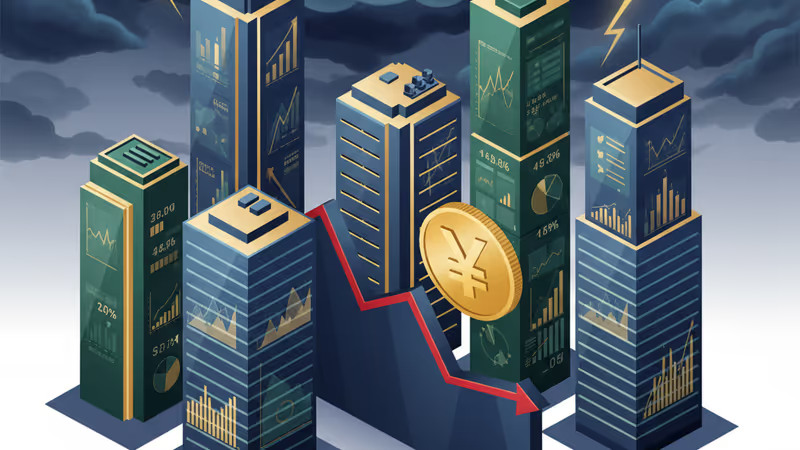
Takaichi Vows Fiscal Grip as Japan's Bond Yields Spike to 26-Year High
As Japan's 10-year government bond yield hits a 26-year high of 2.1%, Prime Minister Sanae Takaichi vows to maintain fiscal discipline, rejecting 'irresponsible' tax cuts or bond issuance.
Japanese Prime Minister Sanae Takaichi drew a line in the sand on fiscal policy Tuesday, rejecting any "irresponsible bond issuance or tax cuts" as the country's 10-year government bond yield surged to 2.1%—a level not seen since 1999.
In an exclusive interview with Nikkei, Takaichi acknowledged Japan's national debt is "still high," signaling to anxious investors that her government intends to prioritize fiscal stability even as it prepares a record-setting budget.
Yields Test Government's Resolve
The spike in the 10-year Japanese Government Bond (JGB) yield represents a critical test for Tokyo. It reflects growing market concern over the government's debt load, especially as it plans to increase spending. If investors lose confidence in Japan's ability to manage its finances, it could trigger a sell-off in both the yen and government bonds, creating a vicious cycle of rising borrowing costs.
Walking a Policy Tightrope
The Prime Minister's firm stance comes as her administration faces a difficult balancing act. On one hand, the economy needs support to weather the impact of high U.S. tariffs. On the other, any perceived fiscal recklessness could unnerve the very investors Japan relies on to fund its debt.
According to the Prime Minister's office, communications with China are ongoing despite current tensions, adding another layer of geopolitical complexity to the economic picture. Takaichi's comments on Tuesday appear designed to reassure markets that fiscal discipline remains a top priority.
本コンテンツはAIが原文記事を基に要約・分析したものです。正確性に努めていますが、誤りがある可能性があります。原文の確認をお勧めします。
関連記事

米国が国連でベネズエラへの最大限の制裁再発動を示唆。原油価格の高騰リスクが再燃し、世界経済とインフレに与える影響を分析します。

ロイター通信によると、セルビアの石油大手NISがロシア資本の株式売却交渉について米国から承認を得た。バルカン半島のエネルギー地図と地政学的なバランスを揺るがす可能性を解説。

日本政府が、増大するサイバー攻撃に対応するため、サプライチェーン全体でセキュリティ費用を分担する新基準を計画。アサヒやアスクルの事例を受け、中小企業の防御力強化を目指す。

みずほ系のアセットマネジメントOneが2026年1月、日本初となる国債アクティブETFを5本上場。金利上昇局面で個人投資家に新たな選択肢を提供し、国債発行の受け皿としても期待される。
米国が国連でベネズエラへの最大限の制裁再発動を示唆。原油価格の高騰リスクが再燃し、世界経済とインフレに与える影響を分析します。
ロイター通信によると、セルビアの石油大手NISがロシア資本の株式売却交渉について米国から承認を得た。バルカン半島のエネルギー地図と地政学的なバランスを揺るがす可能性を解説。
日本政府が、増大するサイバー攻撃に対応するため、サプライチェーン全体でセキュリティ費用を分担する新基準を計画。アサヒやアスクルの事例を受け、中小企業の防御力強化を目指す。
みずほ系のアセットマネジメントOneが2026年1月、日本初となる国債アクティブETFを5本上場。金利上昇局面で個人投資家に新たな選択肢を提供し、国債発行の受け皿としても期待される。