

Japan Bets on Deep-Sea Mining, Plans Rare Earth Facility by 2027 to Counter China
Japan announces plans for a deep-sea rare earth processing facility by 2027 on Minamitorishima island, aiming to tap vast reserves 6,000 meters deep to reduce its critical mineral reliance on China.
Japan is moving to unlock a vast deep-sea treasure trove of rare earths, planning to build a processing facility by 2027 in a direct challenge to China's stranglehold on the critical minerals market. The move aims to bolster Japan's economic security by tapping its own resources from the abyssal depths of the Pacific Ocean.
According to the plan, the facility will be constructed on Minamitorishima, Japan's easternmost island located about 1,950 kilometers (1,200 miles) southeast of Tokyo. It will process rare-earth-rich mud extracted from the ocean floor some 6,000 meters (nearly 20,000 feet) below the surface—a significant technological undertaking.
Why it matters: Rare earth elements are indispensable for everything from electric vehicle motors and smartphones to sophisticated defense systems. China currently dominates the global supply, giving it immense geopolitical leverage. By developing a domestic source, Japan seeks to de-risk its high-tech industries from potential supply disruptions, a lesson learned from past trade disputes where Beijing restricted mineral exports.
Don't expect rare earth prices to plummet overnight. Commercial-scale deep-sea mining is still unproven and years away. However, this is a major strategic signal. The project represents a government-backed push to create resilient, 'friend-shored' supply chains. For investors, this move could catalyze innovation in deep-sea robotics and extraction technologies. In the long term, it could lower the geopolitical risk premium for Japanese and allied tech manufacturers that depend heavily on these materials.
本コンテンツはAIが原文記事を基に要約・分析したものです。正確性に努めていますが、誤りがある可能性があります。原文の確認をお勧めします。
関連記事

英国のIHGが2029年、大阪ベイエリアに800室超の大型ホテルを開業計画。USJと将来のカジノリゾートに近接し、富裕層やビジネス客の需要を狙う。

片山さつき財務大臣が円安是正に向けた市場介入を示唆したことで、22日のニューヨーク市場で円が急伸。一時1ドル=156円台まで上昇した背景と市場の反応を解説します。
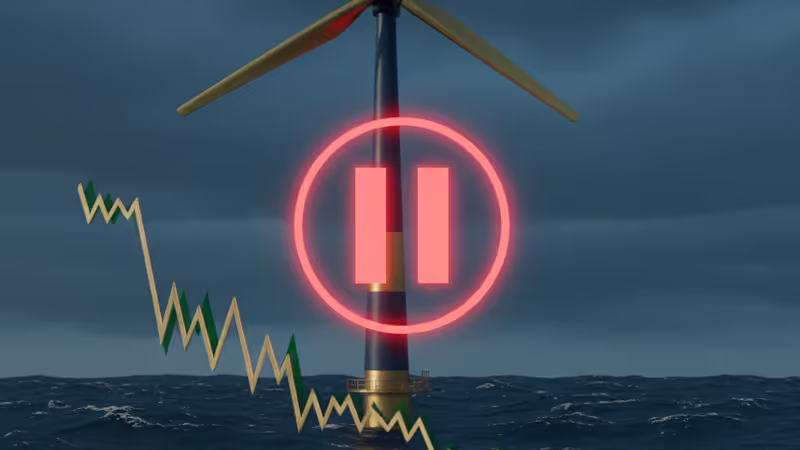
ロイター通信によると、米政府が主要な洋上風力発電プロジェクト5件を凍結。関連企業の株価は15%以上急落し、米国の再生可能エネルギー政策に大きな打撃を与えています。背景にあるコスト高騰とサプライチェーン問題を解説。
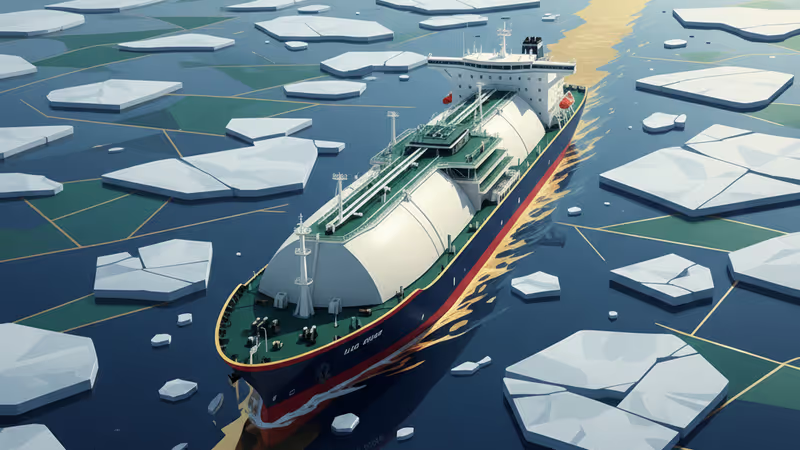
米国の制裁下にあるロシアの巨大プロジェクト「アークティックLNG 2」が初のLNG出荷を開始。西側諸国の制裁の実効性が問われる中、世界のエネルギー市場への影響を解説します。