
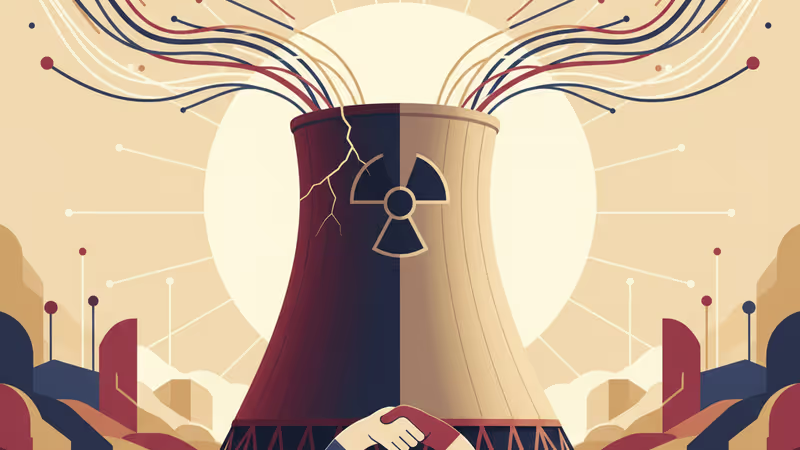
Japan Formally Approves Major Nuclear Power Expansion, Aims to Restart 17 Reactors by 2030
Japan's government has officially greenlit a new energy strategy to restart up to 17 nuclear reactors by 2030 and develop next-generation technology, marking a decisive shift away from its post-Fukushima caution amid energy security concerns.
In a major policy shift 14 years after Fukushima, Tokyo prioritizes energy security.
Japan's government has officially approved a new energy strategy that paves the way for restarting up to 17 nuclear reactors by 2030 and developing next-generation reactors. The decision, finalized in a cabinet meeting on December 22, 2025, marks a definitive pivot away from the cautious, phase-out approach adopted after the 2011 Fukushima Daiichi nuclear disaster.
The government frames the move as a necessary response to secure the nation's energy supply amid volatile global markets and to meet its 2050 carbon neutrality commitments. "This is a pivotal decision for Japan's energy security and our commitment to decarbonization," said METI Minister Ken Saito. "We will proceed with the utmost priority on safety, learning the lessons from the past."
Timeline: Japan's Post-Fukushima Nuclear Policy
- March 2011: The Great East Japan Earthquake triggers a meltdown at the Fukushima Daiichi plant, leading to a nationwide shutdown of all reactors.
- August 2015: The first reactor is restarted under new, stricter safety standards set by the Nuclear Regulation Authority (NRA).
- 2022: The government signals a major policy shift, indicating it would once again embrace nuclear as a core energy source.
- December 2025: The cabinet formally approves a long-term plan to restart up to 17 reactors and develop next-gen technology.
A Nation Still Divided
Despite the government's push, public opinion remains deeply divided. A recent poll by Kyodo News found that 58% of the public is still opposed to or wary of restarting nuclear reactors, a testament to the lasting trauma of the Fukushima catastrophe.
The decision has drawn sharp criticism from environmental groups. Greenpeace Japan called it a "dangerous step backward," urging the government to accelerate investment in renewables like offshore wind. In contrast, the business community, represented by the powerful Keidanren (Japan Business Federation), has welcomed the policy, arguing it's essential for stable electricity prices and industrial competitiveness.
"This isn't just about kilowatts; it's a strategic realignment. By securing a stable baseload power source, Japan is fortifying its industrial backbone—from semiconductors to EVs—and seeking greater strategic autonomy in an increasingly unpredictable world."
Officials stress that all restarts are contingent upon passing the independent and rigorous safety reviews of the Nuclear Regulation Authority (NRA). However, with significant hurdles remaining, including securing local consent and addressing the perennial issue of spent nuclear fuel, the path to a nuclear renaissance in Japan is far from guaranteed.
関連記事

米司法省は、故ジェフリー・エプスタイン関連文書の公開プロセスについて「被害者保護が最優先」と説明。弁護士による精査が現在も続いていると述べ、透明性とプライバシー保護のバランスを強調しました。

韓国政府が、LNG運搬船の核心技術である貨物タンクの国産化を目指し、官民合同のワーキンググループを発足。海外技術への依存から脱却し、数兆ウォンの技術料削減を狙う。

中国と韓国が12月12日、停滞していたFTA第2段階交渉の加速で合意。製造業からサービス分野へと経済協力の軸足を移し、地政学的変化に対応する狙いです。

ASEAN外相は12月22日、クアラルンプールで緊急会合を開き、タイとカンボジア間の国境紛争の沈静化を協議。数十人が死亡したこの紛争は、ASEANの結束を脅かしています。