
iRobot's Collapse: 3 Hard Lessons for Investors from the Roomba Pioneer's Demise
iRobot's bankruptcy is more than a corporate failure. It's a critical lesson for investors on regulatory risk, competitive moats, and the geopolitical shifts in tech.
The Lede
iRobot, the company that pioneered the robotic vacuum, has filed for bankruptcy, marking a dramatic fall for one of America's most recognizable consumer robotics brands. In an immediate and brutal market verdict, shares plummeted over 72% on the news. The company will be taken private by its key supplier and lender, Shenzhen Picea Robotics, in a deal that serves as a stark case study on the lethal intersection of fierce competition, failed M&A, and geopolitical tensions in the tech sector.
Key Numbers
- Market Reaction: Shares (IRBT) plunged more than 72% following the announcement.
- Debt Load: The company has approximately $190 million in debt, with nearly $100 million owed to its new owner, Picea.
- Revenue Collapse: Q3 sales were $145.8 million, a steep 25% decline from the previous year, signaling a fundamental collapse in demand and market position.
- Failed Lifeline: The bankruptcy follows the January 2024 collapse of a planned $1.7 billion acquisition by Amazon, which was thwarted by regulators.
The Analysis
A Pioneer's Graveyard: Crushed by a New Generation of Rivals
iRobot's story is a classic case of the "pioneer's dilemma." After creating the market with the Roomba in 2002, the company enjoyed a long reign but ultimately failed to build a defensible moat. In recent years, a wave of aggressive, lower-cost, and technologically nimble competitors from China—notably Roborock, Ecovacs, and Anker's Eufy brand—flooded the market. These rivals offered comparable or superior features, such as advanced LiDAR mapping and self-emptying docks, at significantly lower price points. iRobot, saddled with a legacy brand premium and slower innovation cycles, could not compete effectively. Its core business was fundamentally eroding long before the Amazon deal fell apart.
The Regulator's Gambit: Unintended Consequences of Antitrust Action
The decision by EU and U.S. regulators to block the Amazon acquisition was a critical blow. While the stated goal was to prevent anti-competitive practices in the smart home market, the outcome is deeply ironic. Co-founder Colin Angle's claim that the bankruptcy was "avoidable" points directly at this regulatory intervention. The market clearly viewed the Amazon deal as iRobot's only viable path to survival, offering access to capital, a massive distribution channel, and integration into a leading smart home ecosystem. Our analysis suggests that in seeking to prevent one U.S. tech giant from growing, regulators inadvertently facilitated the transfer of a pioneering American robotics company—and its valuable patent portfolio—to a Chinese-affiliated entity. This outcome arguably does more to harm long-term U.S. competitiveness than the original deal ever would have.
PRISM Insight: Investment Strategy & Industry Impact
For Investors: The Peril of Acquisition Arbitrage
The iRobot saga is a painful lesson for investors betting on M&A. The stock was artificially inflated by the prospect of the Amazon buyout, masking deteriorating fundamentals. The 72% crash represents the instant evaporation of that acquisition premium. The key takeaway: regulatory risk is no longer a footnote; it is a central thesis point in any M&A-driven investment. In today's heightened antitrust environment, particularly for deals involving Big Tech, investors must rigorously assess a target company's standalone viability. Without the Amazon deal, iRobot's path to insolvency was clear. Investors who ignored the underlying business decay in favor of a quick buyout payday have been severely punished.
For the Industry: The End of Standalone Hardware
iRobot's failure signals a broader shift in consumer electronics. Success is no longer about just building a clever gadget; it's about integrating that hardware into a sticky, valuable software and data ecosystem. Roomba collected vast amounts of spatial data from users' homes—a treasure trove Amazon coveted—but iRobot itself was unable to effectively monetize it or build a compelling ecosystem around it. The future of consumer robotics belongs to platforms like Amazon, Google, and Apple, which can leverage hardware as an entry point to their wider service ecosystems. For standalone hardware companies, the message is clear: get acquired by an ecosystem player or risk becoming a commodity supplier for one—or worse, face extinction.
The Bottom Line
The fall of iRobot is more than the failure of a single company. For investors, it is a mandate to re-evaluate how they price regulatory risk and to look past acquisition hype to core business health. For the tech industry, it confirms that in the battle for the smart home, isolated devices are losing to integrated platforms. The ultimate tragedy, as co-founders have noted, may be that in an effort to curb a domestic tech giant, regulators have handed the keys to a foundational piece of American robotics innovation to an overseas competitor.
関連記事
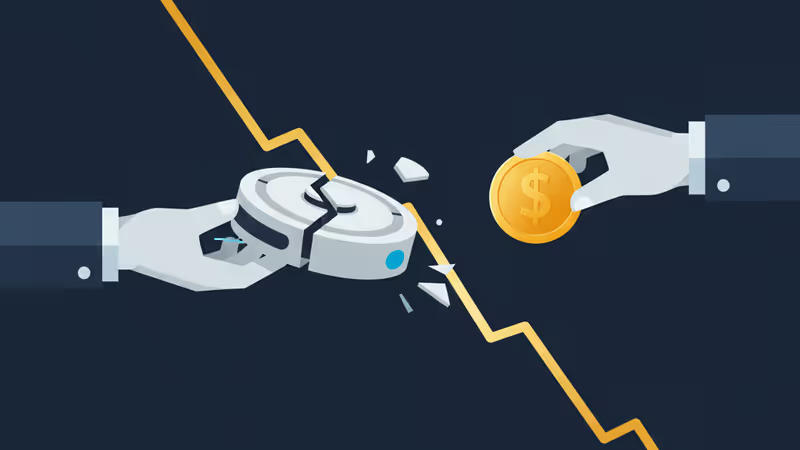
ロボット掃除機ルンバのiRobotが経営破綻。アマゾンによる買収失敗後、中国サプライヤーに買収される背景と、投資家が学ぶべき市場の教訓を専門家が解説します。
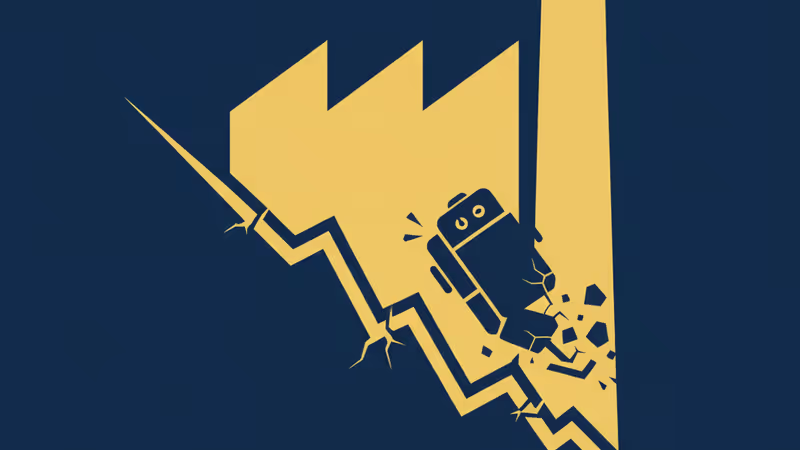
「ルンバ」で知られるiRobotが中国の製造委託先に買収され破産。この出来事が示す、製造業のパワーシフトと投資家への教訓を専門家が徹底分析します。

お掃除ロボットのパイオニア、iRobotが経営破綻。Amazonによる買収失敗の裏側と、中国企業への身売り。投資家が知るべき規制リスクとサプライチェーンの罠を専門家が解説します。

FRBが利上げ打ち止めを示唆。高金利が続く「金利高原」時代に投資家が取るべき新戦略とは?ポートフォリオや業界別の影響を専門家が徹底解説します。