
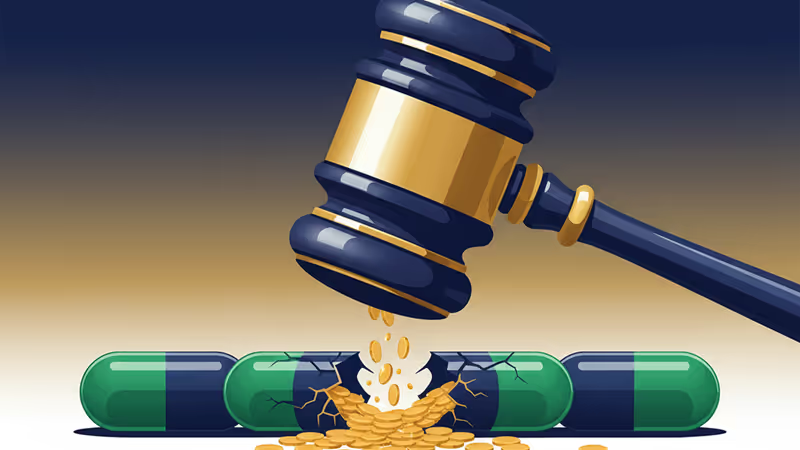
White House Quadruples Down on Drug Price Negotiations, Wiping Billions From Pharma Stocks
The Biden administration announced a massive expansion of the Medicare drug price negotiation program from 10 to 50 drugs, sparking a sell-off in pharma stocks and a legal threat from the industry.
The Biden administration is dramatically accelerating its plan to negotiate Medicare drug prices, a move that sent pharmaceutical stocks reeling Monday and sets the stage for a major legal battle with the industry.
The White House announced it will expand the list of drugs subject to negotiation from 10 to 50, a fivefold increase from the initial slate set by the Inflation Reduction Act (IRA). The move, enacted via executive action on December 22, 2025, aims to lower healthcare costs faster than originally planned. The new list will be finalized by September 1, 2026, with lower prices taking effect in 2028.
Officials estimate the accelerated timeline will save the U.S. government an additional $100 billion over the next decade. For millions of seniors, it's expected to translate into significantly lower out-of-pocket costs for high-priced medications treating chronic conditions like cancer, heart disease, and autoimmune disorders.
Industry Vows Legal War, Citing “Stifled Innovation”
The pharmaceutical industry's reaction was swift and furious. The Pharmaceutical Research and Manufacturers of America (PhRMA), the sector's most powerful lobby group, condemned the decision as a massive overreach.
"This is an unprecedented government overreach that will stifle innovation and harm patients by limiting access to future cures," PhRMA CEO Stephen J. Ubl said in a statement. The group announced it will pursue legal action to block the expansion.
The industry's core argument is that forced price cuts will slash the R&D budgets necessary to develop the next generation of life-saving drugs.
Market ReactionInvestors didn't wait for the legal fight to play out. The iShares U.S. Pharmaceuticals ETF (IHE) dropped 4% in pre-market trading. Industry giants felt the pain directly:• Pfizer (PFE): -5%• Merck (MRK): -4.5%
PRISM Insight: A New Normal for Pharma Investors?
For investors, this isn't just a one-day headline; it's a potential paradigm shift. The U.S. government, the largest single buyer of prescription drugs in the world, is flexing its muscle more aggressively than ever.
The central conflict is now crystal clear: public pressure for affordable healthcare versus the pharma industry's high-margin business model that funds future innovation. While the administration scores political points by tackling drug costs, the move introduces a significant layer of regulatory risk for the entire sector.
Investors must now re-evaluate the long-term earnings potential for companies heavily reliant on a handful of blockbuster drugs sold to Medicare. The key question is whether the market has fully priced in this new era of government price-setting. The legal battles ahead will be critical, but the political direction of travel seems set.
本コンテンツはAIが原文記事を基に要約・分析したものです。正確性に努めていますが、誤りがある可能性があります。原文の確認をお勧めします。
関連記事

香港で12月19日、日本円で約10億円の現金が入ったスーツケースが奪われる事件が発生。現地警察は容疑者の男1人を逮捕したと発表。金融都市における治安と現金輸送のリスクが浮き彫りになりました。

東京23区のマンション平均価格が1億円を突破。日銀の利上げや長期金利上昇の向かい風の中、政府は住宅ローン「フラット35」の限度額を1.2億円に引き上げる方針。市場の最新動向と投資家への影響を解説。

日銀の利上げ後も円安が止まらず1ドル157円台に。三村財務官らが「過度な変動」への対抗措置を示唆し、為替介入の可能性が浮上。円安の背景と今後の市場への影響を解説します。

日本政府が1100兆円の家計貯蓄を国債の新たな買い手として注目。日銀の金融政策正常化に伴う国債購入縮小に備え、デフレマインドからの転換を促す。